Saturday, April 20, 2013

The 20 Versions of the Qur'an today. (7 are recorded in the Hadith.)


The 20 Versions of the Qur'an today. (7 are recorded in the Hadith.)
Qur'an of today is different than what Muhammad revealed!
Click to ViewIslam: Truth or Myth? start page
The Muslim Claim that the Qur'an is unchanged:No other book in the world can match the Qur'an ... The astonishing fact about this book of ALLAH is that it has remained unchanged, even to a dot, over the last fourteen hundred years. ... No variation of text can be found in it. You can check this for yourself by listening to the recitation of Muslims from different parts of the world. (Basic Principles of Islam, Abu Dhabi, UAE: The Zayed Bin Sultan Al Nahayan Charitable & Humanitarian Foundation, 1996, p 4)

Many Variant Readings of the Quran

  1. "Muslims attack the Bible on the grounds that it sometimes has conflicting wording from different manuscripts. Yet this is exactly the case with the text of the Quran. There are many conflicting readings on the text of the Quran as Arthur Jeffery has demonstrated in his book, Material for the History of the Text of the Quran" (New York, Russell F. Moore, 1952).
  2. Mentions Variant readings in the Koran: Dashti, 23 Years, p. 28
  3. Mentions Variant readings in the Koran: Mandudi, Meaning of the Quran, pp. 17-18
  4. Mentions Variant readings in the Koran: McClintock and Strong, Cyclopedia, V152).
  5. "[the Koran] had a large number of variants, not always trifling in significance" (Islam, p. 189).
  6. "It is interesting to note that in scholarly Muslim journals, there is beginning to be a grudging acknowledgment of the fact that there are variant and conflicting readings on the text of the Quran" (One example would be Saleh al-Wahaihu, "A Study of Seven Quranic Variants," International Journal of Islamic and Arabic Studies, Vol. V (1989), #2, pp. 1-57).
  7. "The Muslin accounts of the history of the Quran texts are a mass of confusion, contradiction and inconsistencies" (Burton, Collection, p. 231).
  8. "Abdollah renounced Islam on the ground that the revelations, if from God, could not be changed at the prompting of a scribe such as he. After his apostasy he went to Mecca and joined the Qorayshites" (Dashti, 23 Years, p. 98).
  9. "There being some passages in the Quran which are contradictory, the Muhammadan doctors obviate any objection from thence by the doctrine of abrogation; for they say that God in the Quran commanded several things which were for good reasons afterwards revoked and abrogated" (E. Wherry, A Comprehensive Commentary on the Qurun, p. 110).
  10. "It is to us astounding how so compromising a procedure can have been permitted to be introduced into the system by friends and foes (Canon Sell in his work, Historical Development of the Qura, Madras: Diocesan Press, 1923, pp. 36-37).
  11. "When Muhammad died there existed no singular codex of the sacred text" (Caesar Farah, Islam: Beliefs and Observations, New York; Barrons, 1987, p. 28).
  12. "One thing only is certain and is openly recognized by tradition, namely, that there was not in existence any collection of revelations in the final form, because, as long as he was alive, new revelations were being added to the earlier ones" (The Shorter Encyclopedia of Islam p. 271).
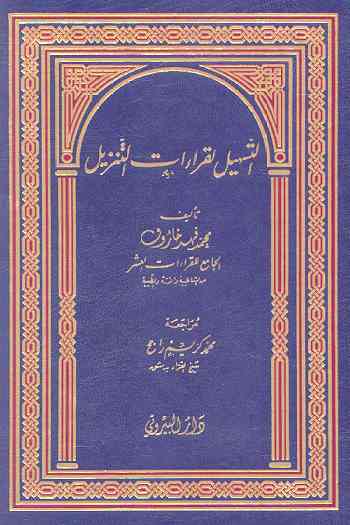
The proof the Muslim claim is false, is in this book:
Click to View
Translation of front cover:Making Easy the Readings of What Has Been Sent Down
Author
Muhammad Fahd Khaaruun
The Collector of the 10 Readings
From Al-Shaatebeiah and Al-Dorraah and Al-Taiabah
Revised by
Muhammad Kareem Ragheh
The Chief Reader of Damascus
Daar Beirut
Click photos for enlargement
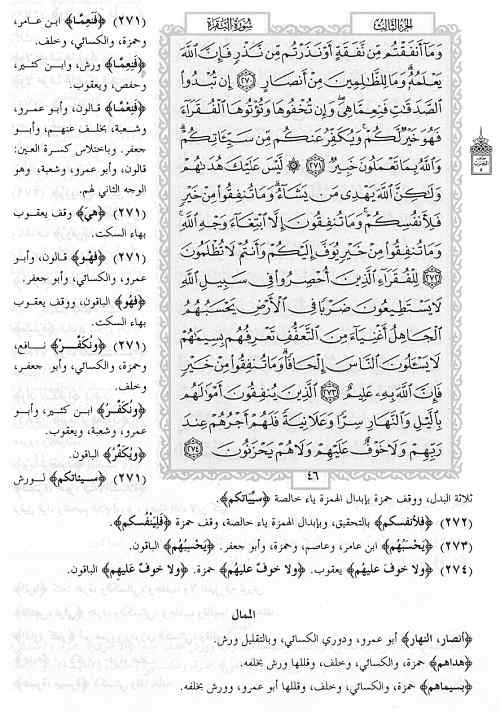
As you can see, the boxed text is the text of the Qur'an and the margins at the left and the bottom are variant readings. There are more known variants than this book includes. Even worse, there are more than readers in existence, but this book limits the variants to only these 10 readers.
Click photos for enlargement
Click to View
What Muslim and non-Muslim scholars say about the known variations/versions within the Qur'an being used in the world today:

Authors of the Quran:-


       Anyone researching and investigating the origins of the Quran will find that a lot of people were involved in its compilation and construction.

       Unknown to the vast majority of Muhammadans, and buried deep inside the Quran, Ahadith and Sirah, there is copious evidence to reject, out of hand, the contention that the Quran is the creation of Allah.

       Making Allah the author of the Quran, is the prime and most groteque lie and deception that was ever perpetrated upon the human intellect for more than 1400 years.
       
       One can say with a great measure of certainty, that the Quran was either composed or inspired and written by a few other individuals. The most notable among them were:

Imrul Qays-                an ancient poet of Arabia who died a few decades before                                        Muhammad's birth

Zayd b. Amr b. Naufal-        an 'apostate' of his time who preached and propagated Hanifism

Labid-                        another poet

Hasan b. Thabit-                the official poet of Muhammad

Salman -                         the Persian-Muhammad's confidante' and an advisor

Bahira-                        a Nestoraian Christian monk of the Syrian church

Jabr-                                a Christian neighbour of Muhammad

Ibn Qumta-                a Christian slave
Khadijah-                        Muhammad's first wife

Waraqa-                        Khadijah's cousin brother

Ubay b. Ka'b-                Muhammad's secretary and a Qur'an scribe

Muhammad -                himself

Bahira
       Bahira was a Nestorian Christian monk who lived in Sham (Syria). His Christian name wasSergius or Georgius. It is believed that he was expelled from the monastery for certain offences. To expiate it, he set out on a mission to Arabia.

       In Mecca, he met Muhammad, became intimate with him and stayed with him. He had confidential conversations with Muhammad, in which he surely told Muhammad many facets of Christianity. The verses in the Quran dealing with Christianity must have emanated from Bahira, the monk. Muhammadsimply re-wrote them with the help of his Quran collectors or scribes.
       It is believed that the Quranic verses on the Psalms of David were actually the contribution of Bahira.These verses are:
4.163 We have sent thee inspiration, as We sent it to Noah and the Messengers after him: we sent inspiration to Abraham, Isma'il, Isaac, Jacob and the Tribes, to Jesus, Job, Jonah, Aaron, and Solomon, and to David We gave the Psalms [Zaboura].
17.55 And it is your Lord that knoweth best all beings that are in the heavens and on earth: We did bestow on some prophets more (and other) gifts than on others: and We gave to David (the gift of) the Psalms[Zaboura].

21.105 Before this We wrote in the Psalms [al Zabouri], after the Message (given to Moses): My servants the righteous, shall inherit the earth."
[In fact, the Dictionary Islam (p.698) writes that the last quoted verse (21.105) is a direct quote from Psalm 37.29]

Psalm 37:29 " The righteous will inherit the earth and dwell forever upon it"
       Here are some sample verses which most likely were contributed by Bahira:
2:101        And when came to them an Apostle from Allah confirming what was with them a party of the people of the Book threw away the Book of Allah behind their backs as if (it had been something) they did not know!

       ***Even when Muhammad confirmed the previous scriptures, the Jews and the Christiansrejected him ***

2:113        The Jews say: "The Christians have naught (to stand) upon"; and the Christians say: "The Jews have naught (to stand) upon."  Yet they (profess to) study the (same) Book.  Like unto their word is what those say who know not but Allah will judge between them in their quarrel on the Day of Judgment

       *** The Quran implies that the Jews and the Christians quarrel with each other even though they study the same book.

       Of course the Quran is, as usual, WRONG, since the Jews and Christians have no quarrel with each other regarding the Hebrew Bible but ONLY regarding the New Testament which theJews do not accept since it is not part of the Divine Revelations at Mount Sinai***

2:139        Say: Will ye dispute with us about Allah seeing that He is our Lord and your Lord;that we are responsible for our doings and ye for yours; and that we are sincere (in our faith) in Him?
       *** This verse implies that the 'Islamic', the Jewish and the Christian God is the same God,do not argue on this; Allah will reward each group according to their deeds…

       In reality, Allah was never the god of Israel or of Jesus since Allah was ONLY the name of the rock god of the Ka'ba, the Black Stone***

3:23 The Jews and the Christians are invited to believe in the Book of Allah to settle their disputes...

       *** The Quran has nothing either equal to or superior to anythnig that it, theQURAN, had PLAGIARIZED, PLUNDERED, PIRATED and/or PERVERTED from the BIBLE, to justify that the People of the Book should believe in it or to use it as a GUIDE ***

3:78 Some Jews and Christians twisted their scriptures and passed them as Allah's messages…

Friday, April 19, 2013

Ina maana gani Yesu kuwa Mwana wa Mungu?


Yesu si Mwana wa Mungu kulingana na ubaba wa kawaida wa binadamu. Mungu hakuoa na kupata mwana wa kiume. Mungu hakufanya tendo la ndoa na Mariamu, na pamoja naye kuzaa mtoto wa kiume. Yesu ni Mungu katika hali kwamba ni Mungu anajithirihisha kama mwili. (Yohana 1:1, 14) Yesu ni mwana wa Mungu kwa dhana kwamba Mariamu alipata mimba kupitia Roho Mtakatifu. Luka 1:35 yasema, “Malaika akajibu akamwambia, Roho Mtakatifu atakujilia juu yako, na nguvu zake Aliye juu zitakufunika kama kivuli; kwa sababu hiyo hicho kitakachozaliwa kitaitwa kitakatifu, Mwana wa Mungu.”

Wakati wa kujaribiwa kwake mbele ya viongozi wa Kiyahudi, kuhani mkuu alimtaka Yesu, “Nakuapisha kwa Mungu aliye hai, utuambie kama wewe ndiwe Kristo, Mwana wa Mungu” (Mathayo 26:63). “Yesu akamwambia wewe umesema,’ Yesu akamwambia, wewe umesema; lakini nawaambieni, Tangu sasa mtamwona Mwana wa Adamu ameketi mkono wa kuume wa nguvu, akija juu ya mawingu ya mbinguni” (Mathayo 26:64) viongozi wa Kiyahudi walimdhania kwa kukufuru (Mathayo 26:65-66). Baadaye mbele ya Pilato, “Wayahudi wakamjibu, Sisi tunayo sheria, na kwa sheria hiyo amestahili kufa, kwa sababu alijifanya kuwa Mwana wa Mungu” Yohana 19:7) ni kwa nini makisio yake kuwa Mwana wa Mungu yachukuliwe kuwa kufuru na astahili hukumu ya kifo? Wayahudi wilielewa vizuri sana chenye Yesu alimaanisha kwa maneno haya “Mwana wa Mungu” kuwa Mwana wa Mungu ni kuwa hali moja na Mungu. Mwana wa Mungu “wa Mungu” kusema uko katika hali sawa na Mungu-hakika kuwa Mungu- kulikuwa sawa na kukufuru kwa viongozi wa Kiyahudi; kwa hivyo walimtaka Yesu auwawe, kulingana na Mambo ya Nyakati 24:15. Waebrania 1:3 inadhihirisha haya wazi, “Yeye kwa kuwa ni mng’ao wa utukufu wake, akiisha kufanya utakaso wa dhambi, aliketi mkono wa kuume wa Ukuu huko juu.”

Mfano mwingine unaweza patikana katika Yohana 17:12 mahali Yuda anaelezwa kama mwana wa “upotevu”? jina upotevu lamaanisha “uharibivu” Yuda hakuwa mwana wa uharibivu, lakini mambo hayo ndio ya kutambulisha maisha ya Yuda. Yuda anadhihirisha upotevu. Vile vile Yesu mwana wa Mungu. Ni Mungu anajidhihirisha (Yohana 1:1,14).

Je, u mungu wa kristo ni kibiblia?


Pamoja na mengine yote Yesu aliyoyasema juu yake mwenyewe, wanafunzi wake waliamini u mungu wake pia. Waliamini kuwa Yesu alikuwa na uwezo wa kusamehe dhambi jambo ambalo Mungu pekee ndiye mwenye uwezo nalo kwa kuwa ni Mungu anayechukizwa na dhambi (Matendo 5:31; Wakolosai 3:13; na kuendelea. Zaburi 130:4; Yeremia 31:34). Pamoja na haya Yesu ndiye atakayekuja, “kuhukumu wafu na walio hai” (Timotheo wa pili 4:1). Tomaso akamlilia Yesu Akisema, “Bwana wangu na Mungu wangu!” (Yohana 20:28). Paulo anamwita Yesu, “ Mungu Mkuu na Mwokozi” (Tito 2:13), na anaelezea ya kuwa Yesu, “alikuwa katika hali ya Mungu” (Wafilipi 2:5-8). Mwandishi wa kitabu cha waebrania asema juu ya Yesu kuwa, “ Kiti chako cha enzi wewe Mungu, kitadumu milele na milele” (Waebrania 1:8). Yohana aeleza kuwa, “Hapo mwanzo kulikuwako neno, naye neno alikuwako kwa Mungu, naye neno (Yesu) alikuwa Mungu” (Yohana 1:1). Mifano ya aya zinazofundisha juu ya u Mungu wa Yesu ni mingi (pia Ufunuo wa Yohana 1:17; 2:8; 22:13; Wakorintho wa kwanza 10:4; Petro wa kwanza 2:6-8; Zaburi 18:2; 95:1; Petro wa kwanza 5:4; Waebrania 13:20), kila mojawapo ya aya hizi inatosha kukujulisha ya kwamba wanafunzi wa Yesu walimwamini kuwa Yesu alikuwa Mungu.

Yesu pia apatiwa adhama ambazo zina Yahweh pekee (Jina maalum la Mungu) katika agano la kale. Adhama ya “Mkombozi” (Zaburi 130:7; Hosea 13:14) inatumika juu ya Yesu katika agano jipya. (Tito 2:13; Ufunuo wa Yohana 5:9). Yesu anaitwa Immanueli (“Mungu pamoja nasi” katika mathayo 1). Katika Zakaria 12:10, ni Yahweh anayesema, “watanitazama mimi waliyenipasua.” Lakini agano jipya haya yanatumika kwa kusulibiwa kwake Yesu (Yohana 19:37; ufunuo wa Yohana 1:7). Kama ni Yahweh mwenye kupasuliwa na mwenye kutazamwa, na Yesu ndiye aliyepasuliwa na kutazamwa basi Yahweh ni Yesu. Paulo anatafsiri Isaya 45:22-23 kama yale ya Yesu katika wafilipi 2:10-11. Pia Jina la Yesu linatumika pamoja na la Yahweh katika sala, “Neema na amani kutoka kwa Mungu baba na Bwana wetu Yesu kristo iwe kwenu” (Wagalatia 1:3; Waefeso 1:2). Hili lingekuwa kufuru kama Yesu hangekuwa Mungu. Jina la Yesu linapatikana tena na la Yahweh katika amrisho la ubatizo Yesu aliposema, “kwa Jina la Baba na la Mwana na Roho Mtakatifu” (Mathayo 28:19; pia tazama wakorintho wa pili 13:14.

Matendo ambayo yanaweza kufanywa na Mungu Pekee yanaonyeshwa yakifanywa na Yesu. Licha ya kuwa alifufua wafu (Yohana 5:21; 11:38-44), na kusamehe dhambi (Matendo 5:31; 13 38), aliumba ulimwengu (Yohana 1:2; Wakolosai 1: 16-17)! Jambo hili linatia msisitizo wakati tunapochukulia ya kwamba Yahweh aliumba akiwa peke yake. (Isaya 44:24). Hata hivyo, Yesu ana sifa sawa na Mungu, kama Umilele (Yohana 8:58), kuwa kila mahali (Mathayo 18:20, 28:20), kufahamu yote (Mathayo 16:21), muweza yote (Yohana 11:38-44).

Yesu ni Mungu


Je, Yesu Kristo ni Mungu?
Hebu tuanzie kutafiti ukweli wa hili swali, Je Yesu ni Mungu, kabla ya kuja kwake mara ya kwanza. Je, manabii walimwita nani na/au walitabiri nini juu ya ujio wake.

Yesu akasema, Amini, Amini nawaambia, kabla ya Abrahamu kuweko mimi nilikuwa.” Tena kwa ajili ya hayo wayahudi wakashika mawe ili wampige nayo Yesu (Yohana 8:59). Je, wayahudi wangetaka kumpiga mawe yesu kama haingekuwa ya kuwa alisikika akikufuru kwa kusema yeye ni Mungu?

YESU KABLA YA KUZALIWA ALITABIRIWA NA MANABII KUWA NI MUNGU: 
King James Bible Isaiah Chapter 9 Verse 6
For unto us a child is born, unto us a son is given: and the government shall be upon his shoulder: and his name shall be called Wonderful, Counsellor, The mighty God, The everlasting Father, The Prince of Peace.
Hii aya hapo juu inakiri kuwa hata kabla ya kuja kwake Mitume na Manabii walitabiri kuwa Yesu ni Mungu. 

YESU NI NENO, NENO ALIKUWA MUNGU:
Yohana 1:1 inasema “Neno alikuwa Mungu”. Yohana 1:14 inasema “Neno akafanyika mwili.” Hii inaonyesha wazi ya kwamba Yesu ni Mungu katika mwili. Matendo 20:28 inatuambia, “…Muwe wachungaji wa kanisa la Mungu, alilolinunua kwa damu yake mwenyewe,” Ni nani aliyelinunua kanisa kwa damu yake mwenyewe? Yesu kristo. Matendo 20:28 inasema ya kwamba Mungu alilinunua kanisa kwa damu yake mwenyewe. Kwa hivyo Yesu ni Mungu!

YESU ALIITWA MUNGU NA WAFUASI WAKE:
King James Bible John 20:28
And Thomas answered and said unto Jesus, My Lord and my God.
Hii aya inatuhakikishia kutoka wafuasi wake kuwa Yesu ni Mungu. Yesu hakupinga alipo itwa Mungu.


Tomaso mwanafunzi wa Yesu alisema kuhusu Yesu, “Bwana na Mungu wangu” (Yohana 20:28). Yesu hamsahihishi kwa kuyasema haya. Tito 2:13 inatuhimiza kusuburi kurudi kwa Mungu wetu na mwokozi – Yesu kristo (Pia tazama petro wa pili 1:1). Waebrania 1:8, Baba asema juu ya Yesu, “Lakini juu ya mwana asema haya, “Na Kiti chako cha enzi, wewe Mungu, Kitadumu milele, na haki itakuwa fimbo ya ufalme wako.”

MWENYEZI MUNGU ALIMWITA YESU MUNGU:
King James Bible Hebrew 1 Verse 8, 9
8. But unto the Son [he saith], Thy throne, O God, [is] for ever and ever: a sceptre of righteousness [is] the sceptre of thy kingdom. 
9. Thou hast loved righteousness, and hated iniquity; therefore God, [even] thy God, hath anointed thee with the oil of gladness above thy fellows.
Hata Mungu Baba alimwita mwanae Yesu Kristo Mungu. Hii aya hapo juu imethibitisha kuwa Yesu ni Mungu. 


YESU MWENYEWE ALIJIITA MUNGU:
King James Bible Matthew 4 Verse 7
Jesus said unto him, It is written again, Thou shalt not tempt the Lord thy God.
Katika hii aya Yesu Kristo anakiri kuwa yeye ni Mungu.

YESU ALIISHI KABLA YA KUUMBWA KWA DUNIA:
King James Bible John 17 Verse 5
And now, O Father, glorify thou me with thine own self with the glory which I had with thee before the world was.


Hii aya inatuhakikishia kuwa Yesu aliishi kabla ya kuumbwa dunia. Hayo maneno ni Yesu anasema kwa Baba yake.


Hivyo basi leo nimeamua kuweka ushaidi yakinifu kuwa Yesu Kristo ni Mungu.
Katika kitabu cha ufunuo wa Yohana, Malaika alimwamuru mtume Yohana kumuabudu Mungu tu(ufunuo wa Yohana 19: 10). Mra nyingi Yesu katika maandiko aabudiwa (Mathayo 2;11; 14:33; 28:9,17; Luka 24:52; Yohana 9:38). Hakemei watu kwa kumuabudu. Kama Yesu hakuwa Mungu, angewaambia watu wasimuabudu, kama vile malaika alivyofanya. Kuna aya nyingi za maandiko zinazoshuhudia ya kwamba Yesu ni Mungu.

Sababu muhimu ya kwamba Yesu sharti awe Mungu ni kwamba kama si Mungu, kufa kwake hakungetoshea kufidia dhambi za ulimwengu wote (Yohana wa kwanza 2:2). Mungu pekee ndiye angeweza kulipia adhabu kama hiyo. Mungu pekee ndiye angeweza kufidia dhambi za ulimwengu wote w (Wakorintho wa pili 5: 21), afe na afufuke kuthibitisha ushindi juu ya dhambi na mauti.

Mungu awabariki sana.
By Max Shimba, A Friend of God

What does it mean that Jesus died for our sins?


Simply put, without Jesus’ death on the cross for our sins, no one would have eternal life. Jesus Himself said: "I am the way and the truth and the life. No one comes to the Father except through me” (John 14:6). In this statement, Jesus declares the reason for His birth, death and resurrection—to provide the way to heaven for sinful mankind, who could never get there on their own.

When God created Adam and Eve, they were perfect in every way and lived in a virtual paradise, the Garden of Eden (Genesis 2:15). God created man in His image, meaning they also had the freedom to make decisions and choices of their own free will. Genesis 3 goes on to describe how Adam and Eve succumbed to Satan’s temptations and lies. In doing so, they disobeyed the will of God by eating of the tree of knowledge from which they were forbidden: “And the LORD God commanded the man, ‘You are free to eat from any tree in the garden; but you must not eat from the tree of the knowledge of good and evil, for when you eat of it you will surely die’” (Genesis 2:16-17). This was the first sin committed by man and, as a result, all mankind is subject to both physical and eternal death by virtue of oursinful nature inheritedfrom Adam.

God declared that all who sin will die, both physically and spiritually. This is the fate of all mankind. But God, in His grace and mercy, provided a way out of this dilemma, the shed blood of His perfect Son on the cross. God declared that “without the shedding of blood, there is no forgiveness” (Hebrews 9:22), but through the shedding of blood, redemption is provided. The Law of Moses (Exodus 20:2-17) provided a way for the people to be considered “sinless” or “right” in God’s eyes—the offering of animals sacrificed for every sin they committed. These sacrifices were only temporary, though, and were really a foreshadowing of the perfect, once-for-all sacrifice of Christ on the cross (Hebrews 10:10).

This is why Jesus came and why He died, to become the ultimate and the final sacrifice, the perfect (without blemish) sacrifice for our sins (Colossians 1:22;1 Peter 1:19). Through Him, the promise of life eternal with God becomes effective through faith to those who believe in Jesus. “So that what was promised, being given through faith in Jesus Christ, might be given to those who believe” (Galatians 3:22). These two words “faith” and “believing” are critical to our salvation. It is through our believing in the shed blood of Christ for our sins that we receive eternal life. “For it is by grace you have been saved, through faith—and this not from yourselves, it is the gift of God—not by works, so that no one can boast” (Ephesians 2:8-9)
.


Why did Jesus have to die?


When we ask a question such as this, we must be careful that we are not calling God into question. To wonder why God couldn’t find “another way” to do something is to imply that the way He has chosen is not the best course of action and that some other method would be better. Usually what we perceive as a “better” method is one that seems right to us. Before we can come to grips with anything God does, we have to first acknowledge that His ways are not our ways, His thoughts are not our thoughts—they are higher than ours (Isaiah 55:8). In addition,Deuteronomy 32:4reminds us that “He is the Rock, his works are perfect, and all his ways are just. A faithful God who does no wrong, upright and just is he.” Therefore, the plan of salvation He has designed is perfect, just, and upright, and no one could have come up with anything better.

The Scripture says, “For I delivered to you as of first importance what I also received: that Christ died for our sins in accordance with the Scriptures, that he was buried, that he was raised on the third day in accordance with the Scriptures” (1 Corinthians 15:3-4). Evidence affirms that the sinless Jesus bled and died on a cross. Most importantly, the Bible explains why Jesus’ death and resurrection provide the only entrance to heaven.

The punishment for sin is death.

God created earth and man perfect. But when Adam and Eve disobeyed God’s commands, He had to punish them. A judge who pardons law-breakers isn’t a righteous judge. Likewise, overlooking sin would make the holy God unjust. Death is God’s just consequence for sin. “For the wages of sin is death” (Romans 6:23). Even good works cannot make up for wrongs against the holy God. Compared to His goodness, “All our righteousnesses are as filthy rags” (Isaiah 64:6b). Ever since Adam’s sin, every human has been guilty of disobeying God’s righteous laws. “For all have sinned and fall short of the glory of God” (Romans 3:23). Sin is not just big things like murder or blasphemy, but also includes love of money, hatred of enemies, and deceit of tongue and pride. Because of sin, everyone has deserved death – eternal separation from God in hell.

The promise required an innocent death.

Although God banished Adam and Eve from the garden, He didn’t leave them without hope of heaven. He promised He would send a sacrifice to take the punishment they deserved (Genesis 3:15). Until then, men would sacrifice innocent lambs, showing their repentance from sin and faith in the future Sacrifice from God who would bear their penalty. God reaffirmed His promise of the Sacrifice with men such as Abraham and Moses. Herein lies the beauty of God’s perfect plan: God Himself provided the only sacrifice (Jesus) who could atone for the sins of His people. God’s perfect Son fulfilled God’s perfect requirement of God’s perfect law. It is perfectly brilliant in its simplicity. “God made Him (Christ), who knew no sin, to be sin for us that we might become the righteousness of God in Him” (2 Corinthians 5:21).

Monday, April 1, 2013

Why did Jesus teach in parables?

It has been said that a parable is an earthly story with a heavenly meaning. The Lord Jesus frequently used parables as a means of illustrating profound, divine truths. Stories such as these are easily remembered, the characters bold, and the symbolism rich in meaning. Parables were a common form of teaching in Judaism. Before a certain point in His ministry, Jesus had employed many graphic analogies using common things that would be familiar to everyone (salt, bread, sheep, etc.) and their meaning was fairly clear in the context of His teaching. Parables required more explanation, and at one point in His ministry, Jesus began to teach using parables exclusively.

The question is why Jesus would let most people wonder about the meaning of His parables. The first instance of this is in His telling the parable of the seed and the soils. Before He interpreted this parable, He drew His disciples away from the crowd. They said to Him, "Why do You speak to them in parables?" Jesus answered them, "To you it has been granted to know the mysteries of the kingdom of heaven, but to them it has not been granted. For whoever has, to him more shall be given, and he will have an abundance; but whoever does not have, even what he has shall be taken away from him. Therefore I speak to them in parables; because while seeing they do not see, and while hearing they do not hear, nor do they understand. In their case the prophecy of Isaiah is being fulfilled, which says,

‘Hearing you will hear and shall not understand, And seeing you will see and not perceive; For the hearts of this people have grown dull. Their ears are hard of hearing, And their eyes they have closed, Lest they should see with their eyes and hear with their ears, Lest they should understand with their hearts and turn, So that I should heal them.’ But blessed are your eyes, because they see; and your ears, because they hear. For truly I say to you that many prophets and righteous men desired to see what you see, and did not see it, and to hear what you hear, and did not hear it" (Matthew 13:10-17).

Saturday, March 23, 2013

Imani na Tumaini


_________________________________________________________ 
Basi imani ni kuwa na hakika ya mambo yatarajiwayo, ni bayana ya mambo yasiyoonekana. 
Waebrania 11:1
Imani ni nini? 
1. Imanini ni kati ya mambo machache ambayo Bibilia inatuelezea sisi. Ni nini imani? 
 (Webranaia 11:1) 
_________________________________________________________________

_________________________________________________________________
2. Ni nini mambo unahakika lakini ujayaona? (hewa, kaskazini, Mungu) 
_________________________________________________________________

3. Imani inatujilia sisi kwa njia gani? (Warumi 10:17) 
_________________________________________________________________

4. Imani inajionyesha kwa njia gani? (Wagalatia 5:6) 
_________________________________________________________________

5. Mistari inayofwata inafunza nini juu ya imani? 
 Wagalatia 2:16 ______________________________________________________
 Wagalatia 3:11 ______________________________________________________
 Wagalatia 3:26 ______________________________________________________
 Warumi 14:23 ______________________________________________________

IMANI NA TUMANI 65
9
SEHEMU YA KWANZA (1)6. Nini kinachostahili kuwekwa katika msingi wa maisha ya yule anayeamini na 
anataka kuwa katika hali ya ukomavu? (Waebrania 6:1-2) 
_________________________________________________________________

7. Tunastahili kuweka imani yetu kwa nani? (Waebrania 6:1) 
_________________________________________________________________
Utekelezaji wa Kibinafsi 
Ulijifunza nini kutokana na somo hili na ni jinsi gani utakitumia katika maisha yako? 

Mambo Ya Msingi Kuhusu Imani


Lakini pasipo imani haiwezekani kumpendeza; kwa maana mtu amwendeaye Mungu lazima aaini kwamba yeye yuko, na kwamba huwapa thawabu wale wamtafutao (Waebrania 11:6).
Kama waaminio, imani yetu imejengwa kwenye msingi kwamba Mungu yupo, naye huwatendea watu wanaomtafuta kitofauti na wale wasiomtafuta. Tukiamini kweli kweli mambo hayo, tunaanza kumpendeza Mungu, kwa sababu mara moja tunaanza kumtafuta. Kumtafuta Mungu ni pamoja na (1) Kujifunza mapenzi Yake, (2) Kumtii, na (3) Kutumainia ahadi Zake. Hayo yote matatu yanapaswa kuwa sehemu ya mwenendo wetu wa kila siku.
Sura hii inatazama mwendo wetu wa imani. Ni bahati mbaya kwamba wengi wamekazia imani mpaka ikapita mipaka ya KiBiblia – hasa mkazo kuhusu mafanikio kimwili. Kwa sababu hiyo, kuna watu ambao wana hofu kulishughulikia swala hili kabisa. Lakini, kwa kuwa kuna watu wanaozama katika madimbwi yao ya kuogelea, si sababu kwetu kuacha kunywa maji. Tunaweza kuwa na msimamo na ukweli wa Maandiko. Biblia ina mengi sana inayofundisha kuhusu mada hiyo, na Mungu anataka tuitumie imani yetu kwa habari ya ahadi Zake nyingi sana.
Yesu aliweka mfano wa mwenye kuwa na imani katika Mungu, Naye anatazamia wanafunzi Wake kufuata mfano Wake. Vivyo hivyo, mtumishi anayefanya wengine kuwa wanafunzi hujitahidi kuweka mfano wa kumtumaini Mungu, naye huwafundisha wanafunzi wake kuziamini ahadi za Mungu. Hii ni muhimu sana sana. Sit u kwamba haiwezekani kumpendeza Mungu pasipo imani, ni kwamba haiwezekani kupokea majibu ya maombi yetu pasipo imani (ona Mathayo 21:22; Yakobo 1:5-8). Maandiko yanafundisha wazi wazi kabisa kwamba wenye mashaka wanakosa baraka ambazo waamini hupokea. Yesu alisema hivi: “Yote yanawezekana kwake yeye aaminiye” (Marko 9:23, TLR).

Maana Ya Imani

Tafsiri ya KiBiblia ya imani inapatikana katika Waebrania 11:1, kama ifuatavyo:
Basi imani ni kuwa na hakika ya mambo yatarajiwayo, ni bayana ya mambo yasiyo-onekana.
Kutokana na tasiri hii, tunapata sifa kadhaa za imani. Kwanza – mtu mwenye imani ana uhakika. Hii ni tofauti na tumaini, kwa sababu imani ni “uhakika wa mambo yatarajiwayo.” Tumaini hutoa nafasi kwa mashaka. Tumaini kila wakati linasema, “labda”. Mfano: Ninaweza kusema hivi: “Natumaini leo mvua itanyesha ili shamba langu lipate maji.” Ni kwamba natamani mvua, lakini sina hakika kama itanyesha. Lakini imani ina uhakika wakati wote, “wa mambo yatarajiwayo.”
Kile ambacho watu wanaita imani mara nyingi si imani kwa tafsiri ya Biblia. Wanaweza kutazama mawingu meusi juu na kusema, “Naamini mvua itanyesha.” Ila, hawana hakika kwamba itanyesha – wao wanafikiri tu kwamba kuna uwezekano mkubwa kwamba pengine itanyesha. Hiyo si imani ya KiBiblia. Imani ya Biblia haina sehemu ya mashaka. Haitoi nafasi yoyote kwa chochote kingine isipokuwa kile ambacho Mungu ameahidi.

Imani Ni Uhakika Wa Mambo Yasiyo-onekana

The Angelic Guardianship in Psalm 91:11: A Scholarly and Inspirational Exploration

The Angelic Guardianship in Psalm 91:11: A Scholarly and Inspirational Exploration By Dr. Maxwell Shimba Shimba Theological Institute A...

TRENDING NOW