Sunday, October 23, 2016

WHAT DOES THE WORD OF GOD SAY ABOUT THE SABBATH? (PART FOUR)

 Sunday, October 23, 2016

WHAT DOES THE WORD OF GOD SAY ABOUT THE SABBATH? (PART FOUR)

Dear reader, in Part Three we learned much about the Pharisees and what they said concerning the Sabbath day.

There have been people who claim to keep the Sabbath, but if you look closely, in reality, they do not keep the Sabbath at all; instead, they break it in a very significant way.

Do you know that if you walk more than one mile on the Sabbath day, you have broken the Sabbath?

“Each of you is to stay where you are; no one is to leave his place on the seventh day.” (Exodus 16:29).

There was a limited distance a person was permitted to walk on the Sabbath (Acts 1:12). It was a sin to go beyond that distance.

According to Sabbath law, it was not allowed at all to walk outside the “Sabbath day’s journey.” The distance of a Sabbath day’s walk was a little less than one mile, about the distance from Bethany to Jerusalem (Luke 24:50; Acts 1:8–12). But today, there are people who call themselves “Sabbatarians.” For example, someone may live in Temeke and travel to church in Ubungo or Kimara on Saturday, yet the distance from Temeke to Ubungo is far beyond a mile — a journey exceeding the Sabbath day’s limit.

According to the Law, “For whoever keeps the whole law but stumbles at just one point is guilty of breaking all of it.” (James 2:10).

So, you Sabbath-keeper who goes to a church more than a mile away, haven’t you already broken your Sabbath? Why waste your time clinging to weak laws that cannot help you?

Moreover, in the Sabbath law, anyone who broke it was to be stoned to death. Why is it today that people who break the Sabbath are not stoned to death? (Numbers 15:32–36).

If you ask Sabbath-keepers why they don’t stone people to death, they will tell you that now we are living in the period of grace. But isn’t it childish to say that in the matter of stoning to death we are under grace, while in other matters we still cling to the Old Covenant laws?

Another issue is this: if we are to continue following the Old Covenant because Jesus said He did not come to abolish the Law or the Prophets but to fulfill them, then we must also continue offering animal sacrifices for the forgiveness of sins, just as in the Old Covenant (Leviticus 5:5–6; 7–10; Leviticus 6:1–7).

Dear reader who is a Sabbath-keeper, have you asked yourself this question? Why do you choose to keep only one day, while ignoring the rest of the laws of Moses? In Paul’s time, Law-keepers who defended Moses’ Law judged Christians harshly for following the teachings of Jesus. The Sabbatarians of that time — the Pharisees — accused Paul of teaching against the Law of Moses. They claimed that Paul was a liar and that he encouraged people to break the Law. But is that true?

Paul referred to such accusations: “Why not say—as some slanderously claim that we say—‘Let us do evil that good may result’? Their condemnation is just!” (Romans 3:8).

In the New Testament church, believers faced severe accusations from Sabbatarians for choosing to live by faith and grace in Jesus, rather than under the Mosaic Law. This is why Paul emphasized deeply how to live under the grace of Jesus Christ. His letters are full of such profound revelations.

That is why even today, Sabbatarians accuse servants of God like “Max Shimba Ministries” of misleading people. Yet this Pharisaical attitude has existed since Paul’s time! Even now! Sabbatarians, I want you to understand: we are no longer under the Law of Moses but under the grace of Jesus Christ. This is the work Jesus did when He gave us the New Covenant. The obsession with keeping the Sabbath has blinded and deafened many to the Word of God.

“What shall we say then? Shall we go on sinning so that grace may increase? By no means! We are those who have died to sin; how can we live in it any longer?” (Romans 6:1–2).

Why do those who cling to the Law fail to understand this? Paul continues: “What then? Shall we sin because we are not under the law but under grace? By no means!” (Romans 6:15).

Why don’t they understand? The truth is the opposite of what they claim! Paul says again: “For sin shall no longer be your master, because you are not under the law, but under grace.” (Romans 6:14). Do you see? Sin will not master us because we are not under law — but under grace!

This means that if a person lives under the law, sin has dominion over him. Others think, “If you are not under law, then you can sin.” They are shocked, as if they have never read the Gospel! We are saved by grace and live by faith, not by the Law of Moses.

But does this mean we have the freedom to sin? No! Paul is clear: “Do we then nullify the law by this faith? Not at all! Rather, we uphold the law.” (Romans 3:31).


THE PUNISHMENT FOR BREAKING THE SABBATH

Anyone who disobeyed the Sabbath law was to be put to death.

“Whoever does any work on the Sabbath day is to be put to death.” (Exodus 31:15b).

HAVE YOU, AS A SABBATH-KEEPER, EVER DONE THESE THINGS?

  1. Doing business
    “People from Tyre who lived in Jerusalem brought in fish and all kinds of merchandise and sold them on the Sabbath to the people of Judah. I rebuked the nobles of Judah and said to them, ‘What is this wicked thing you are doing—desecrating the Sabbath day?’” (Nehemiah 13:16–17).

  2. Carrying burdens
    “This is what the Lord says: Be careful not to carry a load on the Sabbath day.” (Jeremiah 17:21).

When Jesus healed a man who had been paralyzed for 38 years, He said, “Get up, pick up your mat and walk.” (John 5:8). When the Jews saw him carrying his mat, they said, “It is the Sabbath; the law forbids you to carry your mat.” (John 5:10).

  1. Gathering firewood
    While in the wilderness, the Israelites found a man gathering wood on the Sabbath. They brought him to Moses, and the Lord said, “The man must die.” (Numbers 15:32–35).

  2. Lighting fire/cooking
    “You shall not light a fire in any of your dwellings on the Sabbath day.” (Exodus 35:3). This meant cooking was forbidden.

  3. Walking long distances
    “Everyone is to stay where they are on the seventh day; no one is to go out.” (Exodus 16:29).

If you did any of these five things on the Sabbath, the punishment was death by stoning.

“Whoever does any work on the Sabbath day is to be put to death.” (Exodus 31:15b).

Paul wrote that the Law was weak because of the flesh:
“For what the law was powerless to do because it was weakened by the flesh, God did by sending his own Son … And so he condemned sin in the flesh, in order that the righteous requirement of the law might be fully met in us.” (Romans 8:3–4).


CAN THE SABBATH BE BROKEN?

The only one who has the authority to break the Sabbath is the one who created it. Therefore, yes, the Sabbath can be broken.

Who broke the Sabbath? God Himself, who had promised to come to earth (Micah 1:2–3).

This God who gave the Sabbath came and broke it. Read carefully (John 5:2–9, 18). In the Old Testament, carrying a load on the Sabbath was forbidden (Jeremiah 17:21). Yet Jesus told the man He healed to pick up his mat and walk — on the Sabbath.

Why would Jesus tell him to carry a load, knowing that carrying a load on the Sabbath was against Moses’ Law? Did He keep the Sabbath, or did He break it?

If Jesus broke the Sabbath, then He also told us: “Take my yoke upon you and learn from me, for I am gentle and humble in heart.” (Matthew 11:29). If we do what He did, are we not also breaking the Sabbath in following His teaching?

That is why Jesus clashed so much with the Jews about the Sabbath (Matthew 12:1–8). If He had kept the Sabbath perfectly, why did they condemn Him?

Here we see clearly how Jesus defended His disciples for plucking grain on the Sabbath — something considered work in the Old Testament.

There was no allowance for breaking the Sabbath, even for a good reason — unless it was by God’s command, such as offering sacrifices (Numbers 28:9). But here, Jesus justified His disciples. Under the Old Covenant, they would have been stoned.


We have now reached the end of Part Four, and we will continue with Part Five.

Do you know that if you are a Sabbath-keeper and you wear clothes with mixed colors, you are already breaking the Sabbath? … stay tuned …

DO NOT MISS PART FIVE

It is I, Max Shimba, a servant of Jesus Christ.

© Copyright 1998–2016 Max Shimba Ministries – All Rights Reserved.

Friday, October 21, 2016

Muslim convert, who tried to blow up a restaurant in Britain with a nail bomb, has been found dead in prison


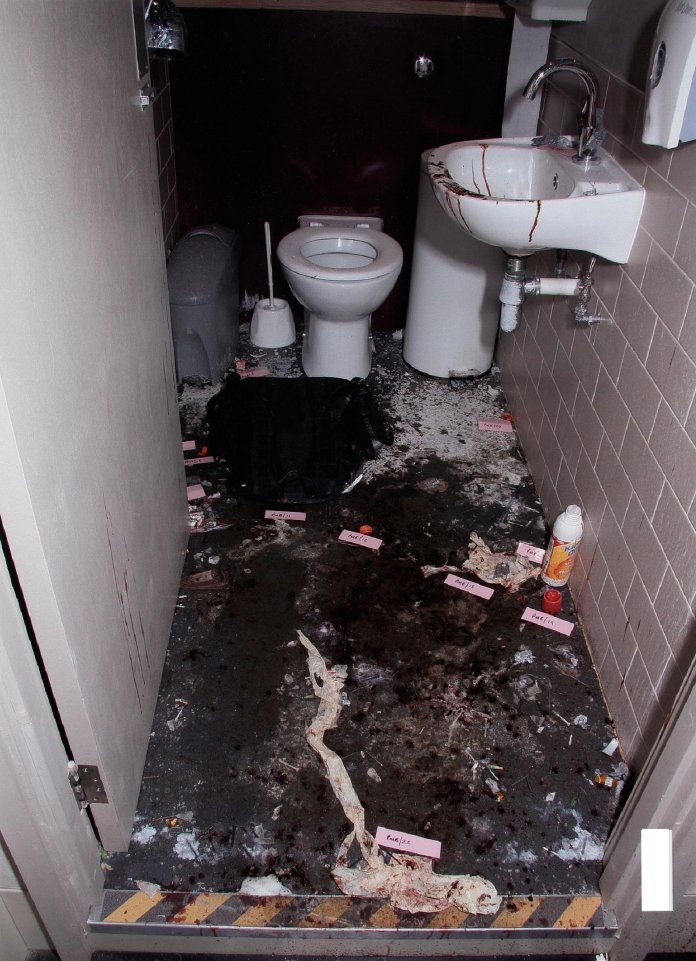
nintchdbpict000276182168Nicky Reilly, 30 (right), who was jailed for life after trying to blow himself up inside a crowded restaurant – Giraffe – in a failed suicide attack, has died in prison. Reilly converted to Islam in 2002, and in 2004, changed his name to Mohamed Rashid Saeed-Alim. He quickly became interested in violent Islamic jihad., and began to download videos on bomb-making and martyrdom.

UK Telegraph  In May 2008 he accidentally set off a home-made nail bomb in a toilet cubicle as he prepared to target dozens of innocent customers. Reilly, described as the “least cunning person ever to have been charged with terrorism”, injured only himself in the blast inside the Giraffe restaurant in Exeter.(Oopsie!)

Reilly seen on camera carrying the explosives inside the restaurant


He pleaded guilty to attempted murder and preparing an act of terrorism and was jailed for life with a minimum term of 18 years in 2009.

A Prison Service spokeswoman said: “HMP Manchester prisoner Mohamed Saeed-Alim died in custody on Wednesday October 19. “As with all deaths in custody, there will be an independent investigation by the Prisons and Probation Ombudsman.”

Reilly decided to carry out his attack on the restaurant after being encouraged by others on the internet. He had intended to run out into the packed dining area holding three bottles, filled with caustic soda, kerosene, and nails, to his stomach.

Inside the toilet where explosives went off

But he got stuck in the toilet as he prepared the blast, leaving one of the bottles to go off before he could leave the cubicle. The explosion sent dozens of restaurant customers fleeing in panic and the bomber staggered out suffering serious facial injuries.

Reilly was intent on becoming a martyr by killing himself and others and wrote: “That is my dream.” He considered bombing Plymouth’s Charles Cross police station and Drake Circus shopping centre as well as Devonport dockyard.

In a rambling suicide note written in red ink and left in his bedroom, Reilly described how he was motivated by the “disgusting” behaviour of people in Britain as well as the “war on Islam”. He also claimed he had not been “brainwashed or indoctrinated.” (Of course not, he was just following the teachings of the quran)

In custody after blast

KUWA MUISLAM NI KUJIFUNZA UCHAWI. SHEHE OMARI MNYISHANI

SOMO:AINA ZA UCHAWI KATIKA UISILAMU
i. Habize/Hepatoscopy(huu ni uchawi wa kutumia maini) Ezekiel21:21 Uchawi huu unakuwa hivi, mchawi anatuma kuku nyumbani kwako, huyo kuku anakuwa anasumbua sana anakula chakula nyumbani mwako anasumbua sana ukimfukuza anarudi, mwisho wake huyo mchawi anamchukua Yule kuku anamchinja na kusoma kwenye maini yake matukio yote yaliyokuwa yanaendelea nyumbani kwako kwa kutumia maini hayo. Yaweza kuwa mnyama yeyote sio lazima awe kuku, yaweza kuwa nguruwe, mbuzi au mnyama yeyote,
ii. Ngote/Hydromacy(huu ni uchawi wa maji) unarogwa kupitia maji; anaekuroga katika njia hii anaweka maji kwenye kitu chochote chaweza kuwa kikombe, dishi na kadharika, mchawi anamwita mtu anaemtaka harafu anatokea juu ya maji harafu anakuchoma kisu au ngumio au silaha yeyote mwishowake anakuuwa.
MWANZO44:5” je kikombe hicho sicho anyweacho bwana wangu? Nae hufanya uaguzi……” MWANZO44:15.
iii. Gagoo/Rhabdomancy (huu ni uchawi wa fimbo, gongo, mishale, mikuki} HOSEA 4:12 “watu wangu hutaka shauri kwa gongo lao na fimbo yao huwahubiri mambo….” Hizi ni ramri za gongo na fimbo au mishale, na kwa kutumia hivyo vitu anauwezo wa kusoma kila kitu katika mahali anapopita na kujua uzito wa watu wa eneo hilo na akishajua, atajua maneno gani achague ya kuongea na watu wake. Mwingine anapita na mkuki anachoma chini kama hatua kadhaa harafu anarudi nyumbani huku ananuizia maneno kuwa kila atakae kanyaga sehemu zile mkuki ulimopita basi mtagawana hela yeye mchawi na wewe; hii inakuwa hivi kama unahela unaenda dukani unanunua kitu kidogo ili uichenji ile hela harafu ukirudisha chenji mfukoni zinapotea, kama hauna hela basi unakufa. Uchawi wa fimbo na gongo huu unakuwa hivi mtu anatembea na fimbo akifika kwenye mtu mwenye hela ile fimbo inaongea harafu huyo mtu anadhurumiwa. EZEKIEL21:21, mfalme wa babeli ambayo leo hii inaitwa Iraq alisimama njia panda akatikisa mishale huko na huko, waganga wa kienyeji nao hutikisa mishale.kama ni hela isiyogawanyika basi kinachozidi kinazidi kwake; hii inamaana kuwa kama unamiambili hamsini basi mia hamsini itaenda kwake na mia itakuja kwako.
iv. Monka/Teraphim ( huu ni uchawi ambao hutumika kwenye vinyago ama vitu visivyo na uhai vinapewa uhai na kuweza kusogea kwa muda) yaani hii inamaanisha kuwa mchawi anaweza kuweka uchawi kwenye kitanda na kitanda kikatembea au kikakurusha na baadae kikarudi kwenye hari yake ya kuwa kitanda.
Au ukapita sehemu Fulani nguzo ya umeme inakuangukia au kinyago kinakuongelesha. ZEKARIA 10:2” kwa maana vinyago vimenena maneno ya ubatili….” EZEKIEL21:21”maana mfalme wa Babeli alisimama kwenye njia panda……”
v. Kerumo/astrology(nyota} ISAYA 47:13”umechoka kwa wingi wa mashauri yako….” Huu ni uchawi maarufu sana kwa kuwa uchawi huu huandikwa hata kwenye magazeti. YEREMIA 10:2. Waganga huwa wanaangalia kwenya anga pindi ifikapo jioni, anaweza akakuta wingu limekaa kama mkono basi hapo kuna tafsiri yake, au anaweza akatazama kwenye nyota akaona mwezi unaonekana katika muonekano gani basi hapo napo atapata maana Fulani. EZEKIEL21:22- uchawi huu mbaya sana kwasababu kama ni biashara atauza yeye jirani yake hatauza kabisa. Yaani mchawi anaweza akaroga mtaa mzima wakamfuata yeye tu, yaani biashara yake inaonekana ni nzuri sana.
Barikiwa sana

ALLAH NA WAISLAM HAWAJUI SAYANSI KUHUSU JUA


Ndugu msomaji:

Baadhi ya Waislam wanasema Kurani ina ukweli wa kisayansi kuhusu mizunguko ya jua, mwezi, (na nyakati nyingine sayari). Ninapenda kuchunguza jambo hili, na tutazunguka pande tofauti tofauti kabla ya kufikia uamuzi. Lakini jambo la msingi ni kuwa: isipokuwa Muislam awe ameziona hizi aya kama misemo ya kufananisha, aya hizi hazitakubali, hazithibitishi usahihi wa kisayansi wa Kurani.
Sura 36:37-40 inasema, "Na ishara yao ni usiku: Tulijitoa pale toka mchana, na tazama wakazamishwa kwenye giza; 38 na jua linafuata mkondo wake wa kawaida kwa muda liliopangiwa; hii ni amri yake (yeye), aliyeinuliwa kwenye nguvu, yeye ajuaye vyote. 39 Na mwezi-tumeupimia majumba makubwa (kupita toka upande mmoja hadi mwingine) hadi unabadilika kuwa kama sehemu ya chini ya kikonyo cha mtende kilichozeeka (na kunyauka). 40 Jua haliruhusiwi kuukuta mwezi na usiku hauwezi kwenda haraka hata kuupita mchana: Kila kimoja huelea tu kwenye mkondo wake wenyewe (kwa mujibu wa sheria)." (Tafsiri ya Yusuf Ali, toleo la kwanza) [Maneno yaliyo kwenye mabano yamo katika mabano kwenye tafsiri.]
Baadhi ya Waislam wanasema kuwa "jua hufuata njia yake kwa muda ambao limepangiwa" na neno "mkondo" likiwa limewekwa mwishoni. Hata hivyo, hatuwezi kusema vitu vingi sana kuhusu "mkondo" wa jua kwa sababu tafsiri ya Yusuf Ali ina rejeo (la 17) chini ya ukurasa linalohusiana na neno hili likisema "mzunguko, njia." Pia, toleo la Yusuf Ali lililofanyiwa marekebisho linasema "mahali pa kupumzika" badala ya "kipindi."
Ni kwa Jinsi Gani Baadhi ya Waislam Huitafsiri Kurani kwa Uhuru?
Tovuti ya Wasufi http://www.sufi.co.za/modern_science_and_islam.htmhupita kiwango ikisema
"Vitu hivi vyote dunia, mwezi na sayari zote na wakati wote hutembea kwenye mikondo (au mihimili) yake ni matufe yaeleayo" (Ansari)
Inaongeza maneno "(vyote hivi ni sayari)" na "(au mihimili yake)" kwenye mabano, kwa sababu hayamo kabisa kwenye Kiarabu. Hebu tuliache hili kwa kuwa ni tafsiri isiyo sahihi, na tujiulize "Sura 36:37-40 inafundisha nini hasa?" Inaweza kuwa moja ya vitu hivi vitatu:

Mikondo ya jua na mwezi: Kurani inafundisha kuwa jua na mwezi vilienda bila kupumzika kwenye njia/mikondo vikiizunguka dunia kwa kipindi maalum kilichopangwa.
Kuogelea kuelekea sehemu linaposimama: Jua huogelea kwenye mawingu wakati wa mchana, na huelekea sehemu linapopumzika usiku, na kurudi mahali pake lilipokuwa asubuhi iliyotangulia. Vivyo hivyo mwezi huogelea kwenye njia yake.
Misemo ya kufananisha: Kama sehemu iliyotangulia, ila hili limekusudiwa kama maelezo ya jinsi vitu vinavyoonekana kuwa, si jinsi vilivyo hasa.
Hebu Turudi kwenye Kiarabu

ALLAH SIO YEHOVA "YAHUH" ( يهوه ) MWENYEZI MUNGU (SEHEMU YA KUMI NA TATU)

Mbingu ya Yehova:
Luka 20:34-36
Yesu akawaambia wana wa ulimwengu huu huoa na kuolewa, lakini, wale wahesabiwao kuwa wamestahili kuupata ulimwengu ule. Na kule kufufuka katika wafu hawaoi wala hawaolewi. wala hawawezi kufa tena. Kwa sababu huwa sawa sawa na malaika, nao ni wana wa Mungu kwa vile walivyo wana wa ufufuo.
Maandiko haya yanatuthimbitishia Wakristo kuwa tutakapofufuliwa na kuingia mbinguni, hakuna mambo ya kuolewa wala kuoa, maana tutakuwa na miili ya kiroho (1 Korintho 15:43-54) Aidha maandiko yanatufundisha kuwa ufalme wa Mungu siyo kula wala kunywa bali ni haki na amani na furaha katika Roho Mtakatifu. (Tazama Warumi 14:17). Mungu wetu anafundisha wazi wazi kuwa kule mbinguni katika ufalme hakuna njaa, wala kiu wala jua kutupiga (Ufunuo 7:16-17.)
Pepo au Mbingu ya Allah itakuwa hivi:
i). Maghorofa
Qurani 39:20 Suratul Zumar (makundi/vikosi)
Lakini waliomcha mola wao watapata ghorofa zilizojengwa juu ya ghorofa chini (mbele) yake hupita mito. Ndiyo ahadi ya Mwenyenzi Mungu, Mwenyenzi Mungu havunji ahadi yake.
ii) mito ya maji, maziwa, ulevi, asali na matunda
Qurani 47:15 Suratul Muhammad
Mfano wa pepo waliyoahidiwa watawa (wacha Mungu itakuwa hivi). Imo mito ya maji yasiyovunda, na mito ya ulevi wenye ladha kwa wanywao na mito ya asali iliyosafishwa. Tena humo watapata matunda ya kila namna, na samahani kutoka kwa mola wao. Basi hao watakuwa sawa na wale wataokaa motoni na kunyweshwa maji yachemkayo yatakayokata chango zao?.
Je Matunda hayo ni sawa na ya wapi?
Qurani 2:25 Suratul Al- Baqarah (ngombe jike)
Na wabashirie walioamini na kufanya vitendo vizuri, kwamba watapata mabustani yapitayo mito mbele yake. Kila mara watakapopewa matunda humo kuwa ni chakula watasema “haya ndiyo yale tuliyopewa zamani (ulimwenguni) kwani wataletewa (matunda hayo) hali yatakuwa yamefanana (na yale waliyokuwa wakiyajuwa ulimwenguni wataletewa kwa sura hiyo lakini
utamu mwingine kabisa) na humo watapata wake waliotakasika (na kila mabaya na machafu) na watakaa milele humo.
iii). Watapata wanawake aina hizi na nyama za ndege
Qurani 56:15-23 Suratul Al Waaqiah (Tukio) nanukuu aya ya 21-23 tu
Na nyama za ndege kama watakavyotamani (wenyewe). Na wanawake wenye macho mazuri na makubwa (ya vikombe). (wanapendeza na safi) kana kwamba ni lulu zilizofichwa (katika machaza yake, ndio kwanza zinapasuliwa)
Qurani 37:48-49 Suratul As-Saaffat (Wapangao mistari)

NENO LA MUNGU LINASEMA NINI KUHUSU SABATO? (SEHEMU YA TATU)

Baada ya kusoma Sehemu ya Pili inayozungumzia Bwana Yesu Kuingia kwenye Sinagogi, sasa tuwaangalie Mafarisayo na nini walisema kuhusu Yesu Kristo.
Nitaanza na kuwalezea maana ya Mafarisayo. Je, Mafarisayo ni akina nani hasa? Mafarisayo waliunda madhehebu mojawapo ya Uyahudi ambayo wakati wa Yesu Kristo liliweza kufikia 5% ya Wayahudi wote, lakini lilikuwa na athari kubwa katika jamii yao, kutokana na sifa ya kuwa wanadini hasa. Jina lenyewe lina maana ya waliojitenga (na wakosefu) ili kushika kiaminifu masharti yote ya Torati ya Musa.
Mafarisayo wanajulikana hasa kutokana na Injili ambazo zinawataja kwa kawaida kama wapinzani wa Yesu, ingawa yeye alikuwa anakubaliana nao katika mafundisho mengi ya imani tofauti na yale ya Masadukayo, madhehebu nyingine kubwa iliyokuwa na wafuasi hasa kati ya makuhani.
Mafarisayo walianza mwishoni mwa karne ya 2 K.K. na kuendelea kustawi hadi mwaka 70 B.K. , ambapo Yerusalemu iliteketezwa na Warumi. Maangamizi ya hekalu yalivunja nguvu ya Masadukayo na kuwaachia Mafarisayo uongozi wa dini yao.

Mafarisayo ambao walikuwa WADINI au naweza kusema wenye siasa kali katika dini [utunzaji wa torati ya Musa], walimshitaki Yesu Kristo kwa Makuhani kwa kuwahusu wanafunzi wake wavunje sheria ya Musa ikiwa ni pamoja na kuvunja sabato (Marko 2:23-28). Ikimaanisha kuwa, mbele ya macho ya hawa Mafarisayo, Bwana Yesu na Wanafuzi wake walikuwa wanavunja Torati/Sabato. Je, Bwana Yesu aliwajibuje mashtaka ya hawa Mafarisayo? Hebu angali jinsi Yesu anavyo jibu kwa kutumia hekima! Bwana Yesu anawakumbusha Mafarisayo jinsi Mfalme Daudi alivyo vunja ya sheria.
Moja: Torati ya Musa inasema kuwa ni Makuhani pekee ndio walitakiwa kula mikate lakini tunamsoma Daudi akiingia ndani ya Hema na kuila Mikate, jambo ambalo ni kinyume cha Sheria ya Musa! Je, kwanini Yesu alifanya na au toa huu mfano wa Daudi kula Mikake? Katika mfano huu, tunajifunza kuwa Yesu anamtetea Daudi alipo kula Mkate ingawa alicho fanya Daudi kilivunja aya katika Hesabu 24: 5 mpaka 9.
Mbele ya Macho ya BWANA, uhai wa Mfalme Daudi alikuwa ni bora Zaidi kuliko kuto kula Mkate, ndio maana Yesu alisema, “Sabato ilifanyika kwa ajili ya mwanadamu, wala si mwanadamu kwa ajili ya sabato.” Kwa maneno hayo Bwana Yesu anaweka wazi kabisa kwamba sabato iliwekwa kwa ajili ya KUMTUMIKIA MWANADAMU na siyo iwe ‘bwana’ juu yake!
Hebu tumsome kwanza Yesu: Yesu alipomponya mtu ambaye alikuwa hawezi kwa muda wa miaka 38, alimwambia ‘jitwike godoro lako, uende.’ (Yohana 58). Hii ilikuwa ni siku ya sabato.
Lakini tunaona kwamba Wayahudi walipomwona mtu huyo walimwambia, Leo ni sabato, wala si halali kwako kujitwika godoro. (Yohana 5:10). Bila shaka walisema hivi kwa kuwa walifahamu fika jinsi sabato inavyotakiwa kutunzwa.
Hii ni kusema kwamba, kwa kadiri ya kanuni za utekelezaji wa sabato, hili lilikuwa ni kosa. Sasa, swali ni kwamba, kwa nini Yesu alivunja sabato kwa kumruhusu yule mtu abebe godoro?

Wayahudi walipomkasirikia Yesu kwa sababu ya kumruhusu yule mtu kubeba godoro siku ya sabato, Bwana Yesu aliwajibu kwamba: Baba yangu anatenda kazi hata sasa, nami ninatenda kazi. (Yohana 5:17). Haya ni maneno ya ajabu sana. Wewe uliye Mungu ulituambia kwamba siku ya sabato tusifanye kazi bali tupumzike; tumemwona mtu anafanya kazi ya kubeba godoro, tumekuja kwako, lakini wewe si tu kwamba hukumkemea, bali unasema tena kwamba na wewe unafanya kazi hata sasa (siku ya sabato)!
Kama sabato hasa ni kuacha kufanya kazi, iweje tena Yesu atamke jambo ambalo ni wazi kabisa linavunja sheria aliyoiweka mwenyewe ya kutofanya kazi; yaani aseme kuwa hata sasa yeye anafanya kazi?
Siku moja Yesu aliingia kwenye sinagogi ambamo mlikuwamo mwanamke mwenye pepo wa udhaifu. Yesu alimponya mama yule.
Hata hivyo, Biblia inasema: Basi mkuu wa sinagogi alikasirika kwa sababu Yesu amemponya mtu siku ya sabato, akajibu, akawaambia mkutano, Kuna siku sita zifaazo kufanya kazi, basi njoni mponywe katika siku hizo, wala si katika siku ya sabato. (Luka. 13:14).
Maneno haya ya mkuu wa sinagogi yanatuonyesha kwamba, jambo alilofanya Yesu lilikuwa ni kuvunja sabato. Swali ni lilelile, kwa nini Yesu alivunja sabato?
Umeona jinsi ambayo hata Mkuu wa Sinagogi anakasirika alipo mwona Yesu akimponya yule Mwanamke, sembuse Mafarisayo. Unapo msoma Yesu, ndio utapata msingi wa Injili ambayo Bwana wetu Yesu alikuja kutuonyesha au fanya. Hebu msome hapa: “Mwanawa Adamu ndiye Bwana wa sabato pia.” Hiyo sentesi inamaana gani? Hapo Yesu anatuonyesha kuwa mwenye mamlaka ya kuvunja Torati ni yule yule aliye ileta Torati. Mungu aliyetoa sharia kwa Musa kwa kupitia Torati yeye Mungu huyo huyo ndioa anaivunja na au mwenye uwezo wa kuivunja Torati – Yeye ndiye Bwana wa sabato! Na hivyo ndivyo Mwenyezi Mungu alivyofanya kupitia Yesu Kristo Mwanawe wa pekee. Ningependa uelewe kuwa, wakati wa Torati kulikuwa hakuna wokovu ambao tulio nao leo hii, hii inamaanisha kuwa TORATI HAINA UWEZO AU HAINA MAMLAKA YA KUOKOA. Torati ilitolewa kwa mkono wa Musa bali neema, kweli na wokovu zilikuja kwa mkono wa Yesu Kristo.
Sasa basi, tunapo zungumzia Sabato na tunapo ona watu leo hii wanapigania kuitunza Sabato, hawa watu au dini au Imani inafanya kosa lilelile ambalo Mafarisayo walifanya katika karne ya kwanza, yaani, wanafanya sabato kuwa ‘BWANA WAO’ na kwa njia hiyo hawamheshimu wala hawamjali Bwana Yesu ambaye ni ‘Bwana wa wote na Bwana wa Sabato’. Biblia inasema kuwa Yesu ni Bwana wa Mabwana. 1Timotheo 6:15 na Ufunuo 19:16.
Je, wewe unaye itunza Sabato, unaona ni haki kumkana Bwana wa Mabwana na kuisujudu siku na/au Kuifanya SABATO ni Bwana zaidi ya Yesu?

YESU KRISTO NI KUHANI MKUU:
Basi hata agano la kwanza lilikuwa na kawaida za ibada, na patakatifu pake, pa “kidunia.” (Waebrania9:1). Lakini “ile sharia haikukamilisha neno” (Waebrania 7:19). Kwa hiyo Mwana wa Mungu alikuja naye “kwa toleo moja amewakamilisha hata milele hao wanaotakaswa” (Waebrania 10:14). Basi, Kristo Yesu ni kuhani mkuu wetu sasa, na kwa hiyo, “ukuhani ule ukibadilika, hapana budi sheria nayo ibadilike.” (Waebrania 7:19).

Kumbe basi, ndio maana Mweyezi Mungu alifanya Agano Jipya kwa kupitia Mwane Yesu Kristo, “Kwa kule kusema Agano jipya, amelifanya lile la kwanza kuwa kuukuu. Lakini kitu kianzacho kuwa kikuukuu na kuchakaa ki karibu na kutoweka” (Waebrania 8:13). Agano la Kale lilijionyesha kuwa kuukuu Mungu amefanya Agano Jipya!
Kumbe basi lile agano na Musa ni Kukuu na ndio maana Mafarisayo na Masadukayo na Makuhani walio kuwa Yesu anavunja Torati. Sasa tunafahamu kuwa habari zote ndani ya gano la kale ni “KIVULI, Je, unaweza kula na au tegemea KIVULI? Je, unaweza kunywa kivuli? Je, unaweza kushika kivuli?
KUMBE SADAKA WAKATI WA AGANO LA KALE NI KAMA KIVULI? 
“…wako watoao sadaka kama iagizavyo sheria; watumikiao mfano na KIVULI cha mambo ya Mbinguni, kama Musa alivyoagizwa na Mungu, alipokuwa tayari kuifanya ile hema…” (Waebrania 8:4,5)

Umesha ona hapo kuwa, kumbe sadaka zote ambazo za ndani ya hema zilikuwa ni mifano ya kivuli tu cha mambo ya Mbinguni. Sasa unapata faida gani kutoa sadaka kivuli?
Kumbe basi mambo ya kiroho ni mambo ya Yesu Kristo. Kumbe basi mambo ya uzima wa milele ni mambo ya Kristo! Sasa kwanini unashika kivuli “SABATO” na kuachana na Yesu Kristo ambaye ni Bwana wa Sabato?
KUMBE TORATI ILIKUWA NI KIVULI CHA MEMA YAJAYO?

WHAT DOES THE WORD OF GOD SAY ABOUT THE SABBATH? (PART THREE)

 Friday, October 21, 2016

WHAT DOES THE WORD OF GOD SAY ABOUT THE SABBATH? (PART THREE)

After reading Part Two, which spoke about the Lord Jesus entering the synagogue, let us now look at the Pharisees and what they said about Jesus Christ.

I will begin by explaining the meaning of the Pharisees. Who really were the Pharisees? The Pharisees formed one of the sects of Judaism which, during the time of Jesus Christ, made up about 5% of all Jews, but they had a great influence in their society because of their reputation for being highly religious. The very name means “those who are separated (from sinners)” in order to faithfully keep all the requirements of the Law of Moses.

The Pharisees are especially known from the Gospels, which usually describe them as opponents of Jesus, although He agreed with them on many matters of faith, unlike the Sadducees, another large sect whose followers were mostly among the priests.

The Pharisees began toward the end of the 2nd century B.C. and continued to flourish until 70 A.D., when Jerusalem was destroyed by the Romans. The destruction of the temple broke the power of the Sadducees and left the Pharisees with leadership of their religion.

The Pharisees, who were RELIGIOUS zealots—or we could say radical in religion [observing the law of Moses]—accused Jesus Christ before the priests concerning His disciples breaking the law of Moses, including the breaking of the Sabbath (Mark 2:23–28). This meant that, in the eyes of the Pharisees, the Lord Jesus and His disciples were breaking the Law/Sabbath.

How did the Lord Jesus respond to the accusations of these Pharisees? Look at how wisely He answered! Jesus reminded the Pharisees how King David broke the law.

First: the Law of Moses says that only the priests were allowed to eat the consecrated bread. But we read that David entered the tabernacle and ate the bread—something that was contrary to the Law of Moses! Why then did Jesus use the example of David eating the bread? In this example, we learn that Jesus defended David when he ate the bread, even though what David did violated a command in Numbers 24:5–9.

Before the eyes of the LORD, the life of King David was more important than not eating the bread. That is why Jesus said, “The Sabbath was made for man, not man for the Sabbath.” With those words, the Lord Jesus made it very clear that the Sabbath was given to SERVE HUMANITY, not to be a ‘master’ over him!

Let us read about Jesus: When Jesus healed a man who had been an invalid for 38 years, He told him, “Take up your mat and walk.” (John 5:8). This was on the Sabbath day. But when the Jews saw this man, they said to him, “It is the Sabbath; it is not lawful for you to carry your mat.” (John 5:10). Clearly, they said this because they knew well how the Sabbath was supposed to be kept.

This means that, according to the rules of Sabbath observance, this was an offense. So the question is: Why did Jesus break the Sabbath by allowing that man to carry his mat?

When the Jews were angry with Jesus because He had allowed the man to carry his mat on the Sabbath, the Lord Jesus answered them, “My Father is working until now, and I too am working.” (John 5:17). These are astonishing words! You who are God told us that on the Sabbath day we should not work but rest; yet we saw a man working, carrying a mat. We came to You, but not only did You fail to rebuke him, You even said that You too are working until now (on the Sabbath)!

If the Sabbath truly means ceasing from work, how could Jesus declare something so obviously in violation of the very law He Himself had given, saying that He was also working even on the Sabbath?

One day Jesus entered a synagogue where there was a woman with a spirit of infirmity. Jesus healed her. Yet Scripture says: “The ruler of the synagogue was indignant because Jesus had healed on the Sabbath. He said to the people, ‘There are six days for work. So come and be healed on those days, not on the Sabbath.’” (Luke 13:14).

These words of the synagogue ruler show us that what Jesus did was considered breaking the Sabbath. The same question arises: Why did Jesus break the Sabbath?

You can see how even the synagogue ruler was upset when he saw Jesus heal the woman—how much more the Pharisees! When you read about Jesus, you find the foundation of the Gospel which our Lord Jesus came to reveal. Listen: “The Son of Man is Lord even of the Sabbath.” What does that sentence mean? Here Jesus is showing us that the One who has authority to break the Law is the very same One who gave the Law. The God who gave the Law to Moses through the Torah is the same God who can break it—He is the Lord of the Sabbath! And this is exactly what Almighty God did through His only begotten Son, Jesus Christ.

Understand this: in the time of the Law there was no salvation like we have today. This means that THE LAW HAS NO POWER NOR AUTHORITY TO SAVE. The Law was given through Moses, but grace, truth, and salvation came through Jesus Christ.

So, when we talk about the Sabbath and see people today fighting to observe it, these people, religions, or beliefs are making the very same mistake that the Pharisees made in the first century: they are making the Sabbath their ‘LORD’ and in doing so, they dishonor and disregard the Lord Jesus, who is ‘Lord of all and Lord of the Sabbath.’ The Bible says that Jesus is King of kings and Lord of lords (1 Timothy 6:15; Revelation 19:16).

You who keep the Sabbath—do you think it is right to deny the Lord of lords and bow to a day, making the Sabbath greater than Jesus?

Now let us carefully look at the foundation of the Sabbath in the Bible. We read from Hebrews 8:6:
“But in fact the ministry Jesus has received is as superior to theirs as the covenant of which He is mediator is superior to the old one, since the new covenant is established on better promises.”

Here the Bible clearly tells us that the new covenant is superior to the old covenant.

But what do those who keep the Sabbath say? They claim that the Sabbath is not of the Law but existed before the Law was given to Moses. Therefore, they insist that the Sabbath is still to be kept. This is not true. Let us continue.

The Bible says that the Law and its ordinances were only shadows:
“These are a shadow of the things that were to come; the reality, however, is found in Christ.” (Colossians 2:17).

Again, let us read: “The law is only a shadow of the good things that are coming—not the realities themselves. For this reason it can never, by the same sacrifices repeated endlessly year after year, make perfect those who draw near to worship.” (Hebrews 10:1).

Listen to me, reader! If the Law was only a shadow, then the Sabbath, being part of the Law, was also just a shadow of Christ. Now the reality, the substance, is in Christ.

This is why the Bible says: “For the law was given through Moses; grace and truth came through Jesus Christ.” (John 1:17).

This means that the Law, including the Sabbath, was fulfilled in Christ Jesus. He is the true rest for humanity.

Therefore, whoever continues to fight to keep the Sabbath has not understood the Gospel and is still bound by the shadow of the Law instead of embracing the reality, which is Jesus Christ.

We must know that salvation is not in a day but in a person — Jesus Christ the Lord.

So, when you read and see some people argue about the Sabbath, claiming that it is eternal, remember that these are the same arguments made by the Pharisees in the days of Jesus, and He rebuked them.

The Sabbath pointed to Christ, and Christ Himself said: “Come to Me, all you who labor and are heavy laden, and I will give you rest.” (Matthew 11:28).

Therefore, the rest (Sabbath) for a Christian is not in keeping Saturday or Sunday, but in entering into Christ Himself. He is our rest, our Sabbath.

Thursday, October 20, 2016

Rescued baby elephant rescues her rescuer, whom she thought was drowning


The rescuer wasn’t drowning and didn’t need help but it’s heartwarming to know that elephants understand and reciprocate human kindness.

The reason for this post is to serve as a reminder of what Muslim poachers do to elephants as a means of funding terrorism: ELEPHANT JIHAD: Muslim savages funding terrorism by poaching elephants

HOT DOGS in Muslim-majority Malaysia set for name change because “dogs” are offensive and considered filthy by Muslims


058fd1b73c13c17e191b55c938f1c347From the ‘You Can’t Make This Stuff Up’ file, food outlets in Muslim-majority Malaysia must rename hotdogs or risk being refused ‘halal’ certification. The ruling, which also includes other food items whose name includes the word ‘dog’ has garnered much ridicule on social media. “In Islam, dogs are considered unclean (‘haram’) and the name cannot be related to halal certification.”

unnamed

Breitbart  It follows complaints by Muslim tourists from overseas, said Sirajuddin Suhaimee, director of the halal division from the Department of Islamic Development. “Any (halal) products that make consumers confused, we have to change,” he said.

Numerous street vendors and halal restaurants sell hotdogs in Malaysia. Sirajuddin said checks would be made “step-by-step” when these outlets renew their two-year halal certification with the department.

US pretzel chain Aunty Anne’s, which has 45 outlets in Malaysia with plans to expand further, told AFP it has no qualms about renaming its pretzel dogs — sausages wrapped with pretzels — following advice from religious authorities.

aw-root-beer

Sirajuddin, who recommended pretzel dogs be called pretzel sausages, said Aunty Anne’s halal certification application is currently being considered.

NENO LA MUNGU LINASEMA NINI KUHUSU SABATO? (SEHEMU YA PILI)

Kwanini Bwana Yesu aliingia kwenye Sinagogi siku ya Jumamosi “SABATO”?
Kabla sijaanza kuelezea kwanini Yesu aliingia Sinagogi, ni vyema tukafahamu angalau kiufupi maana ya Sinagogi.
Sinagogi ni nyumba ya dini na ya jamii ya Wayahudi inayotumika hasa kusali. Jina hili Sinagogi linatokana na neno la Kigiriki συναγωγή sinagoge, likimaanisha "mkutano"; ni tafsiri ya neno la Kiebrania בית כנסת beit knesset, yaani "nyumba ya mkutano".
Wayahudi hutumia pia neno la Kiyiddish "shul" (=shule) kutajia sinagogi.

Sasa basi, baada ya kulewa maana ya Sinagogi, huto shangaa kuwa Wayahudi ndio watumiaji wa hayo Masinagogi na waliingia siku ya Saba “Sabato” kusali au kusoma “Shule” kama ambavyo neno hili hutamkwa katika Kiyiddish.
Hivyo, basi, haikuwa jambo la ajabu au kustaabisha tunapo soma kuwa Bwana Yesu aliingia ndani ya Masinagogi ili awafundishe Wayahudi kuhusu Ufalme wa Mbinguni. "Luka 4:16. alipokwenda Hapo Alipozaliwa Nazaret alipozaliwa na Siku ya Sabato(jumamosi) alikwenda katk#Sinagogi kama Ilivyokuwa Desturi Yake. Akasimama ili asome 17. akapewa kitabu cha nabii isaya akafunua mahali palipo andikwa "#Roho_wa_Bwana yuu Juu Yangu. Amenipaka mafuta Kuhubiriia maskini Habari njema "
Basi Wasabato wanapo soma hiyo aya teyari wanasema kuwa Yesu aliitunza Sabato kwasababu aliingia Sinagogi siku ya Saba ya Juma = Jumamosi. Haya madai hayana nguvu yeyote ile bali ni madai dhaifu. Kuingia Sinagogi siku ya Jumamosi hakukufanyi na au hakumfanyi mtu kuwa Msabato.
HILI DAI LA KUINGIA SINAGOGI naweza kulifananisha na dai la Waislam kuwa, eti, Yesu aliingia Sinagogi na hivyo Yesu ni Muislam. Waislam wao wana hoja ya kuwa Sinagogi ni Msikiti, basi ukiingia kwenye Sinagogi basi wewe ni Muislam HUKU WASABATO wana hoja ya kuwa Yesu kaingia SINAGOGI SIKU YA JUMAMOSI, basi Yesu ni Msabato. HOJA ZOTE MBILI ZA WAISLAM NA WASABATO NI DHAIFU.
Wakristo wa mwanzo hawakutumia Sinagogi katika ibada zao ndio maana Bwana wetu Yesu Kristo alisema hivi: Kwa mfano, baada ya kumtakasa mtu yule aliyejaa ukoma, Yesu alimwambia, “Asimwambie mtu, ila, Nenda ukajionyeshe kwa kuhani; ukatoe kwa ajili ya kutakasika kwako kama Musa alivyoamuru, iwe ushuhuda kwao.” (Luka 5:14). Haya maneno yanaashiria kuwa Yesu alipo fanya huu muujiza hakuwa kwenye Sinagogi na ndio maana alimwambia Nenda ukajionyeshe kwa kuhani; ukatoe kwa ajili ya kutakasika kwako kama Musa alivyoamuru, iwe ushuhuda kwao.” (Luka 5:14).
Hiki ni kipindi ambacho ni cha kiimani zaidi. Kimsingi hiki ni kipindi ambacho kinaendelea hadi sasa. Huu ni wakati wa kupumzika kazi za mwili za uovu, yaani kuacha dhambi na kuishi kwa kumtegemea Kristo. Ni maisha ya imani.
Imeandikwa: Njoni kwangu ninyi nyote wenye kulemewa na mizigo nami nitawapumzisha. (Matayo 11.28), yaani, nitawapa ‘sabato’. Pia ndiyo maana ya andiko lisemalo: Kwa maana Mwana wa Adamu ndiye Bwana wa Sabato. (Matayo 12:8). Sabato iko kwake, si kwenye siku.


Ni maisha ya kujiachia mikononi mwa Mungu ambaye yeye ndiye anayeshughulikia kila kitu katika maisha yetu. Kazi yetu ni kuamini tu kuwa atafanya; naye hakika anafanya. Hilo ndilo pumziko! Hiyo ndiyo raha! Hiyo ndiyo starehe! Hiyo ndiyo Sabato!

SABATO SI SIKU

Ancient Jewish Wedding Ceremony: “No man knows the day or hour, only the Father”

  The Ancient Jewish Marriage Rite: A Detailed Exposition of Betrothal, Preparation, and Consummation Dr. Maxwell Shimba Shimba Theological ...

TRENDING NOW