
I am a wide-eyed, sanctified, blood-bought, Spirit-taught, Bible-totin', Scripture-quotin', Satan-blastin', sin-trashin', Christ-followin' Pride-swallowin', hard-praying', truth-conveyin', faith-walking, gospel-talkin', bonafide big-time believer! And proud of it
Sunday, June 24, 2018

Muslims Are Turning to Christianity in Iran!

See how Muslims in Iran are tiring of Islam and are turning to Christianity!!
https://www.youtube.com/watch?time_continue=3&v=bD2hWtb7MTc
Saturday, June 23, 2018
Kaká: “Without Jesus, I can’t do anything.”

Lying in bed for two months with a broken neck, 18-year-old Ricardo Izecson dos Santos Leite made a list of 10 goals. These were audacious dreams even for a boy raised on the soccer mania of Brazil – especially one who had needed a medical program to spur his stunted growth and who was yet to crack the starting lineup of the junior squad of São Paulo Football Club. The list began with “Return to soccer” and scaled upward to finish with “Compete in the World Cup” and “Transfer to a big club in Italy or Germany.”
In January 2001 about two weeks after returning to soccer he was called up to São Paulo’s professional team. Brazil had met Kaká. (The nickname, pronounced Ka-kah’, came when his older brother couldn’t pronounce his name.) He claimed his starting spot for São Paulo and within two years could cross off the entire list of goals, including playing for Brazil’s 2002 World Cup champions. By 2007 Kaká stood at the apex of world soccer, sweeping its highest individual honors: the FIFPro World Player of the Year, the Ballon d’Or for best in the world and the FIFA World Player of the Year.
“It may seem that I have everything,” he says. “Due to my wealth and fame, some people ask why or if I still need Jesus. The answer is simple: I need Jesus every day of my life. His Word, the Bible, tells me that without Him, I can’t do anything. I really believe that. The ability I have to play football and all that has resulted from it are gifts from God. He has given me a talent to use for Him, and I try to improve on it every day.”
Kaká’s star shot into the stratosphere in soccer-mad Brazil following his breakout game. The press couldn’t get enough of him. After the initial shock, Kaká developed a warm accessibility with the press and fans, but he avoided the limelight and temptations of the nightclubs. His family and faith were his anchor.
“Many people think that I became a Christian after the accident, but that is not true,” Kaká says. “My parents always taught me the Bible and its values, and also about Jesus Christ and faith.”
Being baptized at 12 was an important milestone for Kaká and one that had a profound effect on his young spiritual life. “Little by little, I stopped simply hearing people talk about the Jesus my parents taught me,” he says. “There came a time when I wanted to live my own experiences with God.”
There’s a common saying about soccer: “England invented it. The Brazilians perfected it.” The Brazilian game is generally an artful, rhythmic flow marked by skillful dribbling and unexpected passing. The nation brought joga bonita, the beautiful game, to the world and holds more World Cup championships, five, than any other country.
European soccer is generally considered more physical and tactical than the South American game, but the 6-foot, 1-inch, 180-pound Kaká adapted instantly. His first season he earned a starting role.
Most media have shown respect for Kaká’s faith and praised his sportsmanship. His consistency and graciousness matched with his stellar play make it difficult to do otherwise. Yet when some have suggested that his lifestyle is boring, Kaká has countered that it is radical to follow Christ. As Kaká continues to pursue new goals, he leaves little doubt that he is all about Jesus.
“Today, I have my ministry through sports, but I play because I have a God-given gift,” he says. “I play because He has perfected the gift He gave me in my life. Jesus said ‘without me, you can do nothing’ and I believe this.”
In January 2001 about two weeks after returning to soccer he was called up to São Paulo’s professional team. Brazil had met Kaká. (The nickname, pronounced Ka-kah’, came when his older brother couldn’t pronounce his name.) He claimed his starting spot for São Paulo and within two years could cross off the entire list of goals, including playing for Brazil’s 2002 World Cup champions. By 2007 Kaká stood at the apex of world soccer, sweeping its highest individual honors: the FIFPro World Player of the Year, the Ballon d’Or for best in the world and the FIFA World Player of the Year.
“It may seem that I have everything,” he says. “Due to my wealth and fame, some people ask why or if I still need Jesus. The answer is simple: I need Jesus every day of my life. His Word, the Bible, tells me that without Him, I can’t do anything. I really believe that. The ability I have to play football and all that has resulted from it are gifts from God. He has given me a talent to use for Him, and I try to improve on it every day.”
Kaká’s star shot into the stratosphere in soccer-mad Brazil following his breakout game. The press couldn’t get enough of him. After the initial shock, Kaká developed a warm accessibility with the press and fans, but he avoided the limelight and temptations of the nightclubs. His family and faith were his anchor.
“Many people think that I became a Christian after the accident, but that is not true,” Kaká says. “My parents always taught me the Bible and its values, and also about Jesus Christ and faith.”
Being baptized at 12 was an important milestone for Kaká and one that had a profound effect on his young spiritual life. “Little by little, I stopped simply hearing people talk about the Jesus my parents taught me,” he says. “There came a time when I wanted to live my own experiences with God.”
There’s a common saying about soccer: “England invented it. The Brazilians perfected it.” The Brazilian game is generally an artful, rhythmic flow marked by skillful dribbling and unexpected passing. The nation brought joga bonita, the beautiful game, to the world and holds more World Cup championships, five, than any other country.
European soccer is generally considered more physical and tactical than the South American game, but the 6-foot, 1-inch, 180-pound Kaká adapted instantly. His first season he earned a starting role.
Most media have shown respect for Kaká’s faith and praised his sportsmanship. His consistency and graciousness matched with his stellar play make it difficult to do otherwise. Yet when some have suggested that his lifestyle is boring, Kaká has countered that it is radical to follow Christ. As Kaká continues to pursue new goals, he leaves little doubt that he is all about Jesus.
“Today, I have my ministry through sports, but I play because I have a God-given gift,” he says. “I play because He has perfected the gift He gave me in my life. Jesus said ‘without me, you can do nothing’ and I believe this.”
Daniel Sturridge

Daniel Sturridge
His life of faith: The England and Liverpool forward is very vocal about his faith and is well known for his tweets quoting scripture, most noticeably, Phillippians 4:13. He recently spoke openly about his faith in an article where he was compared with his England strike partner Rooney, for having an easy ride in being able to express his beliefs.
NEYMAR

Neymar
His life of faith: The 22 year old revelation famously said that "Life only makes sense when our highest ideal is to serve Christ". Known for his magical feet on the pitch, off it he is described as a humble individual who tithes 10% of his mega salary to his home Church in Brazil.
WANAUME WA KIISLAM WAMERUHUSIWA KUJICHUA TUPU ZAO

SALAAAALEEEEE
WANAUME WA KIISLAM WAMERUHUSIWA KUJICHUA TUPU ZAO
SOMA MWENYE BANDIKO HAPA, NA LINGANISHA NA KITABU CHAO.
Ama mwanamme yeye anaweza akatoboa TIKITI "Water melon" au akaponda unga mbichi au ngozi akaweka katika sanamu (la mtu) au kwenye PAJA akaingiza uchi wake!! Na Ibnul Qayyim anasema (na kufanya hivi ni afadhali kuliko punyeto ya mkono wake mwenyewe)
KWA WANAWAKE WAMERUHUSIWA KUTUMIA MATANGO. MSIBAAAA
“And if a woman had no husband and her temptation grew stronger, it is said by some of our companions that it is permissible for her to behold a ‘Akrabanj’ (which is made of leather) for her to use, or the use of cucumbers or small percussion or what is similar to that.” [Bada’i Al-Fuwa’id 4/96-97]
SUNNI ‘ULAMA HAVE RULED ON PERMISSIBILITY OF HAVING SEX WITH WATERMELONS
That was not a typographical error. Ibn Qayyim continues this discussion, which exemplifies the morals espoused by Sunni Islam:
“If a man makes a hole in a watermelon, or a piece of dough, or a leather skin, or a statue, and has sex with it, then this is the same as what we have said about other types of masturbation [i.e., that it is halaal in the same circumstances given before, such as being on a journey]. In fact, it is easier than masturbating with one’s hand”.
No. 13588: ath-Thawri, from Ma’mar, from al-A’mash from Abi Ruzayn (Mas’ood bin Maalik, thiqah), from Abi Yahya (mastoor)[4], from Ibn ‘Abbaas that a man said to him, “I fondle with my penis until I ejaculate”. He replied: “Having sex with a slave-girl is better than it, and it is better than zinaa”.
No. 13593: Ibn Jurayj informed us, Ibraaheem bin Abi Bakr (al-Akhnasi, mastoor) informed me that Mujaahid said: “Those from our predecessors used to command their young to masturbate, and the woman as well to enter something (in her).” We said to ‘Abdurazzaaq: “What’s ‘to enter something’ mean?” He (‘Abdurazzaaq) said: “He means a sihq[7]” Mujaahid says: “To keep her from zinaa”. This athar has a mastoor who was not followed (in narration) by others. It is thus, an unauthentic isnaad. In any case however, it is a constrained permissibility, Mujaahid constrained it to permissibility only if one fears zinaa (if one were to assume the narration is authentic).
No. 13587: ath-Thawri narrated from ‘Abdullah bin ‘Uthmaan (bin Khaytham, jayyid), from Mujaahid who said: Ibn ‘Umar was asked concerning it, so he said: “It is having sex with oneself”. This is a jayyid (good)
Tunapo sema hii sio dini ya Mwenyezi Mungu huwa hatubahatishi.
Shalom
WANAWAKE WA KIISLAM WAMERUHUSIWA KUTUMIA MATANGO KUJICHUA TUPU ZAO

MSIBAAA HUU HAPAAA
WANAWAKE WA KIISLAM WAMERUHUSIWA KUTUMIA MATANGO KUJICHUA TUPU ZAO
WALAH HII SIO DINI BALI NI MSIBA TUPU.
Mwanamke asiye na mume au aliye katika majaribu makali, ilisimuliwa na maswahaba kuwa ameruhusiwa kutumia "AKRABANJ" uume bandia ulio tengenezwa kwa ngozi, au atumie Tango kujichua tupu yake. [Bada’i Al-Fuwa’id 4/96-97]
“And if a woman had no husband and her temptation grew stronger, it is said by some of our companions that it is permissible for her to behold a ‘Akrabanj’ (which is made of leather) for her to use, or the use of cucumbers or small percussion or what is similar to that.” [Bada’i Al-Fuwa’id 4/96-97]
NDIO MAANA TUNAPOSEMA UISLAM NI DINI YA JEHANNAM HUWA HATUBAHATISHI.
No. 13588: ath-Thawri, from Ma’mar, from al-A’mash from Abi Ruzayn (Mas’ood bin Maalik, thiqah), from Abi Yahya (mastoor)[4], from Ibn ‘Abbaas that a man said to him, “I fondle with my penis until I ejaculate”. He replied: “Having sex with a slave-girl is better than it, and it is better than zinaa”.
No. 13593: Ibn Jurayj informed us, Ibraaheem bin Abi Bakr (al-Akhnasi, mastoor) informed me that Mujaahid said: “Those from our predecessors used to command their young to masturbate, and the woman as well to enter something (in her).” We said to ‘Abdurazzaaq: “What’s ‘to enter something’ mean?” He (‘Abdurazzaaq) said: “He means a sihq[7]” Mujaahid says: “To keep her from zinaa”. This athar has a mastoor who was not followed (in narration) by others. It is thus, an unauthentic isnaad. In any case however, it is a constrained permissibility, Mujaahid constrained it to permissibility only if one fears zinaa (if one were to assume the narration is authentic).
No. 13587: ath-Thawri narrated from ‘Abdullah bin ‘Uthmaan (bin Khaytham, jayyid), from Mujaahid who said: Ibn ‘Umar was asked concerning it, so he said: “It is having sex with oneself”. This is a jayyid (good)
Friday, June 22, 2018
MUHAMMAD (P.B.U.H) OF ISLAM KNEW JESUS WAS CRUCIFIED..

In one the authentic tradition in Islam, speaks about the Prophet who was crucified by his people and forgave them.
It reads, “Narrated ibin Mas’ud (r.a): As if I saw the Prophet (p.b.u.h) talking about one of the prophets whose nation had beaten him and caused him to bleed, while he was cleaning the blood off his face and saying, “ O Allah! Forgive my nation, for they have no knowledge.”
(SAHIH AL, BUKHARI, VOLUME 4, HADITH NO. 683)
None other than Jesus spoke those words at the Cross when he was crucified..
We read, "When they came to the place called the Skull, they crucified him there, along with the criminals—one on his right, the other on his left. 34 Jesus said, “Father, forgive them, for they do not know what they are doing.” (Luke 23:33-34 (NIV)
Muhammad was talking about the story of Jesus not like what the Quran denies about it.
The decision of believing in Jesus is upon every Muslims’ shoulder. Jesus is Alive! Hallelujah!
How Muslim Mobs Attack Christian Churches in Egypt with Impunity
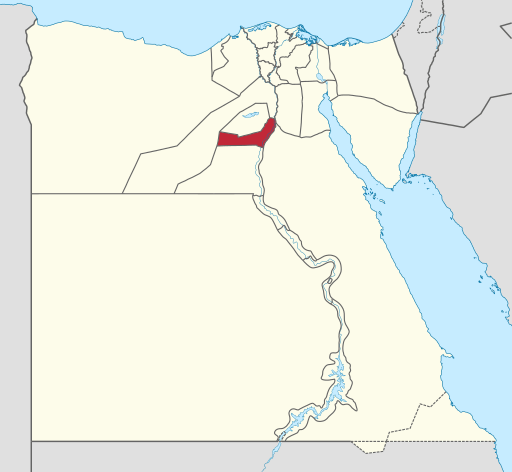
(Morning Star News) – Christians coerced into an out-of-court settlement following an Islamist attack on a church building in Egypt recently saw the usual outcome – a closed church – a practice that has long oppressed Christians, according to Middle East observers.
Members of an armed Muslim mob that attacked a church building in Meinin village, Beni Suef Governorate, in April were acquitted on May 22 of mobbing, fighting and possession of unlicensed firearms based on a “conciliation” settlement calling for the church site to close.
Nine Christians were arrested – with five held illegally for a month – and charged with failing to have a church building license in a country where officials are slow to approve licenses if at all, Middle East specialist Raymond Ibrahim noted on his website. The State Security Court handed the nine Christians and 11 Muslims one-year suspended sentences, essentially acquitting them based on the out-of-court settlement.
Coptic villagers told Watani newspaper that authorities had recently visited the site in preparation for legalizing the church building, prompting the attack.
Obtaining or constructing a church building in Egypt was nearly impossible before a 2016 Law for Building Churches, and the Meinin church of the Holy Virgin and Pope Kyrillos had applied for legalization under the law – which stipulates that no church that has submitted its application to officials shall be closed, according to Watani.
Muslim attacks on church buildings create the threat of sectarian conflict that then serves as the pretext for closing them, Ibrahim notes.
“Authorities tell Christian leaders things like, ‘Yes, we understand the situation and your innocence, but the only way to create calm in the village is for X [the offending Christian and extended family, all of whom may have been beaten] to leave the village – just for now, until things calm down,’” Ibrahim wrote in a previous article. “Or, ‘Yes, we understand you need a church, but as you can see, the situation is volatile right now, so, for the time being, maybe you can walk to the church in the next town six miles away – you know, until things die down.”
Should the Christians refuse and demand their rights as citizens against the assailants, authorities smile and say “Okay,” he states.
“Then they go through the village making arrests – except that most of those whom they arrest are Christian youths,” he writes. “Then they tell the Christian leaders, ‘Well, we’ve made the arrests. But just as you say so-and-so [Muslim] was involved, there are even more witnesses [Muslims] who insist your own [Christian] youths were the ones who began the violence. So, we can either arrest and prosecute them, or you can rethink our offer about having a reconciliation meeting.”
The dejected Christians see no alternative but to comply, or else their young men will go to prison and be tortured, Ibrahim notes.
Islamist assailants are further emboldened to attack the next church about to be legalized, he adds.
In the Beni Suef attack, five Coptic Christians illegally held without charge for a month were released on May 21. One of them, Farag Sehata, lost his job due to the detention, his brother told Watani. Sehata was unable to provide proof to his employers that he was in police custody because, not wanting to admit holding him illegally, officers refused to give it to him.
The Meinin village church had used its now-shuttered building for about 10 years, according to Watani. It is one of 3,370 churches that Samuel Tadros, a senior fellow at the Hudson Institute’s Center for Religious Freedom, said have applied for licenses. Earlier this year the government announced the legalization of 53 church buildings under the new law, all constructed before the 2016 church building law went into effect.
Delta Church Attack
Another church that applied for legalization under the new law was attacked by Muslims who feared it was about to be legalized, according to Watani.
Muslims at a mosque in Al-Shuqaf, near Housh Eissa in the west Delta governorate of Beheira, on May 26 reportedly used mosque microphones to call on villagers to attack the church.
“The mob also pelted the Coptic villagers’ houses with stones, damaged the priest’s car, and set on fire a motorbike that was parked in front of the church,” Watani reported. “Seven Copts suffered slight injuries. The Coptic villagers claim that the nine Copts who were arrested had been caught randomly in what has now become common practice by the police in order to pressure the Copts into ‘conciliation,’ so that no legal action would be taken against the Muslim culprits in exchange for setting free the Coptic detainees and ensuring a swift end to hostilities.”
With the intervention of local political and security officials, the Coptic Christians and Muslims forged an agreement allowing the church building to remain in use if charges were dropped against the assailants, according to Watani.
The church is among those that have applied for legalization under the 2016 law, which eases building and restoration restrictions for the first time in centuries.
Egypt was ranked 17th on Christian support organization Open Doors’ 2018 World Watch List of the countries where it is most difficult to be a Christian.
Source Morning Star News
Christians Arrested at Wedding Site on ‘Forcible Conversion’ Charge in India, Relatives Say
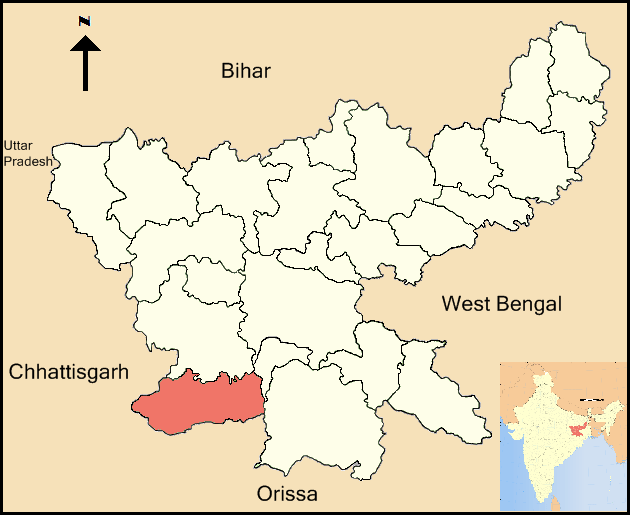 HYDERABAD, India (Morning Star News) – Two weeks ago a Christian couple in eastern India was about to get married, not knowing the bride’s father had filed a false complaint of forcible conversion against them, relatives said.
As they were preparing for the wedding on May 28, police in Jharkhand state arrived at the site of the ceremony and arrested the bride and groom, along with pastor Sudarshan Manjhi, who was to officiate, and a Christian woman invited to attend, they said.
In his complaint, the bride’s father, Somaru Manjhi, alleged that Christians beat him and threatened to kill him if he did not convert to Christianity, allegations which his 18-year-old daughter, Tripti, said were false.
Bolba police in Simdega District registered a First Information Report on May 30, charging the Christians with forcible conversion under Jharkhand state’s new anti-conversion act.
“My father was drugged with alcohol that day, and the Sarna tribals, including the village president, abetted him to submit the false complaint in the police station pending the wedding so there won’t be a Christian wedding in the village,” Tripti told Morning Star News.
“He [Somaru Manjhi] is now repentant for what he has done, but it is too late.”
Everybody in her family of six (four children) put their faith in Christ except her father, she said. Her sister, Sumanti Kumari, the bride, was baptized in 2012 and could never think of marrying a non-Christian in the Sarna tradition, Tripti said.
Though her father wanted Sumanti Kumari to marry a tribal Sarna, she refused, and the rest of the family supported her, Tripti said. Her marriage to 28-year-old Rupesh Manjhi was decided after discussions with elders in the family and church in the presence of Pastor Manjhi, she said.
The pastor’s wife, Biyari Devi, told Morning Star News that the wedding was decided according to the bride and groom’s wishes.
“They both come from Sarna families but have accepted Christ, and it is obvious that they would want a holy matrimony,” Devi said. “Somaru Manjhi is my uncle also in relation. He has always been against Christ and the church since the house church was established in 2008. But he never became violent or aggressive with us until the question was about his daughter’s marriage.”
Rupesh Manjhi, the groom, was ostracized by his family after he came to Christ, Devi told Morning Star News.
Tripti said her family has been pleading with her father to drop the charges.
“We have been pleading with my father to testify in the court that he was instigated by the Sarnas, and that the allegations are false,” she said. “My younger brother and I keep asking him, ‘How can you go against your own daughter? She is in jail because of you. Why are you doing this?’”
Her father responded that he had filed the complaint on the command of the village president and elders, and that he would ask them for help to free only his daughter, Tripti said. Completely in their control, he had only signed the complaint they wrote, she said.
“They have used him to falsely frame the pastor and the couple,” Tripti told Morning Star News.
An attorney representing the Christians told Morning Star News that a family dispute has turned into a nonbailable offense by the “draconian” anti-conversion act.
“The fact that an irrelevant law has been pulled in needlessly in a family dispute that could have simply arisen from difference of opinions between the members is unfortunate and must be condemned,” the attorney said on the condition of anonymity. “It is very unfortunate police registered the FIR without enquiring or verifying into the matter under a law that contains harsh provisions.”
A bail petition was rejected by the chief judicial magistrate. The attorney said a decision on another bail petition before the district sessions judge is awaited.
“They are just a young couple who wanted to be married, and two other people, the pastor and a female believer who were present at the venue, also have been arrested,” the attorney said.
Section 4 of the Jharkhand’s anti-conversion law, ironically titled a “Freedom of Religion Act,” punishes a person guilty of forcible conversion of a minor, woman or a person belonging to Scheduled Castes and Scheduled Tribes by imprisonment of four years and fine up to 100,000 rupees (US$1,480).
In 2017, six Christians from a Simdega village were falsely charged with hurting religious beliefsafter the villagers attacked them for praying for a sick woman.
11 Christians Arrested
In neighboring West Singhbum District, 11 Christians in Mohanpur have been charged with forcible conversion, including a politician who ran in state Legislative Assembly elections in 2014.
Indrajeet Samad, 53, leader of Adivasi Ho Samaj Mahasabha Prakhand Samiti, a movement launched by indigenous tribes, submitted a complaint to Mohanpur police against the Christians, sources said.
Samad alleged that the Christians who visit his village often entice tribal people with money in order to convert them to Christianity. The May 12 complaint, translated from Hindi, accuses Christians Ajay Champiya, as well as Suman Champiya and his family, of being influenced by Christianity and conducting prayers at their residence with the 11 Christians.
He also claimed that the Christians threatened his group, alleging that they warned that if Samad’s party resisted their conversion efforts, they would have Maoists kill him and his colleagues.
“These are false allegations,” one of the accused told Morning Star News. “Eleven are booked in one case, and there is no connection between us. I belong to CNI [Church of North India], others are Pentecostal or Baptist.”
In 2016, villagers ostracized Suman Champiya’s family after they were baptized, and they have been under pressure since then, said a source who requested anonymity.
On April 9, Ajay Champiya and his wife, Suman Champiya, filed a complaint with Mohanpur police that villagers had ostracized them for more than two years, and that Samad and his colleagues had made it difficult for Christians to live in the village.
“They told us that they work for [Hindu extremist group] RSS, and that all the Christians should be put to death,” the Christians said in the complaint. “Inderjeet Samad passed an order that the Christians water supply must be disconnected, and that they should not be allowed to excrete in fields.”
Mohanpur police refused to register a First Information Report (FIR) based on the two-page complaint, filing an FIR only after tribal leader Samad filed a complaint. Only Samad’s complaint made its way into the FIR. Police charged the Christians with criminal intimidation and Section 4 of the anti-conversion act.
“We moved a petition before the district’s sessions judge with the help of a Christian attorney and are waiting for anticipatory bail,” another accused Christian told Morning Star News.
An attorney representing the Christians said the complaint randomly accuses them of saying certain people have come to know Christ.
“The accusations do not seem specific to any particular person, and the Christian family in question were converted 10 years ago,” the attorney told Morning Star News. “Eleven individuals who have no connection with each other are booked under the draconian act merely because they identify themselves as Christians.”
Samad is a front-runner as the Hindu extremist Bharatiya Janata Party’s candidate for the Legislative Assembly from Mohanpur in elections to be held in 2020, said another source.
Religious freedom advocacy group Alliance Defending Freedom-India has recorded 76 incidents of violence against Christians in India in the first four months of 2018, a rate of 20 per month, as recorded on its United Christian Forum helpline (1-800-208-4545).
ADF-India’s records show 15 Christians have been booked under Section 4 of Jharkhand’s anti-conversion act since it became a law in February 2018.
According to the 2011 Jharkhand Religion Census, only 4.3 percent of the state’s population practices Christianity.
The hostile tone of the National Democratic Alliance government, led by the Hindu nationalist Bharatiya Janata Party, against non-Hindus, has emboldened Hindu extremists in several parts of the country to attack Christians since Prime Minister Narendra Modi took power in May 2014, religious rights advocates say.
India ranked 11th on Christian support organization Open Doors’ 2018 World Watch List of countries where Christians experience the most persecution.
Source Morning Star News
HYDERABAD, India (Morning Star News) – Two weeks ago a Christian couple in eastern India was about to get married, not knowing the bride’s father had filed a false complaint of forcible conversion against them, relatives said.
As they were preparing for the wedding on May 28, police in Jharkhand state arrived at the site of the ceremony and arrested the bride and groom, along with pastor Sudarshan Manjhi, who was to officiate, and a Christian woman invited to attend, they said.
In his complaint, the bride’s father, Somaru Manjhi, alleged that Christians beat him and threatened to kill him if he did not convert to Christianity, allegations which his 18-year-old daughter, Tripti, said were false.
Bolba police in Simdega District registered a First Information Report on May 30, charging the Christians with forcible conversion under Jharkhand state’s new anti-conversion act.
“My father was drugged with alcohol that day, and the Sarna tribals, including the village president, abetted him to submit the false complaint in the police station pending the wedding so there won’t be a Christian wedding in the village,” Tripti told Morning Star News.
“He [Somaru Manjhi] is now repentant for what he has done, but it is too late.”
Everybody in her family of six (four children) put their faith in Christ except her father, she said. Her sister, Sumanti Kumari, the bride, was baptized in 2012 and could never think of marrying a non-Christian in the Sarna tradition, Tripti said.
Though her father wanted Sumanti Kumari to marry a tribal Sarna, she refused, and the rest of the family supported her, Tripti said. Her marriage to 28-year-old Rupesh Manjhi was decided after discussions with elders in the family and church in the presence of Pastor Manjhi, she said.
The pastor’s wife, Biyari Devi, told Morning Star News that the wedding was decided according to the bride and groom’s wishes.
“They both come from Sarna families but have accepted Christ, and it is obvious that they would want a holy matrimony,” Devi said. “Somaru Manjhi is my uncle also in relation. He has always been against Christ and the church since the house church was established in 2008. But he never became violent or aggressive with us until the question was about his daughter’s marriage.”
Rupesh Manjhi, the groom, was ostracized by his family after he came to Christ, Devi told Morning Star News.
Tripti said her family has been pleading with her father to drop the charges.
“We have been pleading with my father to testify in the court that he was instigated by the Sarnas, and that the allegations are false,” she said. “My younger brother and I keep asking him, ‘How can you go against your own daughter? She is in jail because of you. Why are you doing this?’”
Her father responded that he had filed the complaint on the command of the village president and elders, and that he would ask them for help to free only his daughter, Tripti said. Completely in their control, he had only signed the complaint they wrote, she said.
“They have used him to falsely frame the pastor and the couple,” Tripti told Morning Star News.
An attorney representing the Christians told Morning Star News that a family dispute has turned into a nonbailable offense by the “draconian” anti-conversion act.
“The fact that an irrelevant law has been pulled in needlessly in a family dispute that could have simply arisen from difference of opinions between the members is unfortunate and must be condemned,” the attorney said on the condition of anonymity. “It is very unfortunate police registered the FIR without enquiring or verifying into the matter under a law that contains harsh provisions.”
A bail petition was rejected by the chief judicial magistrate. The attorney said a decision on another bail petition before the district sessions judge is awaited.
“They are just a young couple who wanted to be married, and two other people, the pastor and a female believer who were present at the venue, also have been arrested,” the attorney said.
Section 4 of the Jharkhand’s anti-conversion law, ironically titled a “Freedom of Religion Act,” punishes a person guilty of forcible conversion of a minor, woman or a person belonging to Scheduled Castes and Scheduled Tribes by imprisonment of four years and fine up to 100,000 rupees (US$1,480).
In 2017, six Christians from a Simdega village were falsely charged with hurting religious beliefsafter the villagers attacked them for praying for a sick woman.
11 Christians Arrested
In neighboring West Singhbum District, 11 Christians in Mohanpur have been charged with forcible conversion, including a politician who ran in state Legislative Assembly elections in 2014.
Indrajeet Samad, 53, leader of Adivasi Ho Samaj Mahasabha Prakhand Samiti, a movement launched by indigenous tribes, submitted a complaint to Mohanpur police against the Christians, sources said.
Samad alleged that the Christians who visit his village often entice tribal people with money in order to convert them to Christianity. The May 12 complaint, translated from Hindi, accuses Christians Ajay Champiya, as well as Suman Champiya and his family, of being influenced by Christianity and conducting prayers at their residence with the 11 Christians.
He also claimed that the Christians threatened his group, alleging that they warned that if Samad’s party resisted their conversion efforts, they would have Maoists kill him and his colleagues.
“These are false allegations,” one of the accused told Morning Star News. “Eleven are booked in one case, and there is no connection between us. I belong to CNI [Church of North India], others are Pentecostal or Baptist.”
In 2016, villagers ostracized Suman Champiya’s family after they were baptized, and they have been under pressure since then, said a source who requested anonymity.
On April 9, Ajay Champiya and his wife, Suman Champiya, filed a complaint with Mohanpur police that villagers had ostracized them for more than two years, and that Samad and his colleagues had made it difficult for Christians to live in the village.
“They told us that they work for [Hindu extremist group] RSS, and that all the Christians should be put to death,” the Christians said in the complaint. “Inderjeet Samad passed an order that the Christians water supply must be disconnected, and that they should not be allowed to excrete in fields.”
Mohanpur police refused to register a First Information Report (FIR) based on the two-page complaint, filing an FIR only after tribal leader Samad filed a complaint. Only Samad’s complaint made its way into the FIR. Police charged the Christians with criminal intimidation and Section 4 of the anti-conversion act.
“We moved a petition before the district’s sessions judge with the help of a Christian attorney and are waiting for anticipatory bail,” another accused Christian told Morning Star News.
An attorney representing the Christians said the complaint randomly accuses them of saying certain people have come to know Christ.
“The accusations do not seem specific to any particular person, and the Christian family in question were converted 10 years ago,” the attorney told Morning Star News. “Eleven individuals who have no connection with each other are booked under the draconian act merely because they identify themselves as Christians.”
Samad is a front-runner as the Hindu extremist Bharatiya Janata Party’s candidate for the Legislative Assembly from Mohanpur in elections to be held in 2020, said another source.
Religious freedom advocacy group Alliance Defending Freedom-India has recorded 76 incidents of violence against Christians in India in the first four months of 2018, a rate of 20 per month, as recorded on its United Christian Forum helpline (1-800-208-4545).
ADF-India’s records show 15 Christians have been booked under Section 4 of Jharkhand’s anti-conversion act since it became a law in February 2018.
According to the 2011 Jharkhand Religion Census, only 4.3 percent of the state’s population practices Christianity.
The hostile tone of the National Democratic Alliance government, led by the Hindu nationalist Bharatiya Janata Party, against non-Hindus, has emboldened Hindu extremists in several parts of the country to attack Christians since Prime Minister Narendra Modi took power in May 2014, religious rights advocates say.
India ranked 11th on Christian support organization Open Doors’ 2018 World Watch List of countries where Christians experience the most persecution.
Source Morning Star News
Subscribe to:
Posts (Atom)
TRENDING NOW
-
Baba umenipa funguo muhimu katika Mathayo 16:19 za kufunga na kufungua. Ninatumia funguo hizo kufunga na kufungua, kuvunja na kubamiza kil...
-
Kuna watu wanapitia mateso mengi sana, wengine wamefungwa katika vifungo bila wao kujijuwa basi chukua muongozo huu utakusaidia au itasaid...
-
Adui anakuja kuiba, kuua na kuharibu kila kitu chetu, ni lazima kuwa tayari kupambana na maadui, tujue silaha zetu, na kutumia neno la Mun...
-
Twakusalimu kwa mara ingine katika jina tukufu na takatifu la Yesu Kristo Bwana wetu. Twazidi pia kukushukuru kwa ajili ...


