Friday, September 9, 2022

SURAH 5:68 AND THE DOWNFALL OF MUSLIMS


Muslims are taught to believe that the Bible which is in our possession today has been changed from its original form. As a result, many believe it has become corrupted. Almost every Christian-Muslim dialogue begins with this objection against the Bible. Because of this erroneous belief, Muslims reject the Bible as the Word of God. Unless this misconception is cleared, a meaningful dialogue with Muslims will be impossible.

It is important to begin our discussion by clarifying a vital point. It is not because of the existence of strong evidences that Muslims are claiming that the Bible has been changed. But it is because they have to in order to maintain their conviction that the Qur’an is the Word of God. Since the Qur’an contradicts the Bible, one or the other has to be true. And Muslims know for a certainty that two conflicting Scriptures cannot be equally true. That is why they go to such great lengths to discredit the Bible because without this claim, the whole religion of Islam collapses. This is the only reason why Muslims manifest such an aggressive attitude towards the Scriptures that were revealed to the Jews and Christians. However, this assault against the Bible is the downfall for Muslims. Why do we say that?

If the Qur’an itself testifies to the authenticity of the Scriptures of the Jews and Christians and if the Qur’an itself commands the Jews and Christians to live by the teachings of these Scriptures and if these very Scriptures prove Islam is a lie, then the whole belief system of Islam collapses. Let us consider now an important verse in the Qur’an. In view of the importance of this Qur’anic verse, we have provided two different translations:

Surah 5:68 Say: “O followers of the Bible! You have no valid ground for your beliefs unless you truly observe the Torah and the Gospel, and all that has been bestowed from on high upon you by your Sustainer!” (Asad)

Say, “People of the Book, You have no valid ground for your beliefs, unless you truly observe the Torah and the Gospel, and all that has been sent down to you from your Lord.” (Safi Kaskas)

Ironically, Muslims are telling the Jews and Christians not to believe this Qur’anic verse since their Holy Books have now become corrupted. By rejecting this Qur’anic verse as no longer true, Muslims are actually claiming that some parts of the Qur’an are now false. In fact, they are testifying that the Qur’an is outdated and no longer accurate. It is no longer reliable because it is instructing people to observe Scriptures that are corrupted and no longer valid. Therefore, the Qur’an must be updated to remain relevant today. Muslims need a new prophet to update and rectify the existing errors in the Qur’an.

Surah 5:68 identifies the Jews and Christians as the “People of the Book.” This honorable title confirms the fact that the Qur’an recognizes the Jews and Christians as historically belonging to the community of faithful people who were originally given the divine Scriptures of God. No other people were referred to as such in the Qur’an. Not even the Muslims! This in itself proves that they had the authentic Word of God with them. We would like to ask the Muslims the following questions:

Are Allah’s words in Surah 5:68 eternal or not?

Does not Surah 5:68 clearly say that the Jews and Christians “have nothing to stand on unless they uphold the Torah and the Gospel”?

How can the Jews and Christians stand fast by the Torah and the Gospel today, if the Torah and the Gospel are corrupted as you claim?

If the Bible is truly corrupted, will the above admonition of Allah to the Jews and Christians still exist in the Qur’an today?

Muslims often claim that the Qur’an is the eternal Word of Allah. Yet, Muslims refuse to acknowledge the eternity of the teaching of Allah in Surah 5:68. Whenever Surah 5:68 is brought to the attention of Muslims, they deliberately misinterpret this Qur’anic verse. If the perspective of the Muslims is correct, then Surah 5:68 should read as follows:

“O People of the Book you have nothing to stand on unless you uphold the corrupted Torah and the corrupted Gospel.”

Muslims blasphemously distort the true meaning of Surah 5:68 with their tongue. For this and many other reasons, the following Qur’anic verse applies perfectly to the Muslims today:

Surah 3:78: Among them are those who distort the Scripture with their tongues, which you may think that what they say is from the Scripture, when it is not from the Scripture. And they say, “It is from Allah,” when it is not from Allah. They speak a lie concerning Allah and they know it. (Shabbir Ahmed)

The reason why Muslims have to lie about Surah 5:68 is because it testifies to the authenticity of the Torah and the Gospel. The authenticity of the Torah and the Gospel creates one of the most serious predicaments for Muslims. This is because the Qur’an contradicts the Torah and the Gospel while testifying repeatedly that the Torah and the Gospel are the revealed Scriptures of Allah. Therefore, it begs the question: “How can the Scriptures of Allah become corrupted?” As such, there is no valid reason for the Qur’an to contradict the Torah and the Gospel. Muslims are aware of this predicament. It is known as “The Muslim Dilemma.” However, there is more to Surah 5:68. While we usually emphasize the part of this Qur’anic verse which commands the Jews and Christians to observe the Torah and the Gospel, we often overlook the part that follows immediately. We will now analyze this important part of Surah 5:68. Let us read Surah 5:68 once again:

Say, “People of the Book, You have no valid ground for your beliefs, unless you truly observe the Torah and the Gospel, and all that has been sent down to you from your Lord.” (Safi Kaskas)

Please note that after commanding the Jews and Christians to observe the Torah and the Gospel, Allah adds:

“…and all that has been sent down to you from your Lord.”

Therefore, the Jews and Christians must observe not only the Torah and the Gospel but everything else of the Scriptures they received from God. Allah would never have given this commandment to the Jews and Christians, should there be any reason to believe that parts of their Scriptures are corrupted. It is absolutely significant to note that by including the requirement to observe “all that has been sent down” to the Jews and Christians, Allah is validating all their Scriptures as authentic and uncorrupted. Allah is not talking about observing some parts of the Bible that have been spared from corruption as Muslims dishonestly claim, but about observing the entire Bible. And this includes the complete Torah and the complete Gospel. This means Muslims must accept the entire Bible as the Word of God.

When Muslims fail to recognize the entire Bible as the Word of God, they are defiantly taking a stand against Allah. While the Qur’an clearly testifies to the authenticity of the entire Bible, Muslims are claiming just the opposite. Just compare the unambiguous words of Allah in Surah 5:68 with the denial of this Qur’anic verse by Muslims. Muslims must be warned that Surah 5:68 clearly states that the Scriptures of the Jews and Christians were revealed to them from their “Lord.” And the Word of God can neither be corrupted nor changed:

Surah 10:64: The Word of God shall never change. That is the Supreme Triumph. (W. Khan)

The Qur’an clearly states that the Jews and the Christians will not stand on anything, “unless” they “observe the Torah and the Gospel, and all that has been sent down to them from their Lord.” All these Scriptures that is mentioned in Surah 5:68 can only be found in the Bible we have with us today. Take away the Bible and all these Scriptures of Allah disappears into oblivion. This simply means that the Jews and Christians will have no guidance “unless” they observe the teachings of the Bible. This proves conclusively that the Bible was not abrogated with the arrival of the Qur’an. This also proves that the Qur’an is not meant for the Jews and Christians. Allah commands them to submit to the teachings of the Holy Bible for guidance.

THE SALVATION OF CHRISTIANS

Surah 5:68 belongs to the 5th Surah or better known in Arabic as Surah Al-Maidah. The complete Surah was revealed piecemeal during the period spanning the last five years of Muhammad’s life. The entire Qur’an was compiled within 23 years. And Surah Al-Maidah was revealed progressively from the eighteenth to the twenty-third year. Even at this late stage when the Qur’an was nearing its completion, Allah commands the Christians in Surah 5:68 to follow the teachings of their own sacred Scriptures. And no Qur’anic verses were revealed later to abrogate the commandment that was originally given to the Christians. This means that even now as you are reading this article, the salvation of Christians rests not on the Qur’an but on their obedience to the teachings of the Bible. This also proves that it was never the intention of Allah to replace the Bible with the Qur’an.

Allah spoke to the Christians in the present tense when he commanded them “to stand fast by the Torah and the Gospel” in Surah 5:68. We must ask Muslims the following questions:

How should Christians who read this command “to stand fast by the Torah and the Gospel” understand it today?

Should Christians view this command as no longer applicable for them today?

Since when did this Qur’anic verse become obsolete?

At what specific period in time did this Qur’anic verse become irrelevant for Christians?

Why did not Allah reveal another Qur’anic verse to abrogate Surah 5:68?

Does not this prove that Surah 5:68 is still the standing order for Christians today?

In order for Christians to “stand fast by the Torah and the Gospel” today, not only must the Bible be available to them but it must also remain pure and trustworthy. Otherwise, Christians will be submitting to Scriptures that are no longer the authentic Word of God.

In conclusion, let us consider the absurdity of the claim of corruption by Muslims. If the Bible is truly corrupted and therefore if a Christian today decides to abandon the Bible and follow the Qur’an, do you know what he will discover in his study of the Qur’an? The Qur’an commands him to return to the Torah and the Gospel. It tells him: “You have no ground to stand upon unless you stand fast by the Torah and the Gospel and all that has been sent down to you from your Lord.” In other words, it tells him to go back to the Bible. And if Christians are unable to stand fast by the teachings of the Bible because of corruption, then the Qur’an becomes a false guide by directing Christians to submit to a Book which has become corrupted.

This is a serious error because this commandment of Allah for Christians can still be found in the Qur’an today. Each time Muslims accuse the Bible with corruption, they end up condemning the Qur’an as a false guide. And Allah warns these Muslims. He clearly states that Muslims who “deny His Books” have “gone far, far astray.”

Surah 4:136: O you who believe! Believe in Allah and His Messenger and the Scripture which He hath sent to His Messenger and the Scripture which He sent to those before him. Any who deny Allah, His angels, His Books, His Messengers, and the Day of Judgment, hath gone far, far astray.” (Yusuf Ali)

Christians know for a certainty that it is Jehovah God and not Allah who inspired the writings of the Holy Bible. However, in order to explain to the Muslims what the Qur’an actually teaches about the integrity of the Bible, we have to go along–at least for the duration of this article–with the Qur’an’s claim that it was Allah who sent the Bible to mankind. It is unthinkable for the Bible which is the eternal Word of Jehovah to become corrupted.

Isaiah 40:8: The green grass dries up, the blossom withers. But the Word of our God endures forever.”

1 Peter 1:25: The Word of Jehovah endures forever.

We encourage both Christians and Muslims to connected to our PAGE and inform your friends about Max Shimba Ministries org,

Shalom,

Dr. Max Shimba for Max Shimba Ministries Org.

Wednesday, September 7, 2022

Arabic Contradictions in the Qur’ān (3:146) Hafs Vs Warsh


Continuing on with our series variant readings from different Arabic Qur’ān’s we’re going to look at the differences between the Hafs version compared with the Warsh recitation. Below is the English translation of the ayat.


The Hafs

How many of the prophets fought (قَاتَلَ) (in Allah’s way), and with them (fought) Large bands of godly men? but they never lost heart if they met with disaster in Allah’s way, nor did they weaken (in will) nor give in. And Allah Loves those who are firm and steadfast.


Here is the Arabic of Hafs focus on the bold word:


وَكَأَيِّنْ مِنْ نَبِيٍّ قَاتَلَ مَعَهُ رِبِّيُّونَ كَثِيرٌ فَمَا وَهَنُوا لِمَا أَصَابَهُمْ فِي سَبِيلِ اللَّهِ وَمَا ضَعُفُوا وَمَا اسْتَكَانُوا ۗ وَاللَّهُ يُحِبُّ الصَّابِرِينَ


The Warsh

Let’s compare what we’ve read thus far in the Hafs Qur’ān and compare it with the Warsh version of the Qur’ān.


Here is the Arabic of Warsh notice the bolded Arabic letter has different markings than the one above.


وَكَأَيِّنْ مِنْ نَبِيٍّ قٌَتِلَ مَعَهُ رِبِّيُّونَ كَثِيرٌ فَمَا وَهَنُوا لِمَا أَصَابَهُمْ فِي سَبِيلِ اللَّهِ وَمَا ضَعُفُوا وَمَا اسْتَكَانُوا وَاللَّهُ يُحِبُّ الصَّابِرِينَ


Note the Warsh version has the word (قٌَتِلَ) which changes the meaning of the ayat. This word found in Warsh has different diacritical marks than the one in Hafs. The variant in the Warsh reads:


And how many a prophet were killed (قٌَتِلَ) and with him fought many religious scholars. But they never lost assurance due to what afflicted them in the cause of Allah , nor did they weaken or submit. And Allah loves the steadfast.


Question

If one version says the prophets fought and the other says they were killed the significance of that statement between the two are vastly different. If someone fought in a war that doesn’t necessary mean they were killed. But if the statement is made that someone was killed then we realise that person is no longer alive.


Conclusion

Muslims claim there’s only 1 Qur’ān, translators will try to conceal certain words from the Arabic when translating into English. This is the deception of Islam, without lies Islam dies. These lies which Muslims using Dawah deceive many people into thinking there’s only 1 Qur’ān when in reality there are 37-40 different Arabic Qur’ān’s with different words.


An argument made against the Bible by Muslims is “there’s many Bible versions”, this argument is incorrect. There are many English translations of the Bible (KJV, ESV, NASB etc.), the same as there are many English translations of the Qur’ān (Yusuf Ali, Pickthall, Arberry etc.). Does this mean there are also many different Qur’ān’s?


Yes there are because in this article we’re speaking of different Arabic versions, not English translations. Unlike the Qur’ān the Bible is originally written in Hebrew and Greek, therefore, for Muslims to point at English translations and claim there’s many Bible versions is untrue. There’s only 1 Bible in Hebrew and Greek, in speaking of the Qur’ān there’s the Hafs, Warsh, Doori, Al-Susi, Qaloon, Abi Jafar, al-Bazzi and many more.


We would like to take the time to invite Muslims to come to the better and bigger book the Bible and learn about the Saviour of the world, the Lord Jesus Christ that they might have salvation.


Shalom

ALLAH WAS CREATED IN THE MIND OF MOHAMMED TO JUSTIFY HIS SINS


MOHAMMED REJECTED JESUS CHRIST

MOHAMMED IS IN THE HOLDING CELL OF HELL


THE LAKE OF FIRE IS THE FINAL JUDGMENT

I CAN PROVE IT FROM THE WORD OF GOD


Revelation 20:13

And the sea gave up the dead which were in it; and death and hell delivered up the dead which were in them: and they were judged every man according to their works.


Revelation 20:14-15

14. And death and hell were cast into the lake of fire. This is the second death.

15. And whosoever was not found written in the book of life was cast into the lake of fire.


THE DIRTY LITTLE SECRET THAT MOHAMMED DOES NOT WANT HIS FOLLOWERS TO KNOW


The outline below contains the answers to the very questions Muhammad did not want his followers to know. Namely that Islam is a sanitized version of ancient polytheistic moon worship which he invented to exercise military control.


by, Sanjay Rai | h/t John Tanguay


Does the Qur’an define the word “Allah”? No.


Was the name “Allah” revealed for the first time in the Qur’an? No


Does the Qur’an assume that its readers have already heard of “Allah”? Yes


Should we look into pre-Islamic Arabian history to see who “Allah” was before Muhammad? Yes.


According to Muslim tradition, was Muhammad born into a Christian family and tribe? No


Was he born into a Jewish family or tribe? No


What religion was his family and tribe? Pagans


What was the name of his pagan father? Abdullah (Abd + Allah)


Did Muhammad participate in the pagan ceremonies of Mecca? Yes


Did the Arabs in pre-Islamic times worship 360 gods? Yes


Did the Pagan Arabs worship the sun, moon and the stars? Yes


Did the Arabs build temples to the Moon-god? Yes


Did different Arab tribes give the Moon-god different names/titles? Yes


What were some of the names/titles? Sin, Hubul, Ilumquh, Al-ilah.


Was the title “al-ilah” (the god) used of the Moon-god? Yes


Was the word “Allah” derived from “al-ilah?” Yes


Was the pagan “Allah” a high god in a pantheon of deities? Yes.


Was he worshipped at the Kabah? Yes.


Was Allah only one of many Meccan gods? Yes


Did they place a statue of Hubul on top of the Kabah? Yes.


At that time was Hubul considered the Moon-god? Yes.


Was the Kabah thus the “house of the Moon-god”? Yes.


Did the name “Allah” eventually replace that of Hubul as the name of the Moon god? Yes.


Did they call the Kabah the “house of Allah”? Yes


Did the pagans develop religious rites in connection with the worship of their gods? Yes.


Did the pagans practice the Pilgrimage, the Fast of Ramadan, running around the Kabah seven times, kissing the black stone, shaving the head, animal sacrifices, running up and down two hills, throwing stones at the devil, snorting water in and out the nose, praying several times a day toward Mecca, giving alms, Friday prayers, etc.? Yes.


Did Muhammad command his followers to participate in these pagan ceremonies while the pagans were still in control of Mecca? Yes (Yusuf Ali, fn. 214, pg. 78).


Did Islam go on to adopt these pagan religious rites? Yes. (Yusuf Ali: fn. 223 pg. 80).

Were al-Lat, al-Uzza and Manat called “the daughters of Allah”? Yes.


Did the Qur’an at one point tell Muslims to worship al-Lat, al-Uzza and Manat? Yes. In Surah 53:19-20.

Have those verses been “abrogated” out of the present Qur’an? Yes.


What were they called? “The Satanic Verses.” Yes.


Was the crescent moon an ancient pagan symbol of the Moon-god throughout the ancient world? Yes.

Was it the religious symbol of the Moon-god in Arabia? Yes


Were stars also used as pagan symbols of the daughers of Allah? Yes


Did the Jews or the Christians of Arabia use the crescent moon with several stars next to it as symbols of their faith? No


Did Islam adopt the pagan crescent moon and stars as it religious symbol? Yes.

As Islam developed over the centuries, did it adopt pagan names, pagan ceremonies, pagan temples and pagan symbols? Yes


Is it possible that most Muslims do not know the pagan sources of the symbols and rites of their own religion? Yes.


Are they shocked to find out the true sources of their ceremonies and stories? Yes


Can Islam be the religion of Abraham if it is derived from paganism? No


What then is Islam? A modern version of one of the ancient fertility cults.


Is the “Allah” of the Qur’an, the Christian God of Father, Son, and Holy Spirit? No


Do the Jews say that the Muslim “Allah” is their God too? No


Then who’s god is Allah? Paganism.


Shalom,


Dr. Max Shimba

SEX WITH ANIMAL IN ISLAM ( نكاح الحيوانات ) IS HALAL

 Wednesday, July 25, 2018


SEX WITH ANIMAL IN ISLAM ( نكاح الحيوانات ) IS HALAL


Unlike the West, Islamic societies do not universally harbor negative attitudes towards bestiality. Many Muslims seek out gratification or are indifferent to this perversion, and in some cases it is even openly promoted .This is all in stark contrast with their attitudes towards homosexuality and their allowance of pedophilia. 


Therefore to claim that the West without the guidance of Islam has allowed bestiality is not only false, but hypocritical when you consider that this perversion, alongside pedophilia, is left largely unhindered by the Islamic clerisy in their societies and runs rampant among followers of Islam.


Miner and DeVos (1960)[ professor emeritus of anthropology at the University of California, Berkeley, and a pioneer in cultural psychology, ethnic identity and migration studies ] comment that amongst Arab tribal cultures, “Bestiality with goats, sheep, or camels provides another outlet. These practices are recognized as common among boys.” Havelock-Ellis [note 52] states “The Arabs, according to Kocher, chiefly practice bestiality with goats, sheep and mares. The Annamites, according to Mondiere, commonly employ sows and (more especially the young women) dogs.”Historical And Cultural Perspectives On Zoophilia,Serving History .A 9th century, arabic literary work (“Risalat mufakharat al-sudan ‘ala al-bidan”) highlights the prevalence and history of beastiality among many arab tribes . In the next Fatwa as you see sex with animal in original Arabic version of this fatwa is considered ( نكاح الحيوانات ) that is sex with animal, Marriage to animals!! :


al-Uzma Seyyid Ali al-Sistani(Sex with animals Fatwa )


“Sex with animals (نكاح الحيوانات ) before the mission (Islam) was wide spread and many narrations are narrated that it is halal but makrooh (disliked). And on the compulsory precaution one should abandon this practice that may cause self harm. And you must admit this to the owner of the sheep and pay the owner.


” [ http://www.wikiislam.net/wiki/File:Sistani-fatwa.jpg ][ Allamah Hassan bin Mansoor Qadhi Khan, Fatawa Qadhi Khan, Page 820 ]


The Arabs have never taken quite so condemnatory attitude towards the practice of bestality, and indeed a popular Arab saying that “The pilgrimage to Mecca is not complete without copulating with the camel.”[Robert E.L. Masters – Forbidden Sexual Behavior and Morality – The Julian Press, 1st edition 1966,]


Apparantly this mentality is not against Islam and even it is reflected in some hadith:


Abu Bakar al-Kashani (d. 587 H), Badaye al-Sanae, Vol. 2, p. 216″ ولو وطئ بهيمة لا يفسد حجه ” “If he had sexual intercourse with an animal, that will not make his hajj void”


Allamah Hassan bin Mansoor Qadhi Khan, Fatawa Qadhi Khan, Page 820

“Sex with animals, dead people and masturbation, does not invalidate one’s fast provided ejaculation does not occur”


=() Abu Dawud Book 38, Number 4450:Narrated Abdullah ibn Abbas:”There is no prescribed punishment for one who has sexual intercourse with an animal. ”As you see in this hadith if the action of having sex with animal is forbidden then why there is not any prescribed punishment for this forbidden action? According to Judith Worell (PhD, a clinical psychologist and Professor Emerita at the University of Kentucky in Lexington winner of Gold Medal Awards by The American Psychological Foundation (APF) recognize distinguished and enduring records of accomplishment in four areas of psychology ) :”the permissibility of bestiality seems to have been left open to ‘interpretation.’”[ Encyclopedia of women and gender: Volume 1 (p. 298) – Academic Press; 1 edition, September 27, 2001, ISBN 9780122272455 ]


In Islam there are issues that are strictly forbidden ,though in many cases Muhammad is exempted of some of them , yet still the laws are applied to the people. Under those laws there is not excuse, exception, or explanation and details. For example ” pork meat “is forbidden ,period. there is not any kind of exception and details in this law. Bestality is not one of those issues .If Islamic teachings were truly opposed to such a practice, then this omission is somewhat surprising when you consider that, historically, bestiality was indigenously accepted in the Middle-East.For example according to Ayatullah al Uzma Khomeini’s book , “Tahrirolvasyleh” fourth volume, Darol Elm, Gom, Iran, 1990 :

23 :

الحيوان الموطوء إن كان مما يراد أكله كالشاة و البقرة و الناقة يجب أن يذبح ثم يحرق و يغرم الواطئ قيمته لمالكه إن كان غير المالك ، و إن كان مما يراد ظهره حملا أو ركوبا و ليس يعتاد أكله كالحمار و البغل و الفرس أخرج من المحل الذي فعل به إلى بلد آخر فيباع فيه ، فيعطى ثمنه للواطئ ، و يغرم قيمته إن كان غير المالك .


Issue 23 – The animal which has had intimate intercourse done upon it, if it of (a type) that one wants to eat, like a sheep, and a cow, and a she-camel, then it is wajib to slaughter it then burn it, and the doer of the intimate act is fined its value toits owner if he was not the owner. And if it is of (a type) that one wants to (use) its back to carry (i.e. a beast of burden) or to ride, and its eating is not customary, like the donkey and the mule and the horse, it is taken out of spot in which it was done to another balad (country?) and sold in it. So its price is given for (? Unsure) the doer of the intimate act and he is fined its value if he was not the owner.


In simple word: ”A man can have sex with animals such as sheep, cows, camels and so on. However, he should kill the animal after he has his orgasm. He should not sell the meat to the people in his own village; but, selling the meat to the next door village should be fine!!!!”As you see , if the sex with animals are forbidden in Islam then there is no need for details , excuses and other rules.


Robert Masters had correctly stated, “bestiality was not specifically prohibited by the Prophet,”[Robert E.L. Masters – Forbidden Sexual Behavior and Morality – The Julian Press, 1st edition 1966,]


Sahih Muslim, Book of Menstruation Hadith number 525:

According to Commentary of Imam Al -Nawawi on this hadith he explains that “If a woman inserts (in her vagina) an animal’s penis she must wash”


Is this Islamic morality that Muslims are talking about? In a society where homosexuals and adulterers are stoned to death for so called “sexual immorality” you would expect a similar outcome for someone caught having sex with an animal but surprisingly this is not the case!! and even Islamic thinker (like Ayatullah Khomeini) recommend proper way to have sex with animals!!!!


Now let see what Quran says about bestality? As usual Quran is a confused book in this topic as well:

=() Quran 42:11 :” فَاطِرُ السَّمَاوَاتِ وَالْأَرْضِ ۚ جَعَلَ لَكُمْ مِنْ أَنْفُسِكُمْ أَزْوَاجًا وَمِنَ الْأَنْعَامِ أَزْوَاجًا ۖ يَذْرَؤُكُمْ فِيهِ ۚ لَيْسَ كَمِثْلِهِ شَيْءٌ ۖ وَهُوَ السَّمِيعُ الْبَصِيرُ ” Shakir: The Originator of the heavens and the earth; He made mates for you from among yourselves, and mates of the cattle too, multiplying you thereby; nothing like a likeness of Him; and He is the Hearing, the Seeing.


Pay very close attention the Arabic preposition ” مِنْ “(MIN) and the conjunction ” وَ “(va) in the sentence. As a result of the wording of the text this is how it literally reads:


“…The Creator of the heavens and the earth, he has made for you spouses FROM yourselves AND FROM the cattle spouses, whereby He multiplies you…” Now here we have several problems and questions:


1)What does Allah mean when he says he has created mates or spouses from themselves (means “you” “yourselves”)? Who are the “yourselves” of the sentence?


a)Are “they” both men and women, and if so does this mean that marriage can take place only between members of the opposites sex?


b)Can marriage occur between all sexes ( heterosexual, homosexual, lesbian marriages are all permitted by this text)?


c)Since the text addresses the same group(“you”) when it mentions that Allah also created mates from the cattle does this therefore mean that(“you”) humans can engage in sexual intercourse with animals?


d)Why even mention mates from the cattle in a text dealing with human sexual relations?


e)If the text means human can have sex with cattle then with the guidance of Allah they can multiply mankind, then Quran thought that man could cause an animal to get pregnant thereby conceiving human species? Or perhaps Muhammad assumed that the union between these two species would result in a third type of species thereby propagating two kinds of creatures simultaneously?( as they did already : Djins and mankind!).


f) May be Quran is trying to say that Allah created you spouses and the cattle for enjoyment, and yet he multiplies humans only through sexual union amongst themselves.


g) maybe Allah is saying that human intercourse is for both pleasure and multiplication, whereas intercourse with cattle is strictly for pleasure!


IF Muslims claims that homosexual and bestial relations are condemned in Islam can they provide explicit Quranic references ?In simple words, by using the Quran alone can Muslims show that Allah abhors bestial acts?


There are 2 verses that indirect supports for the permissibility of bestiality:

1)=() Quran 23:1>>>11 :Shakir: (1)Successful indeed are the believers,(2)Who are humble in their prayers,(3)And who keep aloof from what is vain,(4) And who are givers of poor-rate, (5) And who guard their private parts, (6) Except before their mates or those whom their right hands possess, for they surely are not blamable, (7) Except before their mates or those whom their right hands possess, for they surely are not blamable, (8) And those who are keepers of their trusts and their covenant, (9) And those who keep a guard on their prayers; (10) These are they who are the heirs, (11)Who shall inherit the Paradise; they shall abide therein.


2)=() Quran 70:28>>>35 Asad: for, behold, of their Sustainer’s chastisement none may ever feel [wholly] secure; and who are mindful of their chastity, [not giving way to their desires] with any but their spouses (azwajihim) – that is, those whom they rightfully possess [through wedlock] – : for then, behold, they are free of all blame, whereas such as seek to go beyond that [limit] are truly transgressors; and who are faithful to their trusts and to their pledges: and who stand firm whenever they bear witness; and who guard their prayers [from all worldly intent]. These it is who in the gardens [of paradise] shall be honored!


some Muslims use these verses to prove that Islam does not permit bestiality because apparently limit lawful relations to a man is spouses or slave girls, and anything beyond that is over the limit that Allah has ordained. BUT the problem is that “those whom your right hands possess” are not limited to wives or female slaves. Since the right hand usually is the dominant hand so it is a figurative expression to indicate anything that are under your control. These verses refer to all the believers, male or females, husbands or wives, and to whatever a person owns or possesses such as animals, property etc. There is even one place in the Quran talks about the list of persons and things that a man possesses:(3:14) : ” زُيِّنَ لِلنَّاسِ حُبُّ الشَّهَوَاتِ مِنَ النِّسَاءِ وَالْبَنِينَ وَالْقَنَاطِيرِ الْمُقَنْطَرَةِ مِنَ الذَّهَبِ وَالْفِضَّةِ وَالْخَيْلِ الْمُسَوَّمَةِ وَالْأَنْعَامِ وَالْحَرْثِ ۗ ذَٰلِكَ مَتَاعُ الْحَيَاةِ الدُّنْيَا ۖ وَاللَّهُ عِنْدَهُ حُسْنُ الْمَآبِ “Shakir: The love of desires, of women and sons and hoarded treasures of gold and silver and well bred horses and cattle and tilth, is made to seem fair to men; this is the provision of the life of this world; and Allah is He with Whom is the good goal (of life).


There are verses in Quran where “those whom your right hands possess” includes more than just the female captives ( 4:36/ 16:71/ 30:28). you can even see this concept in some of the famous Islamic debaters speech such as :Osama Abdallah or Muhammad Asad ( journalist, traveler, writer, linguist, thinker, political theorist, diplomat and Islamic scholar ).


This is Islam that they try to hide from people and many Muslims are kept in darkness and have no clue about their own” Noble book” and the author “Noble role model”!!!!

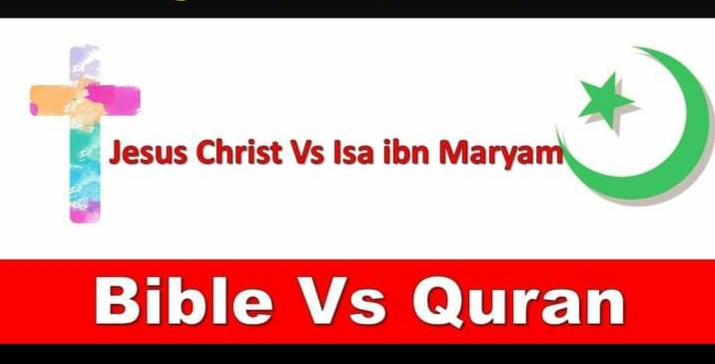
JESUS OF THE BIBLE IS NOT ISA BIN MARYAM OF THE QURAN


In this thread I will explain the difference between Jesus of the Bible and Isa of the Koran. Please be informed that, according to the God of the Bible, Names are very important in Biblical terms, in contrast, Allah of the Koran never cares much about the names. God used to name people according to their job, title, and calling. In the Old Testament we often see that the Angel of the Lord would tell the parents of the prophet what to name their child, and we see also that God would often change the prophet’s name after a turning point in the prophet’s life. For example, we see it in the life of Abraham, whose name was changed from Abram (Genesis 17:5), as well as many others through the entire Bible. And it was not just during the Old Testament time; we see it in the New Testament, as well, when Jesus changes the name of Simon into Peter (John 1:42).


Christ Jesus, the Son of the Living God, was not given His name because it was the name of His grandfather, not even because His earthly mother "Mary" gave Him that name, but because the Angel of the Lord gave Him the name anointed name - Jesus. As fully and impeccably explained in the gospel of according to Matthew 1:21, “You shall call His name Jesus, for it is He who will save His people from their sins.” Jesus is a Hebrew word meaning “Savior.”


Peter who was known Simon, the apostle said in his preaching to the Jews, “Salvation is in one else; for there is no other name under heaven given among men, by which we must be saved” (Acts 4:12). By that great name Jesus, which is above all names, those who believed in His name went around preaching the gospel of Jesus Christ. They commanded sickness and demons to leave the bound and the oppressed in the name of Jesus Christ the Son of the living God, and not in the name of Isa the son of Mary.


Accordingly, Prophet Isa of the Koran is not the same person as our Lord Jesus Christ whom we read about in the Gospel. Actually, Mohammed mentioned Isa as a prophet who was given a book to the people of Israel as it says, “And Allah will teach him (Isa) the Book and Wisdom, the Torah and the Gospel, and (appoint him) as a messenger to the Children of Israel” (Sure 3:48).


Muhammed came with a message to His people, saying, “Worship Allah, my Lord and your Lord; and I was a witness over them whilst I dwelt amongst them; when Thou didst take me up Thou wast the Watcher over them, and Thou art a witness to all things” (Sure 5:117), inter-alia, Jesus came with the Revelation, that is why Christians have Holy Spirit who is the Reveler of the Revelation of Jesus Christ.


After finishing His work on earth, Christ Jesus the Son of the Living God said to His disciples, “Go and teach the nations to observe all that I commanded you; and lo, I am with you always even to the end of the age” (Matthew 28:20). This could not be a normal prophet or messenger.


Please be informed that, Allah's Prophet Mohammed has changed the biblical picture of Messiah-Jesus—the Lord of Lords and the King of Kings to which every knee shall bow—into the picture of a normal prophet. Surely this made it easy for Mohammed to convince his people that he was a prophet to the Arabs, just like Moses and Isa son of Mary were prophets to their people, the Jews.


Wherefore, if the slave of Allah- Mohammed is to be believed, then we would also have to believe the messages of Buddha, the Hindus, and many other false prophets who were sent to deceive the world in order that it would not see the only true Light which came to our world—the one who enlightens every man (John 1:9), who came to set us free of our sins and healed those who were oppressed of the devil (Acts 10:38).


Jesus Christ the Son of the living God did not come to our world to give us a new religion or a new book, but came to destroy the work of the devil (1 John 3:8), that everyone who calls upon that name of Jesus the Savior shall be saved of his sins that separate him from the holy God (Isaiah 59:2).


Isa is the son of Mary (The Cow 2:253).


Jesus is the Son of God (John 1:49).


Isa is a prophet (Surah 5:75).


Jesus is the Lord of the prophets (Matthew 22:45).


Isa is a creation (Surah 3:59).


Jesus is the creator (John 1:3).


Isa did not taste death, for god took him to heaven (Surah Women 4:157).


Jesus tasted death for everyone (Hebrew 2:9).


You can read about the prophet Isa son of Mary in the Koran, but we believe in the Lord Jesus Christ the Son of the living God whom was written about in the Bible. That’s why you have to make a choice: Bible or Koran, Jesus the Son of God or Isa the son of Mary.


Jesus of the Bible is not Isa of the Koran.


Shalom,


Dr. Max Shimba for Max Shimba Ministries org.

ISA OF THE QURAN IS FAKE AND NOT JESUS OF THE BIBLE


Today we increasingly hear and read that Christianity and Islam ‘share’ Jesus, that he belongs to both religions. So also with Abraham: there is talk of the West’s ‘Abrahamic civilization’ where once people spoke of ‘Judeo-Christian civilization’. This shift of thinking reflects the growing influence of Islam.


These notes offer some information and reflections on the ‘Muslim Jesus’, to help put this trend in its proper context.


References in brackets are to the Qur’an. Numbering systems for the Qur’anic verses are not standardized: be prepared to search through nearby verses for the right one.


Islam the primordial faith


Islam regards itself, not as a subsequent faith to Judaism and Christianity, but as the primordial religion, the faith from which Judaism and Christianity are subsequent developments. In the Qur’an we read that Abraham ‘was not a Jew nor a Christian, but he was a monotheist, a Muslim’ (Âl 'Imran 3:66). So it is Muslims, and not Christians or Jews, who are the true representatives of the faith of Abraham to the world today. (Al-Baqarah 2:135)


The Biblical prophets were all Muslims


Many prophets of the past received the one religion of Islam. (Ash-Shura 42:13) Who were these previous prophets? According to Al-An’am 6:85-87 they include Ibrahim (Abraham), ‘Ishaq (Issac), Yaqub (Jacob), Nuh (Noah), Dawud (David), Sulaiman (Solomon), Ayyub (Job), Yusuf (Joseph), Musa (Moses), Harun (Aaron), Zakariyya (Zachariah), Yahya (John the Baptist), ‘Isa (Jesus), Ilyas, Ishmael, Al-Yash’a (Elisha), Yunus (Jonah) and Lut (Lot).


The Muslim ‘Isa (Jesus)


There are two main sources for ‘Isa, the Muslim Jesus. The Qur’an gives a history of his life, whilst the Hadith collections — recollections of Muhammad’s words and deeds — establish his place in the Muslim understanding of the future.


The Qur’an


‘Isa, was a prophet of Islam


Jesus’ true name, according to the Qur’an, was ‘Isa. His message was pure Islam, surrender to Allah. (Âl 'Imran 3:84) Like all the Muslim prophets before him, and like Muhammad after him, ‘Isa was a lawgiver, and Christians should submit to his law. (Âl 'Imran 3:50; Al-Ma’idah 5:48) ‘Isa’s original disciples were also true Muslims, for they said ‘We believe. Bear witness that we have surrendered. We are Muslims.’ (Al-Ma’idah 5:111)


‘The Books’


Like other messengers of Islam before him, ‘Isa received his revelation of Islam in the form of a book. (Al-An’am 6:90) ‘Isa’s book is called the Injil or ‘gospel’. (Al-Ma’idah 5:46) The Torah was Moses’ book, and the Zabur (Psalms) were David’s book. So Jews and Christians are ‘people of the Book’. The one religion revealed in these books was Islam. (Âl 'Imran 3:18)


As with previous prophets, ‘Isa’s revelation verified previous prophets’ revelations. (Âl 'Imran 3:49,84; Al-Ma’idah 5:46; As-Saff 61:6) Muhammad himself verified all previous revelations, including the revelation to ‘Isa (An-Nisa’ 4:47), and so Muslims must believe in the revelation which ‘Isa received. (Al-Baqarah 2:136) However, after ‘Isa the Injil was lost in its original form. Today the Qur’an is the only sure guide to ‘Isa’s teaching.


The biography of ‘Isa


According to the Qur’an, ‘Isa was the Messiah. He was supported by the ‘Holy Spirit’. (Al-Baqarah 2:87; Al-Ma’idah 5:110) He is also referred to as the ‘Word of Allah’. (An-Nisa’ 4:171)


‘Isa’s mother Mariam was the daughter of ‘Imran, (Âl 'Imran 3:34,35) — cf the Amram of Exodus 6:20 — and the sister of Aaron (and Moses). (Maryam 19:28) She was fostered by Zachariah (father of John the Baptist). (Âl 'Imran 3:36) While still a virgin (Al-An’am 6:12; Maryam 19:19-21) Mariam gave birth to ‘Isa alone in a desolate place under a date palm tree. (Maryam 19:22ff) (Not in Bethlehem).


‘Isa spoke whilst still a baby in his cradle. (Âl 'Imran 3:46; Al-Ma’idah 5:110; Maryam 19:30) He performed various other miracles, including breathing life into clay birds, healing the blind and lepers, and raising the dead. (Âl 'Imran 3:49; Al-Ma’idah 5:111) He also foretold the coming of Muhammad. (As-Saff 61:6)


‘Isa did not die on a cross


Christians and Jews have corrupted their scriptures. (Âl 'Imran 3:74-77, 113) Although Christians believe ‘Isa died on a cross, and Jews claim they killed him, in reality he was not killed or crucified, and those who said he was crucified lied (An-Nisa’ 4:157). ‘Isa did not die, but ascended to Allah. (An-Nisa’ 4:158) On the day of Resurrection ‘Isa himself will be a witness against Jews and Christians for believing in his death. (An-Nisa’ 4:159)


Christians should accept Islam, and all true Christians will


Christians (and Jews) could not be freed from their ignorance until Muhammad came bringing the Qur’an as clear evidence (Al-Bayyinah 98:1). Muhammad was Allah’s gift to Christians to correct misunderstandings. They should accept Muhammad as Allah’s Messenger, and the Qur’an as his final revelation. (Al-Ma’idah 5:15; Al-Hadid 57:28; An-Nisa’ 4:47)


Some Christians and Jews are faithful and believe truly. (Âl 'Imran 3:113,114) Any such true believers will submit to Allah by accepting Muhammad as the prophet of Islam, i.e. they will become Muslims. (Âl 'Imran 3:198)


Although Jews and pagans will have the greatest enmity against Muslims, it is the Christians who will be ‘nearest in love to the believers’, i.e. to Muslims. (Al-Ma’idah 5:82) True Christians will not love Muhammad’s enemies. (Al-Mujadilah 58:22) In other words, anyone who opposes Muhammad is not a true Christian.


Christians who accept Islam or refuse it


Some Jews and Christians are true believers, accepting Islam: most are transgressors. (Âl 'Imran 3:109)


Many monks and rabbis are greedy for wealth and prevent people from coming to Allah. (At-Taubah 9:34,35)


Christians and Jews who disbelieve in Muhammad will go to hell. (Al-Bayyinah 98:6)


Muslims should not take Christians or Jews for friends. (Al-Ma’idah 5:51) They must fight against Christians and Jews who refuse Islam until they surrender, pay the poll-tax and are humiliated. (At-Taubah 9:29) To this may be added hundreds of Qur’anic verses on the subject of jihad in the path of Allah, as well as the ‘Book of Jihad’ found in all Hadith collections.


Christian beliefs


Christians are commanded not to believe that ‘Isa is the son of God: ‘It is far removed from his transcendent majesty that he should have a son’. (An-Nisa’ 4:171; Al-Furqan 25:2) ‘Isa was simply a created human being, and a slave of Allah. (An-Nisa’ 4:172; Âl 'Imran 3:59)


Christians are claimed by the Qur’an to believe in a family of gods — Father God, mother Mary and ‘Isa the son — but ‘Isa rejected this teaching. (Al-Ma’idah 5:116) The doctrine of the Trinity is disbelief and a painful doom awaits those who believe it. (Al-Ma’idah 5:73)


‘Isa (Jesus) in the Hadith


‘Isa the destroyer of Christianity


The prophet ‘Isa will have an important role in the end times, establishing Islam and making war until he destroys all religions save Islam. He shall kill the Evil One (Dajjal), an apocalyptic anti-Christ figure.


In one tradition of Muhammad we read that no further prophets will come to earth until ‘Isa returns as ‘a man of medium height, or reddish complexion, wearing two light garments, looking as if drops were falling down from his head although it will not be wet. He will fight for the cause of Islam. He will break the cross, kill pigs, and abolish the poll-tax. Allah will destroy all religions except Islam. He (‘Isa) will destroy the Evil One and will live on the earth for forty years and then he will die’. (Sunan Abu Dawud, 37:4310) The Sahih Muslim has a variant of this tradition: ‘The son of Mary ... will soon descend among you as a just judge. He will ... abolish the poll-tax, and the wealth will pour forth to such an extent that no one will accept charitable gifts.’ (Sahih Muslim 287)


What do these sayings mean? The cross is a symbol of Christianity. Breaking crosses means abolishing Christianity. Pigs are associated with Christians. Killing them is another way of speaking of the destruction of Christianity. Under Islamic law the poll-tax buys the protection of the lives and property of conquered ‘people of the Book’. (At-Taubah 9:29) The abolition of the poll-tax means jihad is restarted against Christians (and Jews) living under Islam, who should convert to Islam, or else be killed or enslaved. The abundance of wealth refers to booty flowing to the Muslims from this conquest. This is what the Muslim ‘Isa will do when he returns in the last days.


Muslim jurists confirm these interpretations: consider, for example, the ruling of Ahmad ibn Naqib al-Misri (d. 1368).


"... the time and the place for [the poll tax] is before the final descent of Jesus (upon whom be peace). After his final coming, nothing but Islam will be accepted from them, for taking the poll tax is only effective until Jesus' descent (upon him and our Prophet be peace) ..." (The Reliance of the Traveller. Trans. Nuh Ha Mim Keller, p. 603).


Ibn Naqib goes on to state that when Jesus returns, he will rule ‘as a follower’ of Muhammad.


Critical Comments on the Muslim ‘Isa (Jesus)

‘Isa not an historical figure


The Qur’an’s ‘Isa is not an historical figure. His identity and role as a prophet of Islam is based solely on supposed revelations to Muhammad over half a millennium after the Jesus of history lived and died.


Jesus’ name was never ‘Isa


Jesus’ mother tongue was Aramaic. In his own lifetime he was called Yeshua in Aramaic, and Jesu in Greek. This is like calling the same person John when speaking English and Jean when speaking French: Jesu, pronounced "Yesoo", is the Greek form of Aramaic Yeshua. (The final -s in Jesu-s is a Greek grammatical ending.) Yeshua is itself a form of Hebrew Yehoshua’, which means ‘the Lord is salvation’. However Yehoshua’ is normally given in English as Joshua. So Joshua and Jesus are variants of the same name.


It is interesting that Jesus' name Yehoshua’ contains within it the proper Hebrew name for God, the first syllable Yeh- being short for YHWH ‘the LORD’.


Yeshua of Nazareth was never called ‘Isa, the name the Qur’an gives to him. Arab-speaking Christians refer to Jesus as Yasou’ (from Yeshua) not ‘Isa.


Jesus did not receive a ‘book’


According to the Qur’an, the ‘book’ revealed to ‘Isa was the Injil. The word Injil is a corrupted form of the Greek euanggelion ‘good news’ or gospel. What was this euanggelion? This was just how Jesus referred to his message: as good news. The expression euanggelion did not refer to a fixed revealed text, and there is absolutely no evidence that Jesus received a ‘book’ of revelation from God.


The ‘gospels’ of the Bible are biographies


The term euanggelion later came to be used as a title for the four biographies of Jesus written by Matthew, Mark, Luke and John, the ‘gospels’. This was a secondary development of meaning. Apparently this is where Muhammad got his mistaken idea of the Injil being a ‘book’.


Most so-called prophets of Islam received no book


Virtually all of the so-called ‘prophets’ of Islam, whose names are taken from the Hebrew scriptures, received no ‘book’ or law code. For example, the Psalms are not a book revealing Islam, as the Qur’an claims, but a collection of songs of worship, only some of which are David’s. There is not a shred of evidence in the Biblical history of David that he received a book of laws for the Israelites. They already had the Torah of Moses to follow. So David was not a prophet in the Qur’an’s sense of this word. Likewise most of the prophets claimed by Islam were neither lawgivers nor rulers.


Biblical prophecy and Islamic prophecy are not the same thing


The Biblical understanding of prophecy is quite different from Muhammad’s. A Biblical prophecy is not regarded as a passage from a heavenly eternally pre-existent text like the Qur’an, but a message from God for a specific time and place. A biblical prophet is someone to whom God reveals hidden things, and who then acts as God’s verbal agent. When a Samaritan woman called Jesus a prophet (John 4:19) it was because he had spoken about things in her life that he could only have known supernaturally. Christianity teaches that Jesus was a prophet, but he brought no ‘book’: he himself was the living ‘Word of God’, a title used of ‘Isa in the Qur’an.


By no means all prophecies referred to in the Bible became part of the Biblical text. The Bible consists of a wide variety of materials originally written for many different purposes, including letters, songs, love poetry, historical narratives, legal texts, proverbial wisdom as well as prophetic passages. These are regarded as inspired by God, but not dictated from a timeless heavenly book.


As prophetic history, the Qur’an contains many errors and anachronisms


The claim that Jesus was not executed by crucifixion is without any historical support. One of the things that all the early sources agree on is Jesus’ crucifixion.


Mariam the mother of ‘Isa is called a sister of Aaron, and also the daughter of Aaron’s father ‘Imran (Hebr. Amram). Clearly Muhammad has confused Mary (Hebr. Miriam) with Miriam of the Exodus. The two lived more than a thousand years apart!


In the Bible Haman is the minister of Ahasuerus in Media and Persia (The Book of Esther 3:1-2). Yet the Qur’an places him over a thousand years earlier, as a minister of Pharoah in Egypt.


The claim that Christians believe in three Gods — Father, son Jesus and mother Mary — is mistaken. The Qur’an is also mistaken to claim that Jews say Ezra was a son of God. (At-Taubah 9:30) The charge of polytheism against Christianity and Judaism is ill-informed and false. (Deuteronomy 6:4, James 2:19a)


The story of the ‘two horned one’ (Al-Kahf 18:82 cf also Daniel 8:3, 20-21) is derived from the Romance of Alexander. Certainly Alexander the Great was no Muslim.


The problem with the name ‘Isa has already been discussed. Other Biblical names are also misunderstood in the Qur’an, and their meanings lost. For example Elisha, which means ‘God is salvation’, is given in the Qur’an as al-Yash’a, turning El ‘God’ into al- ‘the’. (Islamic tradition did the same to Alexander the Great, calling him al-Iskandar ‘the Iskander’). Abraham ‘Father of many’ (cf Genesis 17:5) might have been better represented as something like Aburahim ‘father of mercy’ instead of Ibrahim, which has no meaning in Arabic at all.


The Qur’an has a Samaritan making the golden calf, which was worshipped by the Israelites in the wilderness (Ta Ha 20:85) during the Exodus. In fact it was Aaron (Exodus 34:1-6). The Samaritans did not exist until several centuries later. They were descendants of the northern Israelites centuries after the Exodus.


Many Qur’anic stories can be traced to Jewish and Christian folktales and other apocryphal literature. For example a story of Abraham destroying idols (As-Saffat 37) is found in a Jewish folktale, the Midrash Rabbah. The Qur’anic story of Zachariah, father of John the Baptist, is based upon a second-century Christian fable. The story of Jesus being born under a palm tree is also based on a late fable, as is the story of Jesus making clay birds come alive. Everything the Qur’an says about the life of Jesus which is not found in the Bible can be traced to fables composed more than a hundred years after Jesus’ death.


Jesus’ titles of Messiah and Word of God, which the Qur’an uses, find no explanation in the Qur’an. Yet in the Bible, from which they are taken, these titles are well integrated in a whole theological system.


The Qur’an mentions the Holy Spirit in connection with Jesus, using phrases which come from the gospels. Ibn Ishaq (Life of Muhammad) reports Muhammad as saying that this ‘Spirit’ was the angel Gabriel (cf also An-Nahl 16:102, Al-Baqarah 2:97). However the Biblical phrase ‘Spirit of God’ (Ruach Elohim) or ‘Holy Spirit’ can only be understood in light of the Hebrew scriptures. It certainly does not refer to an angel.


Jesus’ alleged foretelling of Muhammad’s coming (As-Saff 61:6) appears to be based on a garbled reading of John 14:26, a passage which in fact refers to the Spirit.


The Hebrew scriptures were Jesus’ Bible. He affirmed their authority and reliability and preached from them. From these same scriptures he knew God as Adonai Elohim, the Lord God of Israel. He did not call God Allah, which appears to have been the name or title of a pagan Arabian deity worshipped in Mecca before Muhammad. Muhammad's pagan father, who died before Muhammad was born, already bore the name ‘Abd Allah ‘slave of Allah’, and his uncle was called Obeid Allah.


We read that An-Najm 53:19-23 seeks to refute the pagan Arab belief that Allah had daughters named al-Uzza, al-Ilat and Manat. (See also An-Nahl 16:57 and Al-An’am 6:100).


The Biblical narratives are rich with historical details, many confirmed by archaeology. They cover more than a thousand years, and reveal a long process of technological and cultural development. In contrast the Qur’an’s sacred history is devoid of archaeological support. Its fragmentary and disjointed stories offer no authentic reflection of historical cultures. No place name from ancient Israel is mentioned, not even Jerusalem. Many of the supposed historical events reported in the Qur’an have no independent verification. For example we are told that Abraham and Ishmael built the Kaaba in Mecca (Al-Baqarah 2:127), but this is totally without support. The Biblical account, more than a thousand years older, does not place Abraham anywhere near Arabia.


The Qur’an is not a credible source for Biblical history


The Qur’an, written in the 7th century AD, cannot be regarded as having any authority whatsoever to inform us about Jesus of Nazareth. It offers no evidence for its claims about biblical history. Its numerous historical errors reflect a garbled understanding of the Bible.


Islam appropriates the history of Judaism and Christianity to itself


When Muhammad linked the name of Allah to the religious histories of Judaism and Christianity, this was a way to claim them for Islam. In the light of later events, the claim that Islam was the original religion, and that all preceding prophets were Muslims, can be regarded as an attempt to appropriate the histories of other religions for Islam. The effect is to rob Christianity and Judaism of their own histories.


Consider that many Biblical sites, such as the tombs of the Hebrew Patriarchs and the Temple Mount, are claimed by Islam as Muslim sites, not Jewish or Christian ones. After all, the Qur’an tells us that Abraham ‘was a Muslim’. Under Islamic rule all Jews and Christians were banned from such sites.


The place of the Jewish scriptures in Christianity is completely different from the place of the Bible in Islam


There is a fundamental difference between Christian attitudes to the Jewish scriptures and Islamic attitudes to the Bible. Christians accept the Hebrew scriptures. They were the scriptures of Jesus and the apostles. They were the scriptures of the early church. The whole of Christian belief and practice rests upon them. Core Christian concepts such as ‘Messiah’ (Greek ‘Christos’), ‘Spirit of God’, ‘Kingdom of God’ and ‘salvation’ are deeply rooted in the Hebrew Biblical traditions.


We note also that Christian seminaries devote considerable effort to studying the Hebrew scriptures. This is an integral part of training for Christian ministry. The Hebrew scriptures are read (in translation) every Sunday in many churches all around the world.


In contrast Islam’s treatment of the Bible is one of complete disregard. Although it purports to ‘verify’ all earlier prophetic revelation, the Qur’an is oblivious to the real contents of the Bible. The claim that Christians and Jews deliberately corrupted their scriptures is made without evidence, and this only serves to cover up the Qur’an’s historical inadequacies. Muslim scholars rarely have an informed understanding of the Bible or of biblical theology and so remain ignorant of these realities.


Some contemporary Muslim voices on Jesus


Yasser Arafat, addressing a press conference at the United Nations in 1983 called Jesus "the first Palestinian fedayeen who carried his sword" (i.e. he was a freedom fighter for Islam).


Sheikh Ibrahim Madhi, employee of the Palestinian Authority, broadcast live in April 2002 on Palestinian Authority television: "The Jews await the false Jewish messiah, while we await, with Allah's help... Jesus, peace be upon him. Jesus's pure hands will murder the false Jewish messiah. Where? In the city of Lod, in Palestine."


Author Shamim A. Siddiqi of Flushing, New York put the classical position of Islam towards Christianity clearly in a recent letter to Daniel Pipes, New York Post columnist:


"Abraham, Moses, Jesus, and Muhammad were all prophets of Islam. Islam is the common heritage of the Judeo-Christian-Muslim community of America, and establishing the Kingdom of God is the joint responsibility of all three Abrahamic faiths. Islam was the din (faith, way of life) of both Jews and Christians, who later lost it through human innovations. Now the Muslims want to remind their Jewish and Christian brothers and sisters of their original din [religion]. These are the facts of history."


This historical negationism — appearing to affirm Christianity and Judaism whilst in fact rejecting and supplanting them — is a lynchpin of Muslim apologetics. What is being affirmed is in fact neither Christianity nor Judaism, but Jesus as a prophet of Islam, Moses as a Muslim etc. This is intended to lead to ‘reversion’ of Christians and Jews to Islam, which is what Siddiqi refers to when he speaks of ‘the joint responsibility’ of Jews and Christians to establish ‘the Kingdom of God’. By this he means that American Christians and Jews should work to establish shari’ah law and the rule of Islam in the United States.


Conclusion


‘Isa (Jesus) of the Qur’an is a product of fable, imagination and ignorance. When Muslims venerate this ‘Isa, they have someone different in mind from the Yeshua or Jesus of the Bible and of history. The ‘Isa of the Qur’an is based on no recognized form of historical evidence, but on fables current in seventh century Arabia.


For most faithful Muslims ‘Isa is the only Jesus they know. But if one accepts this Muslim ‘Jesus’, then one also accepts the Qur’an: one accepts Islam. Belief in this ‘Isa is won at the cost of the libel that Jews and Christians have corrupted their scriptures, a charge that is without historical support. Belief in this ‘Isa implies that much of Christian and Jewish history is in fact Islamic history.


The Jesus of the gospels is the base upon which Christianity developed. By Islamicizing him, and making of him a Muslim prophet who preached the Qur’an, Islam destroys Christianity and takes over all its history. It does the same to Judaism.


In the end times as described by Muhammad, ‘Isa becomes a warrior who will return with his sword and lance. He will destroy the Christian religion and make Islam the only religion in all the world. Finally at the last judgement he will condemn Christians to hell for believing in the crucifixion and the incarnation.


This final act of the Muslim ‘Isa reflects Islam’s apologetic strategy in relation to Christianity, which is to deny the Yeshua of history, and replace him with a facsimile of Muhammad, so that nothing remains but Islam.


"The Muslim supersessionist current claims that the whole biblical history of Israel and Christianity is Islamic history, that all the Prophets, Kings of Israel and Judea, and Jesus were Muslims. That the People of the Book should dare to challenge this statement is intolerable arrogance for an Islamic theologian. Jews and Christians are thus deprived of their Holy Scriptures and of their salvific value."


— Bat Ye’or in Islam and Dhimmitude: where civilizations collide, p.370.


APPENDIX: The historical evidence for Jesus (Yeshua)

of Nazareth and his death by crucifixion


Non-Christian sources for Jesus


• Tacitus (AD 55-120), a renowned historical of ancient Rome, wrote in the latter half of the first century that ‘Christus ... was put to death by Pontius Pilate, procurator of Judea in the reign of Tiberius: but the pernicious superstition, repressed for a time, broke out again, not only through Judea, where the mischief originated, but through the city of Rome also.’ (Annals 15: 44).


• Suetonius writing around AD 120 tells of disturbances of the Jews at the ‘instigation of Chrestus’, during the time of the emperor Claudius. This could refer to Jesus, and appears to relate to the events of Acts 18:2, which took place in AD 49.


• Thallus, a secular historian writing perhaps around AD 52 refers to the death of Jesus in a discussion of the darkness over the land after his death. The original is lost, but Thallus’ arguments — explaining what happened as a solar eclipse — are referred to by Julius Africanus in the early 3rd century.


• Mara Bar-Serapion, a Syrian writing after the destruction of the Temple in AD 70, mentions the earlier execution of Jesus, whom he calls a ‘King’.


• The Babylonian Talmud refers to the crucifixion (calling it a hanging) of Jesus the Nazarene on the eve of the Passover. In the Talmud Jesus is also called the illegitimate son of Mary.


• The Jewish historian Josephus describes Jesus’ crucifixion under Pilate in his Antiquities, written about AD 93/94. Josephus also refers to James the brother of Jesus and his execution during the time of Ananus (or Annas) the high priest.


Paul’s Epistles


• Paul’s epistles were written in the interval 20-30 years after Jesus’ death. They are valuable historical documents, not least because they contain credal confessions which undoubtedly date to the first few decades of the Christian community.


Paul became a believer in Jesus within a few years of Jesus’ crucifixion. He writes in his first letter to the Corinthians ‘For I delivered to you first of all that which I also received: that Christ died for our sins according to the Scriptures, and that He was buried, and that He rose again on the third day according to the Scriptures, and that he was seen by Cephas (Peter), then by the twelve.’ This makes clear that belief in the death of Jesus was there from the beginning of Christianity.


The four gospels


• The four gospels were written down in the period 20-60 years after Jesus’ death, within living memory of the events they describe.


The events which the gospels describe for the most part took place in the full light of public scrutiny. Jesus’ teaching was followed by large crowds. There were very many witnesses to the events of his life. His death was a public execution.


Manuscript evidence for the Bible and its transmission


The manuscript evidence for the Greek scriptures is overwhelming, far greater than for all other ancient texts. Over 20,000 manuscripts attest to them. Whilst there are copying errors, as might be expected from the hand of copyists, these are almost all comparatively minor and the basic integrity of the copying process is richly supported.


Futhermore, when Western Christians studies the Hebrew scriptures during the Renaissance, they found them to agree remarkably closely with their Greek and Latin translations which had been copied again and again over a thousand years. There were copying errors, and some other minor changes, but no significant fabrications of the stupendous scale which would be required to concoct the story of Jesus’ death.


Likewise when the Dead Sea Scrolls were discovered they included Hebrew Biblical scrolls dating from before the time of Jesus. These too agreed very closely with the oldest Hebrew Masoretic manuscripts of more than a thousand years later. Again, no fabrications, but evidence of remarkably faithful copying.


Conclusion: Jesus of Nazareth is a figure of history


Clearly there are events recorded in connection with Jesus’ life that many non-Christians will not accept, such as the miracles, the virgin birth, and the resurrection. However what is beyond dispute is that Yeshua (‘Jesus’) of Nazareth was a figure of history, who lived, attracted a following in his life time amongst his fellow Jews and was executed by crucifixion by the Roman authorities, after which his followers spread rapidly. Both secular and Christian sources of the period agree on this.


The primary sources for the history of Jesus’ public life are the gospels. These were written down relatively soon after his death — within living memory — and we have every indication that these sources were accepted as reliable in the early Christian community, during a period when first and second hand witnesses to Jesus’ life were still available.


We conclude that any statements about ‘Isa (Jesus) in the Qur’an, made six centuries after Jesus’ death, must be judged against the historical evidence from these first century sources, and not vice versa.


Shalom,


Dr. Max Shimba for Max Shimba Ministries Org.

Tuesday, September 6, 2022

REWRITING OF THE QURAN BY UTHMAN'S INSTRUCTIONS


Sahih al-Bukhari 4987

Narrated Anas bin Malik:


Hudhaifa bin Al-Yaman came to `Uthman at the time when the people of Sham and the people of Iraq were Waging war to conquer Arminya and Adharbijan. Hudhaifa was afraid of their (the people of Sham and Iraq) differences in the recitation of the Qur'an, so he said to `Uthman, "O chief of the Believers! Save this nation before they differ about the Book (Qur'an) as Jews and the Christians did before." So `Uthman sent a message to Hafsa saying, "Send us the manuscripts of the Qur'an so that we may compile the Qur'anic materials in perfect copies and return the manuscripts to you." Hafsa sent it to `Uthman. `Uthman then ordered Zaid bin Thabit, `Abdullah bin AzZubair, Sa`id bin Al-As and `AbdurRahman bin Harith bin Hisham to rewrite the manuscripts in perfect copies. `Uthman said to the three Quraishi men, "In case you disagree with Zaid bin Thabit on any point in the Qur'an, then write it in the dialect of Quraish, the Qur'an was revealed in their tongue." They did so, and when they had written many copies, `Uthman returned the original manuscripts to Hafsa. `Uthman sent to every Muslim province one copy of what they had copied, and ordered that all the other Qur'anic materials, whether written in fragmentary manuscripts or whole copies, be burnt.


حَدَّثَنَا مُوسَى، حَدَّثَنَا إِبْرَاهِيمُ، حَدَّثَنَا ابْنُ شِهَابٍ، أَنَّ أَنَسَ بْنَ مَالِكٍ، حَدَّثَهُ أَنَّ حُذَيْفَةَ بْنَ الْيَمَانِ قَدِمَ عَلَى عُثْمَانَ وَكَانَ يُغَازِي أَهْلَ الشَّأْمِ فِي فَتْحِ إِرْمِينِيَةَ وَأَذْرَبِيجَانَ مَعَ أَهْلِ الْعِرَاقِ فَأَفْزَعَ حُذَيْفَةَ اخْتِلاَفُهُمْ فِي الْقِرَاءَةِ فَقَالَ حُذَيْفَةُ لِعُثْمَانَ يَا أَمِيرَ الْمُؤْمِنِينَ أَدْرِكْ هَذِهِ الأُمَّةَ قَبْلَ أَنْ يَخْتَلِفُوا فِي الْكِتَابِ اخْتِلاَفَ الْيَهُودِ وَالنَّصَارَى فَأَرْسَلَ عُثْمَانُ إِلَى حَفْصَةَ أَنْ أَرْسِلِي إِلَيْنَا بِالصُّحُفِ نَنْسَخُهَا فِي الْمَصَاحِفِ ثُمَّ نَرُدُّهَا إِلَيْكِ فَأَرْسَلَتْ بِهَا حَفْصَةُ إِلَى عُثْمَانَ فَأَمَرَ زَيْدَ بْنَ ثَابِتٍ وَعَبْدَ اللَّهِ بْنَ الزُّبَيْرِ وَسَعِيدَ بْنَ الْعَاصِ وَعَبْدَ الرَّحْمَنِ بْنَ الْحَارِثِ بْنِ هِشَامٍ فَنَسَخُوهَا فِي الْمَصَاحِفِ وَقَالَ عُثْمَانُ لِلرَّهْطِ الْقُرَشِيِّينَ الثَّلاَثَةِ إِذَا اخْتَلَفْتُمْ أَنْتُمْ وَزَيْدُ بْنُ ثَابِتٍ فِي شَىْءٍ مِنَ الْقُرْآنِ فَاكْتُبُوهُ بِلِسَانِ قُرَيْشٍ فَإِنَّمَا نَزَلَ بِلِسَانِهِمْ فَفَعَلُوا حَتَّى إِذَا نَسَخُوا الصُّحُفَ فِي الْمَصَاحِفِ رَدَّ عُثْمَانُ الصُّحُفَ إِلَى حَفْصَةَ وَأَرْسَلَ إِلَى كُلِّ أُفُقٍ بِمُصْحَفٍ مِمَّا نَسَخُوا وَأَمَرَ بِمَا سِوَاهُ مِنَ الْقُرْآنِ فِي كُلِّ صَحِيفَةٍ أَوْ مُصْحَفٍ أَنْ يُحْرَقَ‏.‏

Reference  : Sahih al-Bukhari 4987

In-book reference  : Book 66, Hadith 9

USC-MSA web (English) reference  : Vol. 6, Book 61, Hadith 510

  (deprecated numbering scheme)

Why Uthman burned the QURAN?

 Why did Uthman burn all other versions of Quran and how did he choose the perfect version?


Whole Qur’ānic Manuscripts copies burnt


Narrated Anas bin Malik: Hudhaifa bin Al-Yaman came to `Uthman at the time when the people of Sham and the people of Iraq were Waging war to conquer Arminya and Adharbijan. Hudhaifa was afraid of their (the people of Sham and Iraq) differences in the recitation of the Qur’an, so he said to `Uthman, “O chief of the Believers! Save this nation before they differ about the Book (Qur’an) as Jews and the Christians did before.” So `Uthman sent a message to Hafsa saying, “Send us the manuscripts of the Qur’an so that we may compile the Qur’anic materials in perfect copies and return the manuscripts to you.” Hafsa sent it to `Uthman. `Uthman then ordered Zaid bin Thabit, `Abdullah bin AzZubair, Sa`id bin Al-As and `AbdurRahman bin Harith bin Hisham to rewrite the manuscripts in perfect copies. `Uthman said to the three Quraishi men, “In case you disagree with Zaid bin Thabit on any point in the Qur’an, then write it in the dialect of Quraish, the Qur’an was revealed in their tongue.” They did so, and when they had written many copies, `Uthman returned the original manuscripts to Hafsa. `Uthman sent to every Muslim province one copy of what they had copied, and ordered that all the other Qur’anic materials, whether written in fragmentary manuscripts or whole copies, be burnt. — Sahih al-Bukhari 4987


According to the authentic Hadiths (Sahih) from Bukhari there was a war and a Muslim named Hudhaifa bin Al-Yaman approached Uthman (the son-in-law to Muhammad). Because the Quran was memorised by men there was concerns that during the war individuals who knew the Quran by memory would be killed, thereby, they would lose portions of the Quran. Hudhaifa was afraid of the differences in the recitation of the Qur’an and said to Uthman “Save this nation before they differ about the Book (Qur’an) as Jews and the Christians did before”.


This is interesting, the Hadith is saying there were different recitations of the Quran which means different verses and words. Uthman then sought to standardize all of the different readings into 1 Quran.


Uthman then orders his men to rewrite the manuscripts in perfect copies, afterwards he returns Hafsa’s manuscripts and orders to burn any other Qur’anic materials, whether written in fragmentary manuscripts or whole copies. This proves that Uthman was trying to destroy other Arabic versions of the Quran which contradicts the Hafs version in order to make 1 Quran.


The Question of Jibril’s Identity in Muhammad’s Revelation: A Critical Examination

The Question of Jibril’s Identity in Muhammad’s Revelation: A Critical Examination By Dr. Maxwell Shimba, Shimba Theological Institute I...

TRENDING NOW