Sunday, May 17, 2020

Converted from Islam to Christianity because of love

Converted from Islam to Christianity because of love

By Christine Katende
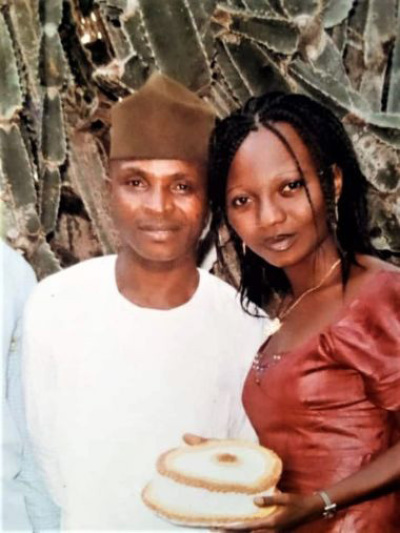
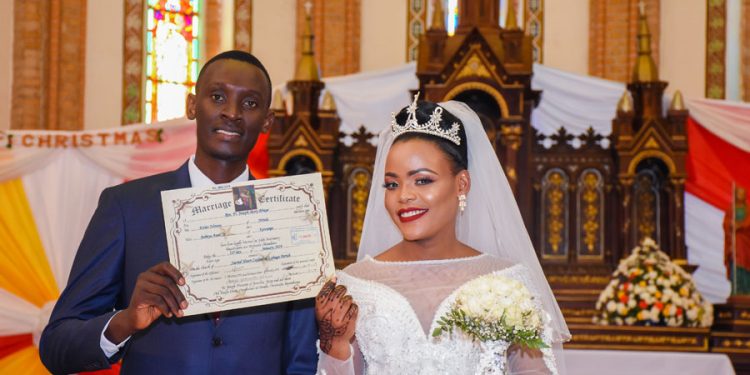
Johnson Kizito, the national deputy secretary-general of Uganda Young Democrats and Anna Marie Babirye, a businesswoman wedded earlier this year. Anna Marie, formerly Nuruh, converted from Islam and they share their story.
What was it like converting from Islam to Christianity?
Anna Marie: I decided to convert to Christianity because I wanted to prove to my husband not only how much I loved him but that I was ready to do anything for him and further I discovered Jesus is the true God and Mohammad was fake. The process was not that hard because my mother was formerly Catholic and she helped me approach my father. He asked me many questions but I was more than ready to be united with my man. My father wrote a consent letter to the Catholic Church which proved their acceptance of our union as parents.
What were the requirements?
Anna Marie:  I was taken through catechism lessons and later baptised Anna Marie. I was excited because I knew we would attend church together. I am now learning other prayers and other doctrines in the Catholic Church.
How did you get to know each other?
Johnson: I was in my final year at Makerere University Business School, Nakawa when I met Anna in 2014. She was in her first year and we met at a friend’s birthday party. We started talking after I got her contact through a friend. Although she gave me a hard time, we later became friends which progressed into a courtship of four years. During that period, we would discuss issues about culture, marriage and religion. We finally walked down the aisle on January 12 2019.
Anna Marie: We had a mutual friend. And it took me about two years to respond to his proposal.
What was your biggest worry?
Johnson: Whether her parents, especially her father, would okay our marriage given the religious differences. I thank God they allowed although it took quite some time of questioning. Anna Marie revealed that she was asked questions such as; why she chose a non-muslim of all men and whether she really loved and wanted to spend her life with me. Being non-Muslim, my father-in-law was worried about me taking their daughter to bars and pork joints but it so happened that I am not a fan of such.
How long did this take?
Johnson: It took about two months for her father to consent. We proceeded with the kukyala at her aunt’s home in Luwero in January 2019 and later the introduction despite my mother passing on a few days to the D-day. I gave my father-in-law a Quaran as mutwalo (bride price) since nothing was indicated in the consent letter.
What did you like about Johnson?
Anna Marrie: Johnson is patient, used to help me with course work and he is God-fearing.
Where did the wedding happen?
Johnson: Rubaga Cathedral. Holy Mass was presided over by the Bishop of Kasana-Luweero Diocese, Paul Ssemwogerere. We later hosted more than 550 guests at Bunga Executive Gardens on Ggaba Road.
How much did you spend on church and reception?
Johnson: About Shs1.5m on church and reception Shs3m.
Did you go for honeymoon?
Johnson: We were meant to travel out of the country immediately after the wedding but I failed to make bookings a week before the wedding because I was sick. We ended up at Speke Resort Munyonyo for three days. We are planning an extension before the year ends.
What were the most expensive items on the budget?
Johnson: Decor at Shs8.5m, food Shs11m, and clothes Shs9.5m
Did you have any disappointments on the wedding day?
Johnson: Church decoration. They used different colours from what we had agreed on. At the reception the service providers such as the decorator did not give us what I had paid for; the lighting was off, the tents old and food was served late at 6pm. The baker brought the cake late and made a shape I did not like and she disappeared immediately after placing the cake.
Anna Marie: I don’t remember any.
Did you have any fears?
Johnson: The decorator hadn’t set up anything on the wedding eve. Then, because I was ill, I feared I could collapse.
And your attire?
Johnson: I wore a navy blue suit which I bought at Shs2m, my best man and other friends, helped me get it since some of them are wedded. My shirt cost Shs150,000, the ties, Shs200,000, socks Shs50,000, 2belts at Shs200,000 and the pair of shoes at Shs700,000.
Who was your best man?
Johnson: Peter Nsubuga, one of my brothers. I wanted someone close to me. I had six groomsmen. These were my close friends, and I did not mind their physique.
Who was your matron?
Anna Marie: Brenda Nantale, she is a close friend and a workmate. I had six maids and they were all my friends, they had good bodies and could afford to facilitate themselves.
How useful was premarital counselling?
Johnson: I not only had counselling from church but even from close relatives and close married friends. However, from the sessions, I was advised to keep the true love to wife, be understanding and trust in God among other things.
Anna Marie: Among the several things that were emphasised include respect, being supportive, loving and prayerful. I promise to be a good wife to him and a good mother to our children.
What challenged you most during the preparation of the wedding?
Johnson: I was financially prepared and my family was cooperative.
Anna Marie: Moving around in the search for what I really wanted wasn’t any easy given the little time I had. Also having the maids agree on the kind and colour dresses to wear was a puzzle.
What did you consider during the search of the service providers?
Johnson:  Venue. I never wanted a reception in an enclosed place. Halls are expensive and tend to get congested. I had to consult a lot with people who knew them to get the right place.
Wedding planner
Favourites
Johnson was happy to see his father-in-law walking hand in hand with his daughter to hand her over to him. Anna Marie also loved walking with her father.
Gown: Anna Marie hired an off-white Cinderella gown at Shs2.5m from Brayan’s Bridal Boutique in Kampala.
“I was meant to change four times but ended up changing three times because of the limited time,” she says.
Cake: They had a green and white cake that reflected their theme colour. It was baked at Shs4.2m.
Tit bits
Groom: Johnson Kizito
Bride: Anna Marie Babirye
Date: January 12 2019
Church: Rubaga Cathedral
Reception: Bunga Executive Gardens
Cost: 40m

Sunday, May 3, 2020

Free online Bible program encourages virtual communal Bible reading amid lockdown


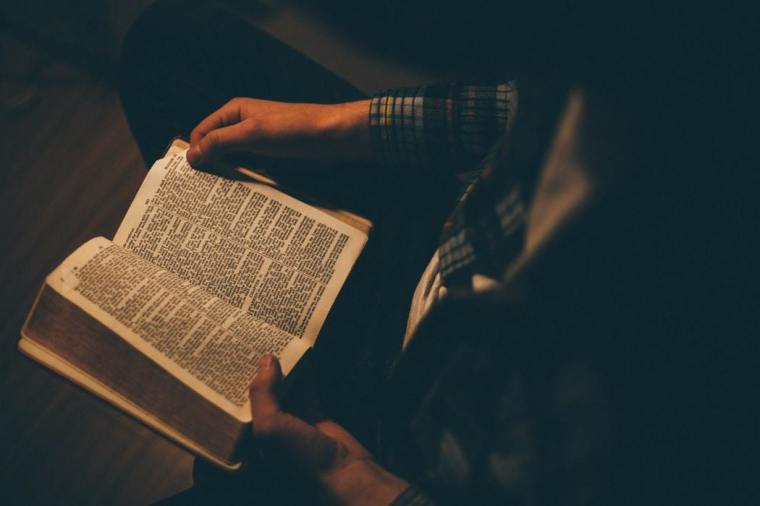
Tyndale House Publishers has teamed up with the Institute For Bible Reading to offer free resources for communal Bible reading and studying as many churches remain closed. 
“One of the things that we’ve seen recently in the midst of this is that reading the Bible by yourself can be lonely. You're there alone to wrestle with your questions. And so ... we want to bring people together," Paul Caminiti, senior director of mobilization for IFBR, told The Christian Post.
The book publisher and activist think tank have worked together for the last few years to offer the increasingly popular “Immerse Bible Reading Experience.” 
The six-volume Bible was created to provide faith communities with the “best reading experience possible” by laying out the Scripture in a “single-column setting” with each chapter displayed “according to its literary genre” without notations, chapter and verse numbers, section headings, and footnotes.
But in light of the coronavirus pandemic and stay-at-home orders, the two organizations have launched “Immerse From Home,” or 10-day virtual Bible “book clubs,” allowing believers to study Luke-Acts with fellow churchgoers online.
The new initiative provides free copies of its book Immerse Messiah (narrating the books of Luke and Acts in novel form) along with a plethora of digital resources allowing users to hold their own “book club” sessions with members of their churches, friends or family. 
“We really made a hard pivot away from Bible studies to book clubs,” Caminiti said. “So there's no participant guides. There is no filling in the blanks.”
“Immerse From Home” includes a virtual resource kit with a free PDF for Immerse Messiah.  
“This initial engagement with Scripture would be centered around the big stories of the first century: the life of Jesus, and the birth of the early church,” Caminiti said. 
“There's the audio version that goes along with it. So we had created a brand new Immerse Audio. There are several videos that are kind of like trailers of what people are going to read that week.”
While at home, the initiative calls on users to host video conference studies so that they can discuss the text with others in their community. The free resources include prompts for open-ended questions that users can discuss and instructions on how to set up an account for Zoom video conferencing. 
“We're still inviting people to read on their own but then to get together at least once a week,” Caminiti said. “And you know, what we're hearing is that some groups are doing this now in four weeks instead of two weeks. And they're still reading substantial amounts.”
“The way the two-week plan is set up is that people would read about eight or nine pages a day,” he added. “If you listen to the audio version, the average is 29 minutes a day. And it's a five-day-a-week plan.”
Caminiti said the initiative is a great fit for churches looking for ways to keep their small groups active while congregants remain at home. But even for people who are not in church small groups, he said the studies can easily be done with two or three of their closest friends or family members from across the country.
“So we're really urging people not to do this as a solo event,” he said.
Over 13 years ago, many of the big influencers in the Bible publishing movement began to have a “crisis of conscience” about how the Bible is being published and consumed by the modern church culture as many niche Bibles were being published, noted Caminiti. At the time, he was a Bible publisher for Zondervan.
“As we began doing some research about our study Bibles and our devotional Bibles, we discovered to our chagrin that people were reading the notes, and the prayers and the devotionals, but very little reading of the text,” he explained. 
“And so that sent me and several of my colleagues kind of on the tour to Christian thought leaders and scholars to ask the question, ‘How is it that when Bible access is skyrocketing (the average household in North America owns four and a half Bibles), why is Bible reading in freefall?’”
He feared that the modern church had created, in some ways, “a culture of misuse of the Scriptures.”
“In our Western individualism, Bible reading has turned into a solo sport, even amongst the devout,” he said. “We go years at a time, getting up in the morning, go into our private area, and read. It’s us and the Scriptures and the Holy Spirit. That's just far removed from the intent of the Scriptures at the beginning.”
In the early centuries, Caminiti said that “communities of faith” engaged the Scriptures together.
IFBR and Tyndale are now calling on churches across the country to “observe modern-day Ezra Moments.” In other words, “community Bible reading in this time of crisis.”
“When the people of Israel returned from captivity and began rebuilding Jerusalem, they sensed that something was still broken: themselves,” Caminiti said. “They believed that healing would come from reimmersion in their story. Ezra responded immediately by organizing corporate Scripture reading. Shaken from our usual routines and frenetic pace, the coronavirus has given us an opportunity to refocus on our founding story told in the Scriptures; to observe a modern-day Ezra Moment.”
Follow Samuel Smith on Twitter: @IamSamSmith

12 Christians killed, couple kidnapped from church during wedding in Nigeria


Muslim Fulani herdsmen in northwest Nigeria killed 12 Christians and kidnapped a couple from their church wedding ceremony in attacks this month, sources said.
In Tegina Kabata village in Niger state's Shiroro County, herdsmen attacked a church site where a wedding was taking place on April 12, abducting the couple and some church members, area resident Danjuma Iliya told Morning Star News.
"As the pastor was officiating during the wedding solemnization, the herdsmen stormed the church and took away everyone who was unable to escape from the church building, including the bride and groom," Iliya said. "In that village, five Christians were killed in the series of attacks carried out by the herdsmen."
Two other Christians were killed by herdsmen in Niger state's Gidigori village, Kusherki District, in Rafi County, on April 20, area resident James Ayuba said. They were two of seven Christians killed in three herdsmen attacks over five days in Rafi County, he said.
Others were injured in herdsmen attacks in the county's Madaka and Sabon Gari villages on April 20-21, he said.
Church Elder Abducted
Also in Niger state, five missionaries kidnapped on March 2 were released on April 22, sources said. In a short statement on April 22 that gave no details, leaders of Calvary Ministries (CAPRO) expressed joy that their missionaries had just been released.
"Please rejoice with us as the remaining five of our missionaries kidnapped in Kamuku Field, Niger state 52 days ago are now safely back to freedom," the statement read.
The missionaries were abducted when armed Muslim Fulani herdsmen on March 2 raided a school in Maruba, Shiroro County, run by CAPRO.
The announcement came the same day that a church elder in north-central Nigeria's Kaduna state had been kidnapped. Armed Fulani herdsmen abducted Emmanuel Iliya Agiya, elder and treasurer of the Evangelical Church Winning All (ECWA) in Atang village, Jema'a County on April 22, area resident Aku Joshua Shai told Morning Star News by phone.
After shooting into the air to send villagers scampering into the bushes, the herdsmen broke into Iliya's house that night and took him away at gunpoint, he said.
"The armed herdsmen first tried to forcefully gain entry into the house of the brother of the victim but were unsuccessful," Shai said. "They then proceeded to the next house, the victim's house, dragged him out, and then took him away at gunpoint."
Iliya is son of community leader Chief Iliya Agiya, Shai added.
Christian killed
Also in Kaduna state's Jema'a County, armed Fulani herdsmen on April 14 attacked Zakkan village, killing one Christian and wounding two others, Shai said.
Abel Danjuma, 40, was killed, and his two brothers, 45-year-old Henry Tuta, 50-year-old Chairman Tuta were injured. Henry Tuta was treated and discharged from Kafanchan General Hospital, while Chairman Tuta's serious injuries required that he be transferred to Jos University Teaching Hospital, Jos, Shai said.
"The three victims are members of the Catholic Church at Zakkan village," he said. "The herdsmen, too, blocked the Abuja-Jos route at Zakkan village and kidnapped two young girls who were traveling from Abuja to Taraba state. The girls were later rescued and set free by Christians from Zakkan village who went in pursuit of the herdsmen and rescued the girls."
On Jan. 30 Christian Solidarity International (CSI) issued a genocide warning for Nigeria, calling on the Permanent Member of the United Nations Security Council to take action. CSI issued the call in response to "a rising tide of violence directed against Nigerian Christians and others classified as 'infidels' by Islamist militants in the country's north and middle belt regions.'"
Nigeria ranked 12th on Open Doors' 2020 World Watch List of countries where Christians suffer the most persecution but second in the number of Christians killed for their faith, behind Pakistan.
This piece was originally published at Christian Today

Monday, April 20, 2020

400 Radical Muslims embrace Jesus as their Savior in Nigeria

Christians praying for Fulani victims
They’re worse than the members of the Boko Haram terrorist group, as far as Nigerian authorities are concerned.
These are the radical Fulani Islamic herdsmen who have killed more people in Nigeria than any other terrorist and insurgent groups in the African country, according to a Lagos-based intelligence consulting firm in 2014.
Considering the atrocious record of this Islamist group, it came as a big surprise when more than 400 Fulanis in Nigeria recently converted to Christianity and vowed to promote peace in their country, Christian Today reported Monday.
Among the Fulanis who embraced Jesus, seven were even ordained.
The Rev. Copper Sebok, who leads COCIN Church Panyam in Plateau State, made the announcement on April 30 during a meeting attended by the Fulani converts.
Addressing the new followers of Christ, Sebok called on them to preach the gospel of peace to their fellow Fulanis to stem the spate of violence in the country.
Sebok said the Fulanis’ conversion debunked the notion that the members of the ethnic group “can’t be reached with the gospel of Christ.”
In his sermon, the cleric called for compassion to “the unsaved to draw them to Christ for eternal salvation.”
Speaking for the converts, the Rev. Hassan Mohammed expressed gratitude to God for giving them a new lease of life as Christians.
He said armed with their new faith, they would go out and proclaim the gospel not only to their fellow Fulanis but to all other people.
In the last few months of 2016, radical Fulani herdsmen reportedly killed over 800 Christians and moderate Muslims, and destroyed at least 16 churches, CP earlier reported.
In January this year, the Fulani terrorists reportedly raided a predominantly Christian village in Nigeria, killing 10 people, destroying homes, and leaving victims wondering why they were attacked.
Watchdog groups such as Release International said the widespread violence carried out by the Fulani militants has intensified the suffering of Christians in Nigeria.
Via | Christian Today

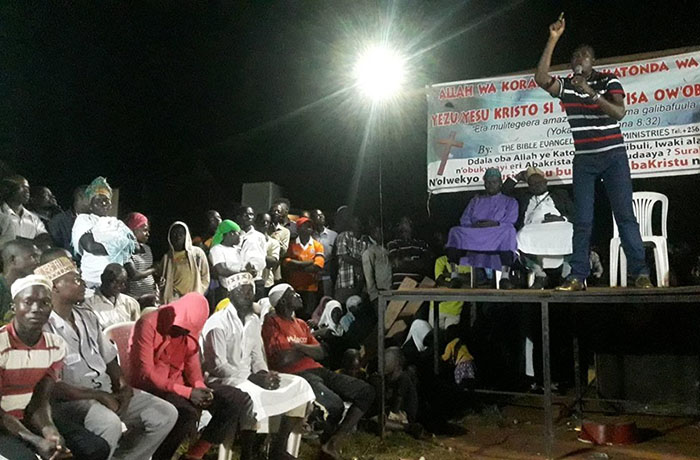
256 Muslims come to Christ in Mbale


A gospel crusade in Mbale ended with 256 new converts from Islam to Christianity, Pastor Stephen Waiswa of Bible Evangelism Ministries says.
In his remarks on 9th March 2019, Pastor Stephen said the crusade was conducted at multiple locations within Mbale including; Nile view Casino, Namakwekwe and Nakaloke. 
“We have fought a good fight, until the end, I ask God to bless everyone who supported this mission, we finished the mission – with 256 new converts from Islam to Christianity,” he said.
As this website often reports, many evangelical organizations, across the country, engage in evangelism to Muslims. It should, however, be noted that several converts often resort to secrecy to survive after receiving threats from their counterparts.
This concern over safety proves the greatest complication in assessing the number of Muslims converting to Christianity in several nations, according to the Center for the Study of Global Christianity.
“Many of these converts keep their new faith a secret. Some of them are fairly isolated, not knowing any other Christians,” the organization notes.
Pastor Stephen is now making preparations to carry out other evangelism crusades at Kazimingi in Jinja, a town in southern Uganda.

Quran with Christian commentary to be released


An International Christian media and publishing company is releasing a new edition of the Qur’an, complete with “Christian commentary” intended to help “pastors and missionaries who minister among Muslims.”
The Quran with Christian Commentary: A Guide to Understanding the Scripture of Islam by Gordon D. Nickel provides in-text notes to explain the meaning of various surahs (chapters) and ayat (verses), their interpretive history and significance in Muslim thought, and similarities and differences when compared to biblical passages.
Zondervan, the publisher, says the work is “factual, respectful of Muslims, and insightful on issues about which Muslims and Christians disagree.”
“Professors and students in courses on Islam and the Quran will find this to be an invaluable resource, as will pastors and missionaries who minister among Muslims. Written at a readable level, any Christian who wants to learn more about Islam and the Quran will find it to be a rich and informative introduction,” the book’s description reads.
The author, Gordon Nickel is director of the Centre for Islamic Studies at South Asia Institute of Advanced Christian Studies in Bangalore, India, and a former instructor at Trinity Evangelical Divinity School.
He told the Christian Post:
“No one can understand the Muslim mind without some solid knowledge of the contents of the Quran.”
“I knew from many years of studying and teaching the Quran that there are ways to read this scripture that allow readers to avoid confusion and rather to make sense of its main themes. I also noticed from my reading that the Quran often addresses non-Muslims directly and seems to demand a response to its claims,” he continued.
“Most of all I wanted to comment on all passages related to Jesus and the Gospel. The apostle Paul wrote certain penetrating words about ‘a different gospel.’ Christians are the custodians of the good news of salvation through the death of Jesus on the cross, the ‘People of the Gospel’ as the Quran describes them. As such they have a stake in the portrait of Jesus offered by a scripture written 600 years after the New Testament,” he added.
Zondervan is a founding member of the Evangelical Christian Publishers Association. 
Source: Christian News 

Saturday, April 18, 2020

Muslims in Buikwe are turning to Jesus: Pastor testifies


Pastor Stephen Waiswa of Bible Evangelism Ministries – Kawempe leading a Muslim to Christ in Prayer. Courtesy Photo.
Founder of Bible Evangelism Ministries, Pastor Stephen Waiswa has reported multiple conversions from Islam to Christianity in Buikwe District.
Stephen, who uses gospel debates (better referred to as apologetic discussions), to share various biblical facts and truths, revealed in an update October 11 that he registered 45 new converts.
This, the preacher explained, was from “the nearest mosque at Kiyindi landing site” in Buikwe District. The crusade lasted close to 5 days, starting 8th October, 2018.
Despite of the opposition he encounters, Pastor Stephen Waiswa earlier stipulated that he has dedicated his life to spreading the gospel of Jesus Christ within Muslim communities around Uganda.
He is a former Muslim who studied in Iran, one of the staunch Islamic countries in the Middle East.
“Buikwe! Muslims are converting every day! We shall settle other things later, but the gospel must be preached,” he said further in the release.
His announcement of the new converts was received amid jubilation from the Christian community – and disapproval from the Muslim community online.

Muslim-dominated Sudan to teach Christianity in public schools


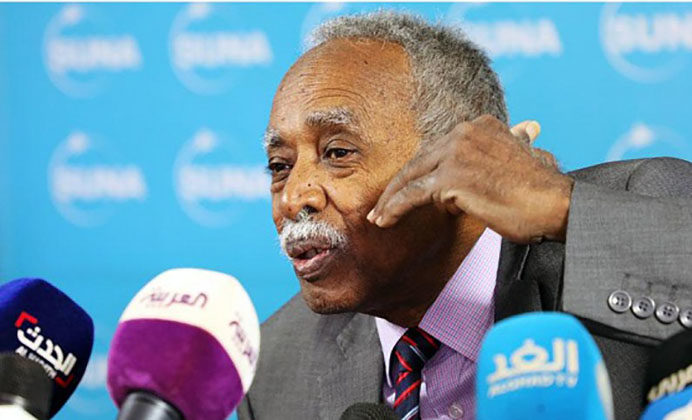
Sudanese Minister of Education Mohamed El Amin El-Toam at the press forum of the Sudan News Agency. (SUNA)
Sudanese Minister of Education Mohamed Al-Amin Al-Toam says that his ministry will consider the appointment of Christian teachers to teach Christianity nationwide.
Christian persecution watchdog Morning Star News revealed in its report published March 6, 2020 that the policy is one of several new faith freedom initiative attempts in Sudan since the collapse of the 30-year Islamist regime of former President Omar al-Bashir.
Morning Star News revealed that Christianity has not been taught in public schools in Sudan for more than 30 years.
“Prohibiting the teaching of Christianity at government schools due to lack of Christian teachers appointed by the governments, Bashir had left instruction on Christianity to churches,” the report reads.
Al-Toam also told church leaders that the government is considering excluding Christian holidays and Sundays in national exam scheduling, according to International Christian Concern.
In July 2017, al-Bashir’s government ordered Christian schools to stop regarding Sunday as a public day off. He wanted to adopt a “100 percent” Islamic constitution when the South split off.

What Clergy Say

In response to the new attempts by the Ministry of Education, many Sudanese Christians are hesitant and skeptical.
Pastor Nalu of the Sudan Presbyterian Evangelical Church told Morning Star, “We are tired of such promises from the government. We need action to show the good motives from the government.”
In December 2019 Sudan was removed from the U.S. State Department’s Countries of Particular Concern list for the first time since 1998 over the religious advances that have been taken in the past year.

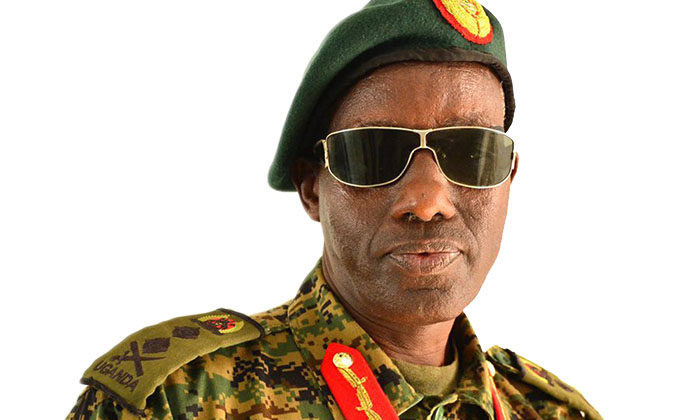
Uganda: General Elly Tumwine says he gave his life to Christ


General Elly Tumwine who was shot in the head during the 80s, and also bitten three times by venomous snakes says he was able to miraculously recover due to the power of prayer.
The high-ranking member of the Ugandan military and professional artist, revealed during a meeting with hundreds of Pentecostal Pastors in Wakiso District that Christ is his personal Lord and Saviors and that “prayer has power beyond what you can imagine.”
“One of the things that made me commit my life to the Lord Jesus Christ was to thank God for my life. And I feel free to share it because of my mother’s prayers. I am still alive because I have a duty to accomplish in this world,” he said at the Worship House – Nansana.
Reports show that General Elly Tumwine interrupted his teaching career in 1978 to join the FRONASA forces led by incumbent President Yoweri Museveni to fight the Idi Amin regime. In 1981, when Museveni went to the bush to form the National Resistance Army (NRA), Elly Tumwine went with him.
“We got to the bush, and I was shot through the head. The bullet moved through the head, and came out through my right eye – It is a long story, but I survived , and went back. There are so many other moments of survival,” he said.
“When I was still young, about one year old, I was bitten by a very big snake. My whole body swelled, but by God’s luck I survived that. I was bitten by a snake another two times: In my Primary six and Primary seven. In Primary four, our house was struck by lightening, and two of my brothers died because of that. I was with them at the table, we were doing our home work. The tragic event led to my belly being burnt and I spent 5 years only taking fluids, without eating solid food,” he said.
Further speaking to the Pastors who included Wilson Bugembe and Bishop Joshua Lwere, the General Overseer of the National Fellowship of Born again Pentecostal Churches of Uganda (NFBPC), General Elly stated that everyone is on earth to fulfill a unique purpose.
The General noted that his mother also encountered the power of prayer.
“One day my mother was going to be operated upon. When she reached the operation theater, she told the doctors, ‘before you give me an anesthetic drug, let me first pray.’ She prayed, ‘God, if You think I still have a duty in this world, bring me back. But if You think I have completed my work in this world, take me.’ When she returned home form the hospital, she was very proud, and said, ‘I am here to fulfill that unique purpose that God has brought me to fulfill. When I complete it, I will go,'” he said.
General Elly Tumwine commended the Pentecostal Pastors for what he called a high “level of organisation exhibited by Churches.”
“The beauty about this structure is that although you are all Christians, you are not here as different political parties… It is all about being one in God.” he said. “We are here for partnership, we are hear to support each other. We are here to continue the long struggle that God needs us to do for our people,” he said.
“For anything you want to do in this country or world, the most important thing is peace, safety and security,” he explained.

Tanzania declares 3 days of prayer against Covid-19: Churches are open


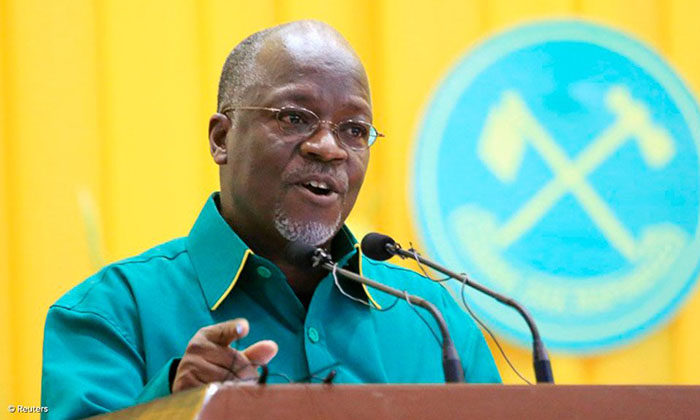
Tanzania President John Pombe Magufuli. COURTESY PHOTO.

Tanzania’s President John Pombe Magufuli has declared three days of national prayers against the novel coronavirus, saying “the Almighty who has power over all things” can save the nation from the pandemic that has affected millions globally.
Magufuli wrote on his official twitter handle Thursday as the country recorded 6 new cases, taking the total number to 94 with 11 recoveries and 4 deaths.
“Fellow Tanzanians, following the coronavirus pandemic, I urge you to use these three days from April 17 to April 19, to pray to the almighty Lord who has power over all things to save us from this disease. Let us all pray, each in their own faith, he will listen,” the President tweeted.
Earlier, local media sources reported that President Magufuli ordered for the closure of schools, colleges and universities in order to curb the spread of the coronavirus in Tanzania.
He also suspended sporting events and banned all public gatherings aside churches, mosques and other places of worship, because “that is where” people will find “true healing”.
“These Holy places are where God is. My fellow Tanzanians, let us not be afraid of going to praise Him,” he was quoted as saying.
Magufuli reportedly said the Covid-19 virus is Satanic and cannot survive while in the “body of Christ”.
“Coronavirus is a devil, it can not live in the body of Christ, it will burn instantly. This is a time to build our faith,” he said, according to Standard Media – Kenya.
Magufuli’s remarks have been challenged by various individuals including opposition leader Zitto Kabwe who perceives temporal Church closure “as a way of adding measures to curb the rapid spread of coronavirus.”
“Lets not argue with science,” Kabwe said, according to Standard Media – Kenya.
Magufuli was quoted by the East African Herald as saying he is optimism that COVID-19 will pass “just like other diseases have passed. But we should continue to take precautions just as experts have been instructed us”.
According to the news source, he further warned “action will be taken” against those who do not adhere to the social distancing measures implemented by the government.
COVID -19, first reported in Wuhan, China, in December 2019, has killed at least 145,705 people worldwide, with at least 2,166,832 infections.

Neuroplasticity, Spiritual Formation, and Holistic Redemption in Christ

Neuroplasticity, Spiritual Formation, and Holistic Redemption in Christ By Dr. Maxwell Shimba, Shimba Theological Institute Introduction ...

TRENDING NOW